Persepolis: The Ceremonial Capital That Burned
A vast stone terrace built for one week a year — and one night of fire that ended an empire's grandest stage.
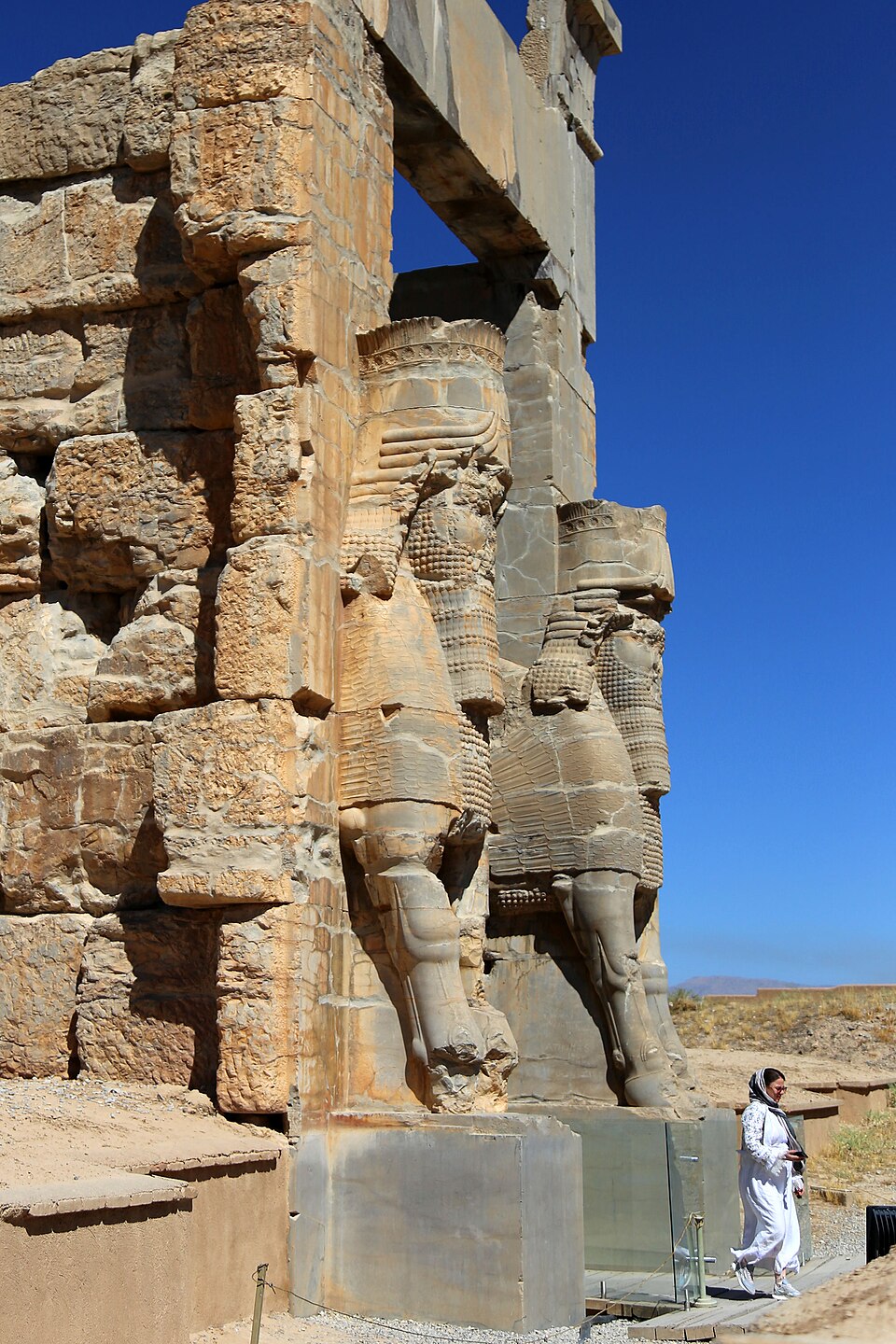
Long before Alexander the Great ever saw it, Persepolis rose from the plains of Marvdasht, ringed by the Zagros Mountains in what is now Iran's Fars province. The earliest remains date to 515 BC, and though French archaeologist André Godard believed Cyrus the Great first chose the site, it was Darius I who raised its terrace and palaces, as inscriptions on the buildings confirm.
Darius was no ordinary heir. With him the Achaemenid sceptre passed to a new branch of the royal house, and the empire's true seats of power remained Susa, Babylon, and Ecbatana. Persepolis, by contrast, seems to have been something else entirely: a grand, seasonally occupied ceremonial complex rather than a true city, raised high on a walled platform with five palaces or halls of varying size and grand entrances. Its exact function is still debated, but most archaeologists have long held it was built primarily for celebrating Nowruz, the Persian New Year at the spring equinox — a festival still celebrated in Iran today. Stairway reliefs depict Iranian nobility and tributary peoples from across the empire arriving to present gifts to the king.
Darius ordered construction of the Apadana audience hall and the Council Hall, known as the Tripylon or 'Triple Gate,' along with the main imperial Treasury. These were finished only under his son, Xerxes I, and construction on the terrace continued until the empire's fall. Around 519 BC, work began on a broad stairway, and grey limestone became the site's principal building material. The uneven platform, with its angled walls, functioned almost like a fortress, letting defenders target any approach.
Greek historian Ctesias reported that Darius's own tomb lay in a cliff face reachable only by an apparatus of ropes — a detail that hints at how remote and guarded this royal landscape truly was. Persepolis remained largely unknown to the Greeks until Alexander the Great's forces reached and plundered it.
That came in 330 BC. After invading Achaemenid Persia, Alexander sent his main force to Persepolis along the Royal Road. Diodorus Siculus records that along the way, Alexander and his army encountered 800 Greek artisans who had been captured by the Persians — mostly elderly, many missing a hand or foot, mutilated so they could not escape after being put to work skillfully. Alexander clothed and provisioned them before continuing on, and it is possible this encounter darkened his view of the city, even if Diodorus does not explicitly link it to what followed.
More from History

The Morning Bingham Climbed to Machu Picchu
On a cold July morning in 1911, an American historian scrambled up a jungle-choked ridge above the Urubamba River — and by afternoon, a forgotten Inca citadel would belong to the world.

The Last Half-Hour of the Hindenburg
It was already half a day late, and the public had been told to keep away — but at seven o'clock that evening, the Hindenburg finally turned toward its mooring mast for the last time.

The Last Hours of Pompeii: August 24, 79 AD
By noon it was just another hot day beside the Bay of Naples. By evening, an entire mountain had rewritten the fate of thousands.

The Longest Walk: Mandela's Last Steps to Freedom
After 27 years behind bars, a 71-year-old man had to relearn how to walk out of a prison gate — into a waiting world of cameras, crowds, and a country holding its breath.

The Document Lincoln Signed on the First Day of 1863
On a single January morning, a president's pen would change the legal status of more than three million people — if the ink held and his hand did not shake.

The Day of the Dream: August 28, 1963
Two hundred and fifty thousand people converged on the National Mall that morning — by nightfall, one voice from the steps of the Lincoln Memorial would echo for generations.