Six Seconds in Dealey Plaza
By noon the crowds in Dallas were cheering; by 1 p.m. the president was dead. What happened in between took less than half an hour.
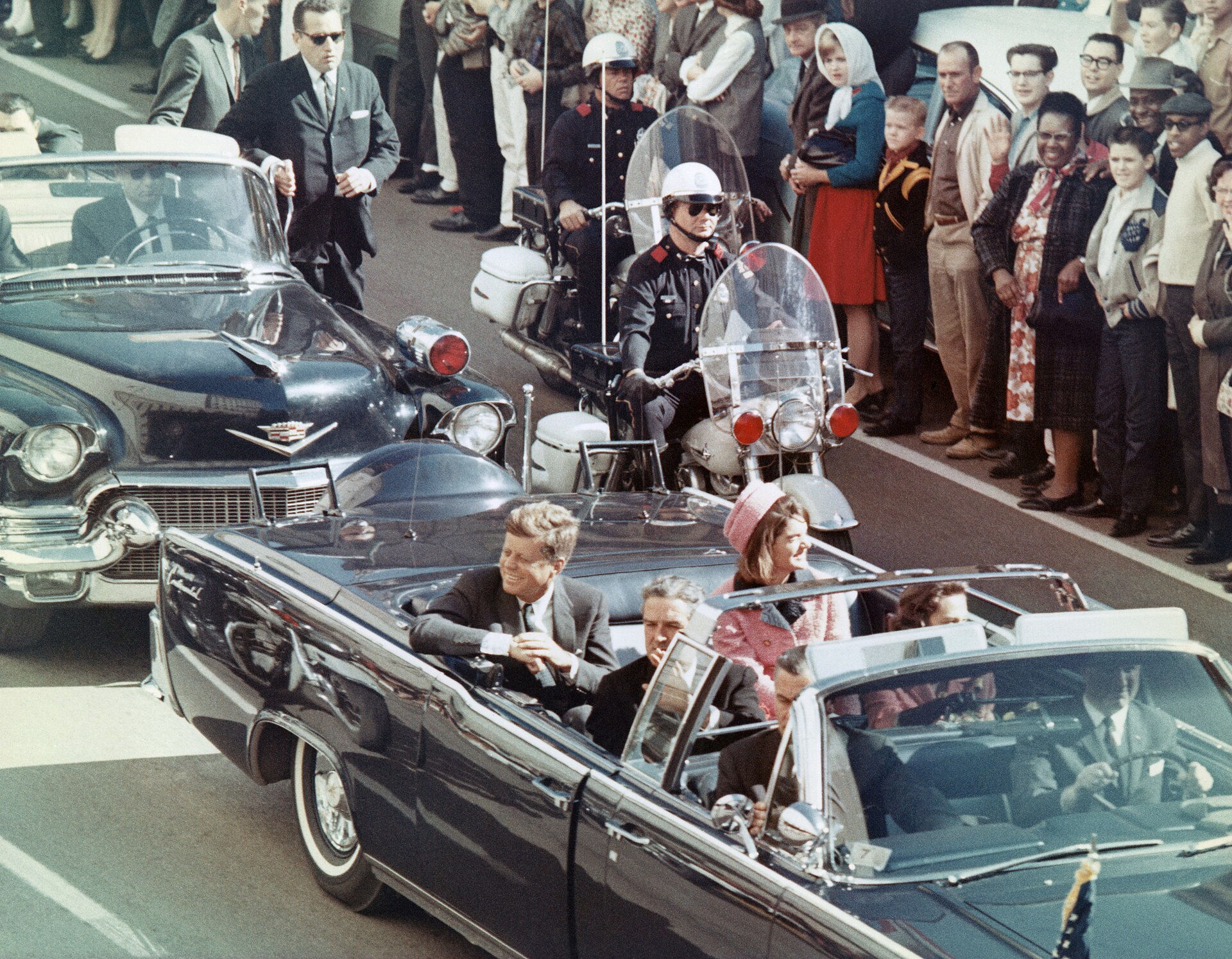
The morning of Friday, November 22, 1963, began with a Texas trip meant to smooth political rifts. President John F. Kennedy had come to Dallas to ease tensions between Senator Ralph Yarborough and Governor John Connally, both Democrats, and to informally launch his 1964 reelection push. He wore a back brace that day, a detail of no importance until it mattered terribly.
At Love Field the president and First Lady Jacqueline Kennedy stepped into an open-top car, joined by Governor Connally and his wife Nellie. The motorcade eased through downtown Dallas under a clear sky, crowds lining the streets, cameras rolling — among them an amateur filmmaker named Zapruder, whose reels would later become the central record of what came next.
At 12:30 p.m., as the motorcade turned through Dealey Plaza, shots rang out from the direction of the Texas School Book Depository. Kennedy was struck in the neck and head; Connally was also wounded but would survive. Witnesses would later argue for years over how many shots were fired — investigators noted an interval of about 5.6 seconds between the first and last, a span FBI agents found difficult to replicate even without aiming.
The motorcade raced to Parkland Memorial Hospital. Doctors worked over the president, but the wounds were fatal. About thirty minutes after the shooting, Kennedy was pronounced dead. Connally, badly hurt, was treated and would recover.
Lee Harvey Oswald, a former U.S. Marine who had worked in the Book Depository, left the building and made his way home, where he retrieved a pistol. Shortly afterward he shot and killed Dallas police officer J. D. Tippit in the street. Roughly seventy minutes after the shots in Dealey Plaza, Oswald was apprehended by Dallas police and charged with both killings.
More from History

The Morning Bingham Climbed to Machu Picchu
On a cold July morning in 1911, an American historian scrambled up a jungle-choked ridge above the Urubamba River — and by afternoon, a forgotten Inca citadel would belong to the world.

The Last Half-Hour of the Hindenburg
It was already half a day late, and the public had been told to keep away — but at seven o'clock that evening, the Hindenburg finally turned toward its mooring mast for the last time.

The Last Hours of Pompeii: August 24, 79 AD
By noon it was just another hot day beside the Bay of Naples. By evening, an entire mountain had rewritten the fate of thousands.

The Longest Walk: Mandela's Last Steps to Freedom
After 27 years behind bars, a 71-year-old man had to relearn how to walk out of a prison gate — into a waiting world of cameras, crowds, and a country holding its breath.

The Document Lincoln Signed on the First Day of 1863
On a single January morning, a president's pen would change the legal status of more than three million people — if the ink held and his hand did not shake.

The Day of the Dream: August 28, 1963
Two hundred and fifty thousand people converged on the National Mall that morning — by nightfall, one voice from the steps of the Lincoln Memorial would echo for generations.