Spain Torn in Two: The War That Foretold a World War
A coup meant to take a country in a single week instead split it in half for three years — and turned Spain into the rehearsal stage for a war the whole world was about to fight.
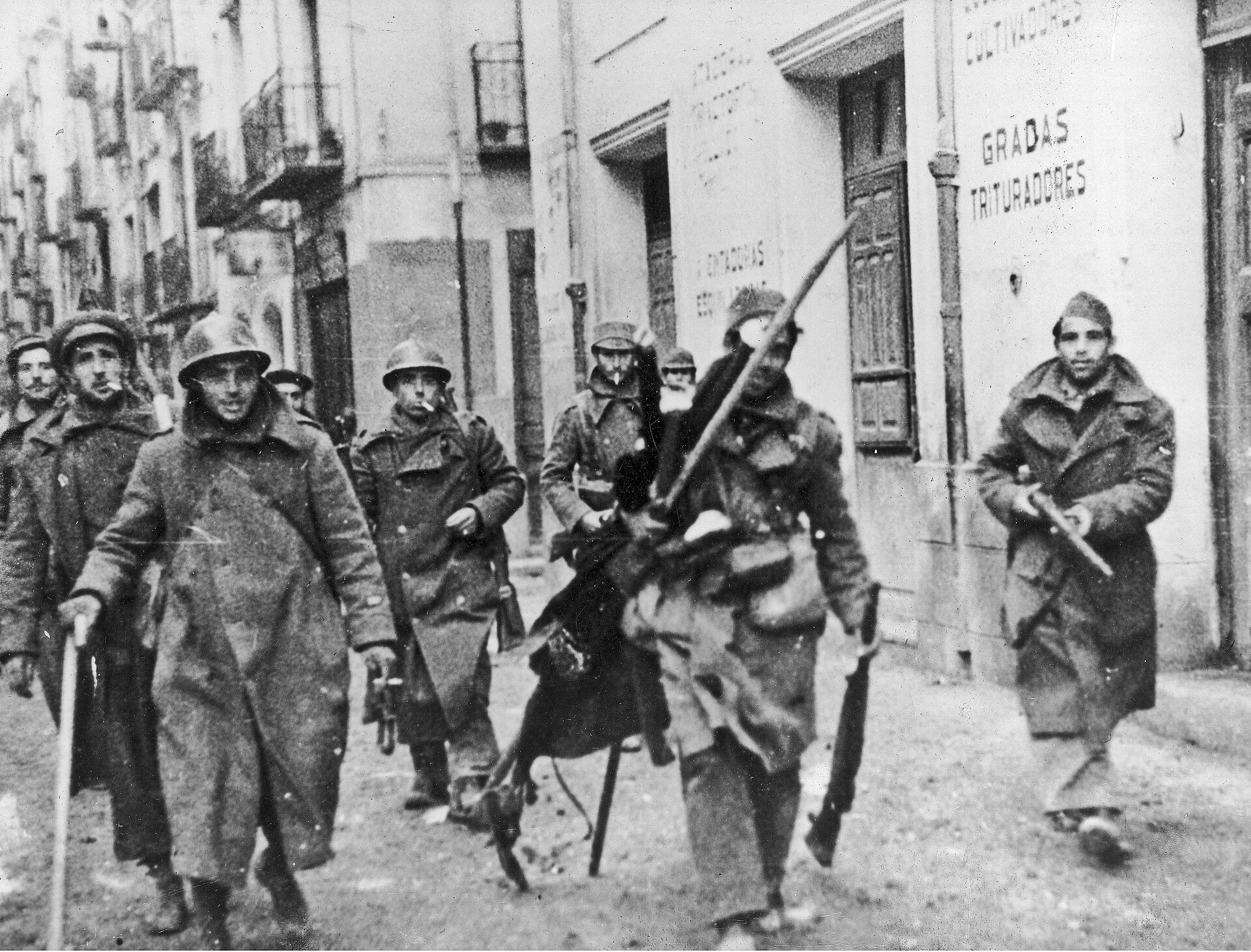
In July 1936, a group of generals in the Spanish Republican Armed Forces launched a pronunciamiento against the elected government of the Second Spanish Republic, headed by President Manuel Azaña. It was meant to be swift. Instead, in cities like Madrid, Barcelona, Valencia, Bilbao, and Malaga, the rebelling units failed to seize control, and the government held on. Spain fractured — militarily, politically, geographically — into two Spains that would spend the next three years trying to annihilate each other.
On one side stood the Republicans: socialists, anarchists, communists, and regional separatists loyal to the left-leaning Popular Front government, propped up by arms and support from the Soviet Union and Mexico. On the other stood the Nationalists — an uneasy alliance of fascist Falangists, monarchists (both Alfonsist and Carlist), conservatives, and the Catholic-traditionalist CEDA party — who found their patrons in Fascist Italy and Nazi Germany. Britain, France, and the United States kept recognizing the Republican government on paper while officially staying out of the fight. That didn't stop tens of thousands of ordinary citizens from those very countries from crossing borders anyway, most joining the pro-Republican International Brigades.
The coup's failure to seize the whole country instantly redrew the war's terms. In the Republican zone, arming left-wing militias to resist the uprising triggered something bigger than a defensive war — a rapid socioeconomic and political upheaval historians call the Spanish Revolution. Behind the front lines, Spanish society was being remade even as it burned.
General Francisco Franco did not start as the obvious leader of the uprising. He rose steadily through the chaos, and on 1 October 1936 he was named supreme leader of what he called the Spanish State. From that position he gradually absorbed the Falangist movement into his own authority, and by 1937 he had become, in full practice, the dictator of the Spanish State.
Militarily, the Nationalists pressed their advantage from strongholds in the south and west. Through 1937 they seized most of Spain's northern coastline and laid siege to Madrid. The capital would not fall for years, but the noose tightened elsewhere: in 1938 and 1939, Nationalist forces overran most of Catalonia, severing Madrid from Barcelona and leaving the Republican war effort with no coherent path forward.
More from History

The Morning Bingham Climbed to Machu Picchu
On a cold July morning in 1911, an American historian scrambled up a jungle-choked ridge above the Urubamba River — and by afternoon, a forgotten Inca citadel would belong to the world.

The Last Half-Hour of the Hindenburg
It was already half a day late, and the public had been told to keep away — but at seven o'clock that evening, the Hindenburg finally turned toward its mooring mast for the last time.

The Last Hours of Pompeii: August 24, 79 AD
By noon it was just another hot day beside the Bay of Naples. By evening, an entire mountain had rewritten the fate of thousands.

The Longest Walk: Mandela's Last Steps to Freedom
After 27 years behind bars, a 71-year-old man had to relearn how to walk out of a prison gate — into a waiting world of cameras, crowds, and a country holding its breath.

The Document Lincoln Signed on the First Day of 1863
On a single January morning, a president's pen would change the legal status of more than three million people — if the ink held and his hand did not shake.

The Day of the Dream: August 28, 1963
Two hundred and fifty thousand people converged on the National Mall that morning — by nightfall, one voice from the steps of the Lincoln Memorial would echo for generations.