Spartacus: The Slave Who Shook Rome
Seventy men armed with kitchen knives fled a gladiator school in 73 BC. Within two years they had defeated Roman armies and terrified the Republic itself.
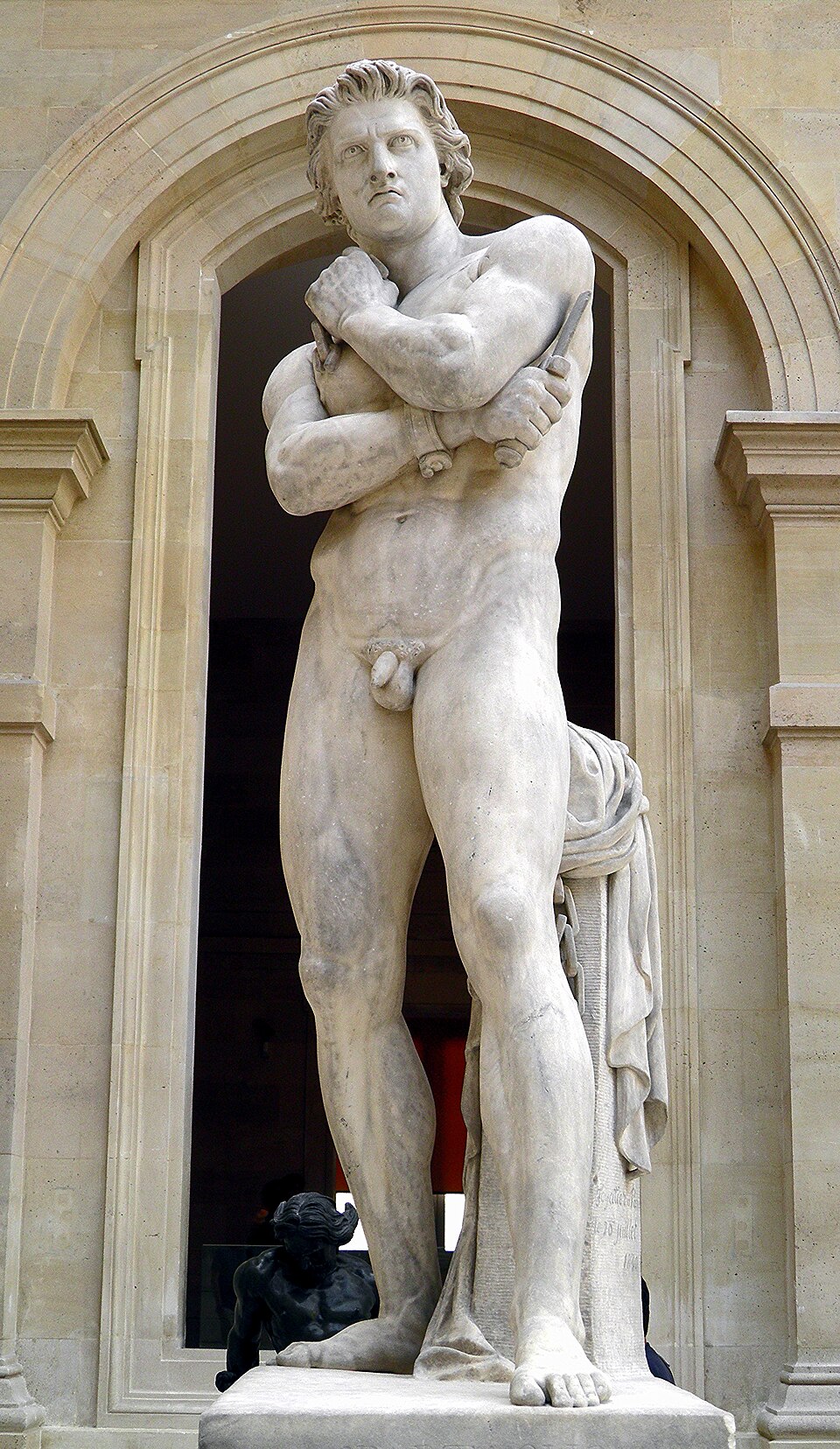
In the year 73 BC, in the town of Capua, a Thracian gladiator named Spartacus led roughly seventy fellow fighters in a desperate escape from the gladiatorial school of Lentulus Batiatus. Armed only with kitchen utensils they seized in the breakout, they fought their way to freedom and captured wagons of gladiatorial weapons and armor along the way. It was a small, chaotic act of defiance that would grow into one of the most formidable challenges Rome ever faced.
Spartacus himself remains a shadowy figure. Ancient writers—chiefly Plutarch and Appian, both composing their accounts more than a century after his death—describe him as a Thracian, possibly from the Maedi tribe near the Strymon river, in what is now Bulgaria. Appian claims he had once served as a soldier with the Romans before being captured, enslaved, and sold into gladiatorial training. He is remembered as a murmillo, a heavyweight fighter who carried a large oblong shield and a sword with a broad, straight blade about eighteen inches long. No contemporary sources survive; every account was written later, by outsiders, without the perspective of the slaves themselves.
After their escape, the rebels retreated to the more defensible slopes of Mount Vesuvius, choosing Spartacus and two Gallic slaves, Crixus and Oenomaus, as their leaders. What began as a band of seventy soon swelled dramatically. As the fugitives defeated Roman detachments sent to recapture them, they attracted escaped slaves and other recruits from across the region, until their numbers were estimated at 70,000 or more.
Rome had been slow to grasp the danger, in part because its legions were occupied fighting revolts in Hispania and elsewhere. But as Spartacus's forces routed unit after unit—defeating the praetor Publius Varinius and even armies commanded by consuls in 72 BC—the Senate could no longer ignore the crisis. Spartacus pushed his army north, reportedly as far as the Alps, defeating the governor of Gallia Cisalpina along the way. The road to freedom beyond Roman territory lay open.
Yet the army did not cross the mountains. For reasons the ancient sources never fully explain, the enslaved fighters chose to remain in Italy, and Spartacus turned his forces south again. It was a fateful decision. Rome now placed its hopes in Marcus Licinius Crassus, a wealthy and ambitious commander tasked with crushing the revolt once and for all. Spartacus suffered his first real defeat against Crassus's forces, and retreated toward Messina, hoping to cross to Sicily with the help of pirates who had promised passage. The pirates never kept their word.
More from History

The Morning Bingham Climbed to Machu Picchu
On a cold July morning in 1911, an American historian scrambled up a jungle-choked ridge above the Urubamba River — and by afternoon, a forgotten Inca citadel would belong to the world.

The Last Half-Hour of the Hindenburg
It was already half a day late, and the public had been told to keep away — but at seven o'clock that evening, the Hindenburg finally turned toward its mooring mast for the last time.

The Last Hours of Pompeii: August 24, 79 AD
By noon it was just another hot day beside the Bay of Naples. By evening, an entire mountain had rewritten the fate of thousands.

The Longest Walk: Mandela's Last Steps to Freedom
After 27 years behind bars, a 71-year-old man had to relearn how to walk out of a prison gate — into a waiting world of cameras, crowds, and a country holding its breath.

The Document Lincoln Signed on the First Day of 1863
On a single January morning, a president's pen would change the legal status of more than three million people — if the ink held and his hand did not shake.

The Day of the Dream: August 28, 1963
Two hundred and fifty thousand people converged on the National Mall that morning — by nightfall, one voice from the steps of the Lincoln Memorial would echo for generations.