The 82 Kilometers Between Two Worlds
A strip of water barely wider than a marathon course separates two continents — and once, it wasn't water at all.
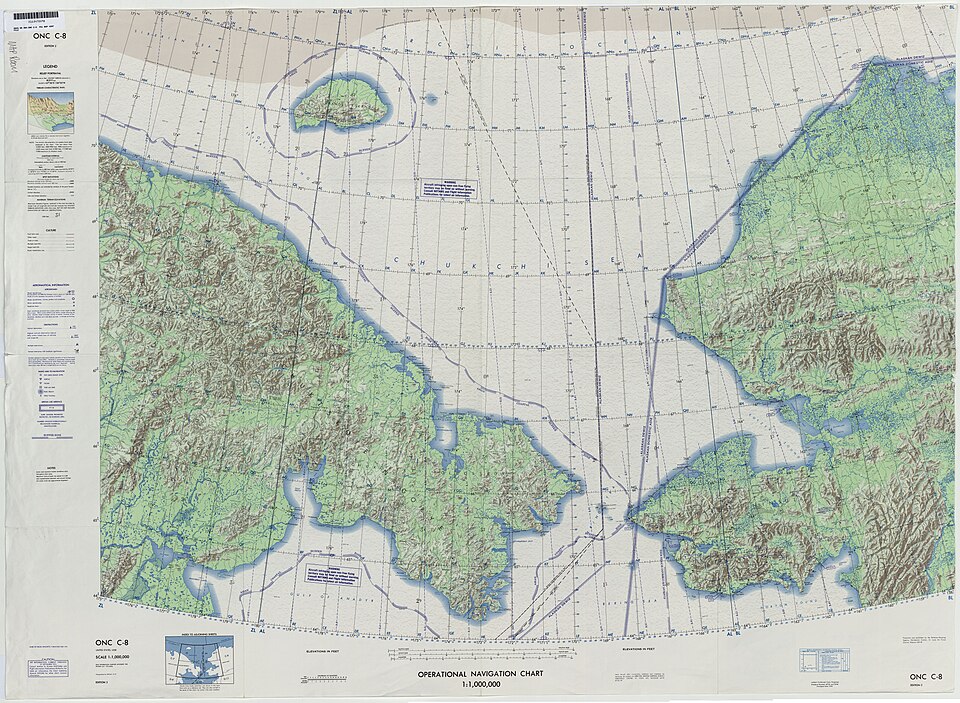
At its narrowest point, only 82 kilometers separate Cape Dezhnev in Russia from Cape Prince of Wales in Alaska. This is the Bering Strait, the place where Asia and North America come closest to touching, a channel connecting the Arctic's Chukchi Sea in the north to the Bering Sea in the south, with a deepest point of just 90 meters.
Scientists believe the strait first opened between 4.8 and 7.4 million years ago. Long afterward, during the ice ages, falling sea levels — locked away in glaciers — exposed a vast land bridge here known as Beringia. For decades this has been the leading scientific explanation for how the first Paleo-Indians reached the Americas, walking across dry seabed rather than sailing across open water.
European geographers imagined a strait between the continents as early as 1562, calling it the Strait of Anián. In 1648, the Russian explorer Semyon Dezhnyov is believed to have passed through it, though his report never reached Europe. It was the Danish-born Russian navigator Vitus Bering who entered the strait in 1728, lending it his name. Four years later, Mikhail Gvozdev became the first European to cross from Asia to America, and in 1778 James Cook visited during his third voyage. By 1847, American ships were hunting bowhead whales in these waters.
The strait has drawn a strange parade of adventurers determined to cross it without conventional means. In March 1913, Captain Max Gottschalk made the crossing by dogsled via the Diomede Islands, the first documented modern journey from Russia to North America without a boat. In 1987, swimmer Lynne Cox swam 4.3 kilometers between the Diomede Islands in water of just 3.3°C, an achievement that earned her joint congratulations from Ronald Reagan and Mikhail Gorbachev during the twilight of the Cold War.
In the summer of 1989, three separate teams attempted the first modern sea-kayak crossings: seven Alaskans on an expedition called Paddling Into Tomorrow, a four-man British team, and a group of Californians led by Jim Noyes, a paraplegic adventurer, accompanied by a film crew in a traditional walrus-skin umiak documenting what would become the film Curtain of Ice.
More from Explorations

Humboldt: The Man Who Measured the World
A Prussian noble's son, once mocked as a sickly child, would climb a volcano to a world-record height and rewrite how humanity understood nature itself.

The Man Who Named Canada
A Breton mariner planted a wooden cross on a foreign shore and claimed a kingdom he did not understand — then spent a winter frozen into its river, praying a stranger's remedy would save his men.

Sixty Ships Into the Unknown: Hanno's Voyage Down the African Coast
A Carthaginian fleet of sixty ships and thousands of settlers vanished past the Pillars of Hercules to found cities on an unmapped coast — and came home with the skins of hairy, hostile 'gorillas' as proof of how far they had gone.

HMS Challenger: The Voyage That Charted the Deep
A stripped-down warship, its guns torn out to make room for microscopes, set sail from Portsmouth to answer a question no one had ever properly asked: what lies at the bottom of the sea?

Scott's Last Expedition: The Letters Written at the End of the World
Five men reached the bottom of the world only to find a Norwegian flag already planted there. What followed was not glory, but a slow, frozen unraveling that the world would remember for a century.

Marco Polo: In the Court of Kublai Khan
A fifteen-year-old boy meets the father he barely knew — and is soon swept toward the richest court on Earth. Twenty-four years later, he returns home with tales so vast that Venice simply calls him 'Mister Millions'.