The 9,999 Rooms of the Purple Star
Cross a single threshold in Beijing and you enter a walled world where, for five centuries, unauthorized footsteps meant instant death — welcome to the Forbidden City.
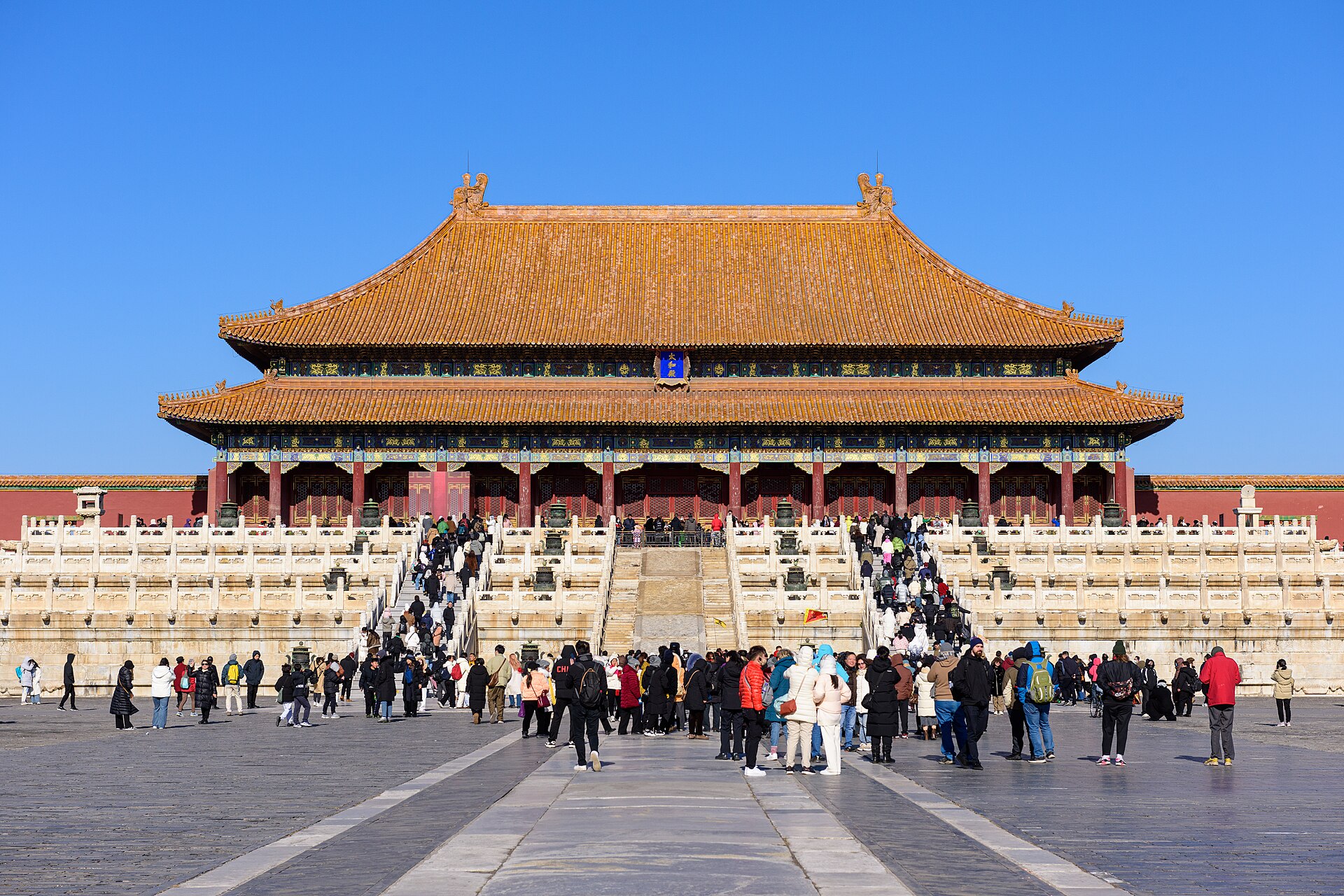
In 1406, the Yongle Emperor, having seized the throne as Zhu Di and moved the capital from Nanjing to Beijing, ordered the construction of a palace worthy of heaven itself. For fourteen years, more than a million laborers hauled whole logs of precious phoebe zhennan wood from the jungles of southwestern China, quarried marble near Beijing, and baked golden bricks in the kilns of Suzhou to pave the floors of its grandest halls. By 1420, the result covered 72 hectares at the very center of the city — a complex so vast and so guarded that entering it without permission carried a sentence of immediate execution.
Its name, Zijincheng, or 'Purple Forbidden City,' carried celestial weight. Zi, purple, referred to the Ziwei Star — the North Star — which ancient Chinese astrology considered the heavenly abode of the Jade Emperor. If the Jade Emperor ruled the stars from his purple enclosure, the earthly emperor ruled China from his own forbidden counterpart. Jin meant prohibition; cheng meant a walled city or fortress. Together the name declared this was no mere palace, but a mirror of heaven placed on earth.
For 24 emperors — fourteen of the Ming dynasty, ten of the Qing — this was home, throne room, and fortress all at once, the political center of China for more than 500 years, from 1420 to 1924. The complex claims 9,999 rooms in total, though modern surveys count closer to 8,886, spread across the grounds. Every gate was studded with golden nails arranged in rows of nine — except the Eastern Prosperity Gate, which bore only eight, a quiet deviation from the rule of nines that governed nearly everything within the walls.
History did not spare the palace its violence. In April 1644, rebel leader Li Zicheng captured the city and proclaimed himself emperor of a short-lived Shun dynasty, only to flee before the combined forces of Ming general Wu Sangui and the Manchus, setting fires as he went. By October, the Manchus held northern China, and a ceremony inside the Forbidden City proclaimed the young Shunzhi Emperor ruler of all China under the new Qing dynasty. The victors renamed key halls to emphasize harmony over supremacy, made nameplates bilingual in Chinese and Manchu, and wove shamanist rites into the palace's daily life.
Foreign armies breached the walls twice more. In 1860, during the Second Opium War, Anglo-French forces occupied the palace until the war's end. In 1900, as the Boxer Rebellion convulsed the capital, Empress Dowager Cixi fled the palace altogether, leaving it to the treaty powers' forces for a year.
More from Architecture

Stonehenge: The Stones That Refuse to Explain Themselves
For more than 4,500 years, a ring of leaning giants has watched the sun rise and set on the same two days each year — and no one alive can say for certain why.

The Dome That Refused to Fall
Two thousand years ago, Roman engineers poured a dome so vast that no one has dared build a bigger one from unreinforced concrete since. It still stands, open to the sky.

A Minaret Rising Over Kingsland Road
On a busy London street better known for shops and buses, the tallest minaret in Britain quietly reaches into the sky. Its story began not in Sinan's sixteenth-century Istanbul, but in 1990s Hackney.

The Bridge That Was Killed Twice
For 427 years it arched over the Neretva like a stone rainbow. Then, in a matter of days in 1993, it simply ceased to exist.

Hoover Dam: The Concrete That Tamed a River
In the scorched depths of Black Canyon, thousands of men built the largest concrete structure the world had ever seen — and finished it two years early, at a cost of over a hundred lives.

Neuschwanstein: The Castle Built for a Ghost
A king who despised his own palace built the most famous fairy-tale castle on earth — and died before he ever truly lived in it.