The Anti-Apartheid Movement: A Voice Against Apartheid
In the heart of London, a movement began that would shake the world. A group of exiles and activists came together to challenge a brutal system, setting the stage for global change.
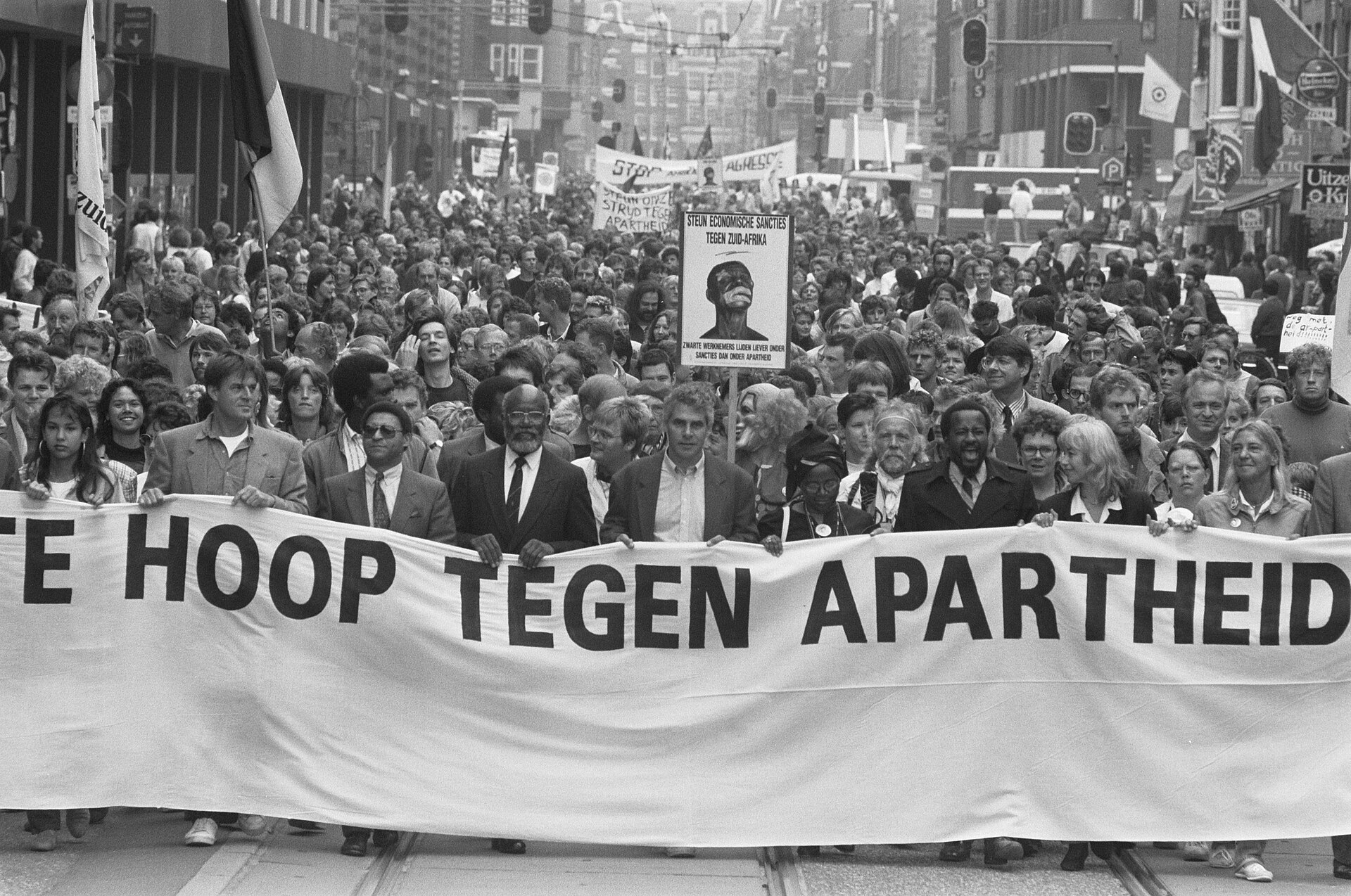
The Anti-Apartheid Movement (AAM) traces its origins to 26 June 1959, when South African exiles and their supporters gathered in London and, in response to an appeal by Albert Luthuli, founded the Boycott Movement. Nelson Mandela was an important figure among the many anti-apartheid activists, and members included Vella Pillay, Ros Ainslie, Abdul Minty and Nanda Naidoo. The movement's request to the British public was simple: withdraw your support from apartheid by not buying South African goods. This early effort marked the start of a powerful international campaign, drawing support from students, trade unions and the Labour, Liberal and Communist parties.
The Sharpeville massacre on 21 March 1960, in which 69 unarmed protesters were shot dead by the South African police, triggered an intensification of action. The group renamed itself the Anti-Apartheid Movement and moved beyond a consumer boycott to coordinate all anti-apartheid work and keep South Africa's apartheid policy at the forefront of British politics. It campaigned for the total isolation of apartheid South Africa, including economic sanctions — a demanding goal, since the United Kingdom was South Africa's largest foreign investor and South Africa was the UK's third biggest export market.
The AAM scored its first major victory in 1961, when South Africa was forced to leave the Commonwealth. The movement held a 72-hour vigil outside Marlborough House, the Commonwealth Secretariat venue, and found willing allies in Canada, India and the newly independent Afro-Asian member states. In 1962, the United Nations General Assembly passed a resolution calling on member states to impose a trade boycott against South Africa; in 1963, the UN Security Council called for a partial arms ban, though this was not made mandatory under the UN Charter.
The movement also confronted racism in South African sport. Abdul Minty, who became the AAM's Honorary Secretary in 1962, presented a letter that year to the International Olympic Committee meeting in Baden-Baden about racism in South African sports. The result was a ruling that suspended South Africa from the 1964 Tokyo Olympics; the country was finally expelled from the Olympics in 1970. It was a clear demonstration that the movement could influence global institutions and further isolate the apartheid regime.
In November 1962, the UN General Assembly passed Resolution 1761, a non-binding resolution calling for economic and other sanctions against South Africa. The AAM then spearheaded an international conference on sanctions, held in London in April 1964, to work out the practicability of economic sanctions. The conference established the necessity, legality and practicability of internationally organised sanctions, but it also pointed out that an effective programme would need the active participation of Britain and the United States — who were the main obstacle to such a policy. The British government maintained that sanctions would be unconstitutional, arguing that the situation in South Africa did not constitute a threat to international peace and that sanctions would not persuade the South African government to change its policies.
More from History

The Morning Bingham Climbed to Machu Picchu
On a cold July morning in 1911, an American historian scrambled up a jungle-choked ridge above the Urubamba River — and by afternoon, a forgotten Inca citadel would belong to the world.

The Last Half-Hour of the Hindenburg
It was already half a day late, and the public had been told to keep away — but at seven o'clock that evening, the Hindenburg finally turned toward its mooring mast for the last time.

The Last Hours of Pompeii: August 24, 79 AD
By noon it was just another hot day beside the Bay of Naples. By evening, an entire mountain had rewritten the fate of thousands.

The Longest Walk: Mandela's Last Steps to Freedom
After 27 years behind bars, a 71-year-old man had to relearn how to walk out of a prison gate — into a waiting world of cameras, crowds, and a country holding its breath.

The Document Lincoln Signed on the First Day of 1863
On a single January morning, a president's pen would change the legal status of more than three million people — if the ink held and his hand did not shake.

The Day of the Dream: August 28, 1963
Two hundred and fifty thousand people converged on the National Mall that morning — by nightfall, one voice from the steps of the Lincoln Memorial would echo for generations.