The Battle of Trafalgar
On a stormy October day in 1805, a naval clash unfolded off the coast of Spain that would shape the course of history. The British, led by a bold and fearless admiral, faced a combined French and Spanish fleet in a battle that would decide the fate of Napoleon's invasion plans.
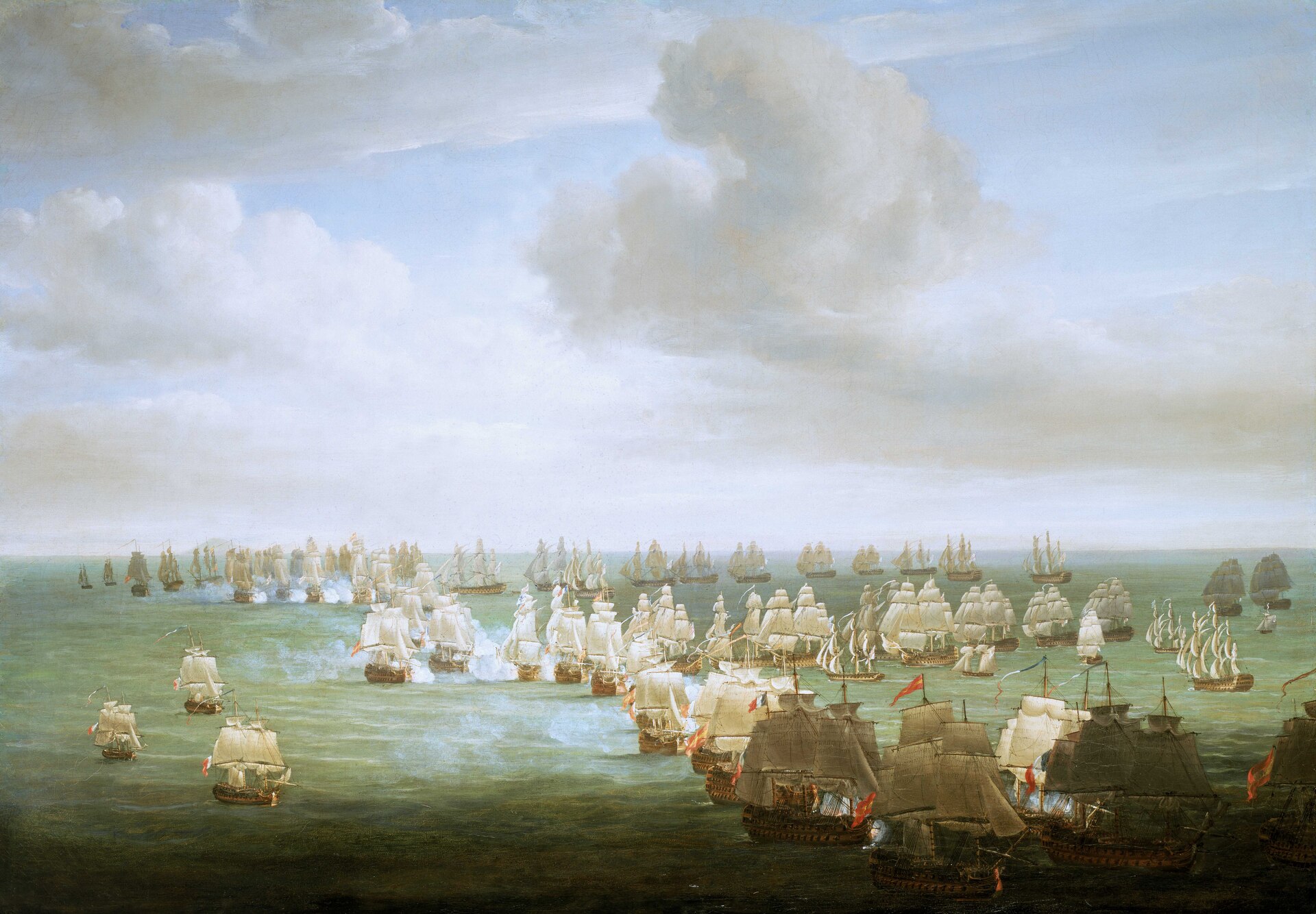
The Battle of Trafalgar was a turning point in the War of the Third Coalition. On 21 October 1805, the Royal Navy, under the command of Vice-Admiral Horatio Nelson, confronted the Franco-Spanish fleet off Cape Trafalgar. The allied fleet, under French Vice-Admiral Pierre-Charles Villeneuve, had sailed from Cádiz to help secure Napoleon's planned invasion of Britain, hoping to wrest control of the English Channel from the Royal Navy.
Nelson's fleet was outnumbered, with only 21 ships of the line facing a combined Franco-Spanish force that included the massive Spanish warship Santísima Trinidad, the largest warship in either fleet. To offset this imbalance, Nelson sailed his ships directly at the allied line in two columns, hoping to break it into pieces — an unconventional approach that departed sharply from traditional naval tactics.
Villeneuve had worried that Nelson might attempt exactly this kind of maneuver, but for various reasons he failed to prepare his fleet for it. His crews, both French and Spanish, were inexperienced and poorly trained. When the British bore down, Villeneuve's hesitation and his fleet's lack of coordination proved fatal.
The British plan worked almost perfectly. Nelson's columns split the Franco-Spanish fleet into three, isolating the rear from Villeneuve's flagship, Bucentaure. The allied vanguard sailed ahead trying to turn back, leaving the British temporarily superior in numbers against the rest of the fleet.
As the battle unfolded, the leading British ships faced intense crossfire as they closed on the Franco-Spanish line. Nelson's flagship, HMS Victory, led the front column and was nearly knocked out of action. Nelson himself was shot by a French musketeer and died shortly before the battle ended. His death marked the end of an era in British naval history, but his legacy would live on in the hearts of his countrymen.
More from History

The Morning Bingham Climbed to Machu Picchu
On a cold July morning in 1911, an American historian scrambled up a jungle-choked ridge above the Urubamba River — and by afternoon, a forgotten Inca citadel would belong to the world.

The Last Half-Hour of the Hindenburg
It was already half a day late, and the public had been told to keep away — but at seven o'clock that evening, the Hindenburg finally turned toward its mooring mast for the last time.

The Last Hours of Pompeii: August 24, 79 AD
By noon it was just another hot day beside the Bay of Naples. By evening, an entire mountain had rewritten the fate of thousands.

The Longest Walk: Mandela's Last Steps to Freedom
After 27 years behind bars, a 71-year-old man had to relearn how to walk out of a prison gate — into a waiting world of cameras, crowds, and a country holding its breath.

The Document Lincoln Signed on the First Day of 1863
On a single January morning, a president's pen would change the legal status of more than three million people — if the ink held and his hand did not shake.

The Day of the Dream: August 28, 1963
Two hundred and fifty thousand people converged on the National Mall that morning — by nightfall, one voice from the steps of the Lincoln Memorial would echo for generations.