The Bay of Pigs: How a Secret Invasion Failed on the Beach
Under cover of darkness, five ships slipped toward a Cuban beach carrying 1,400 exiles and a plan built in Washington's shadows. Three days later, they surrendered on that same sand.
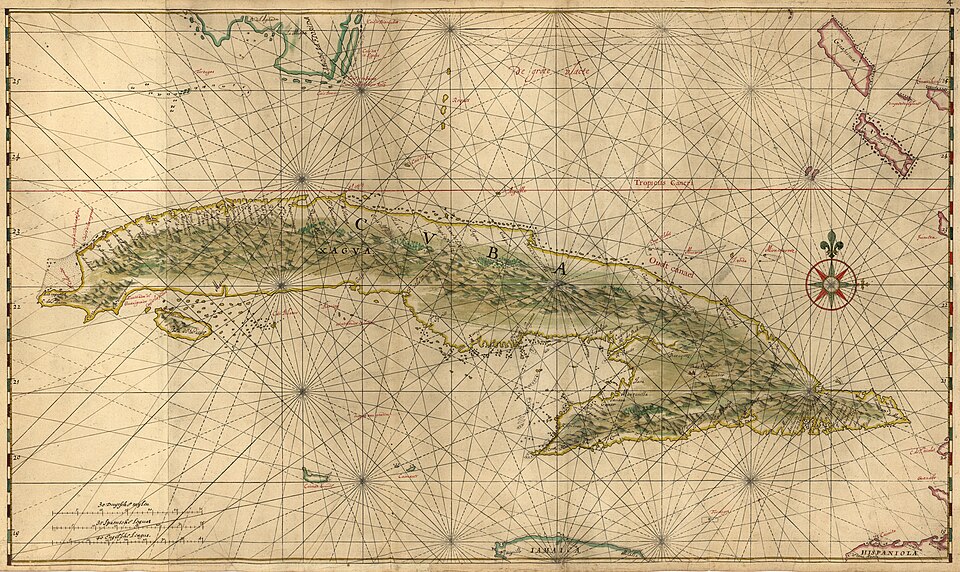
In the early hours of 17 April 1961, two CIA landing vessels, Blagar and Barbara J, slid into the Bahía de Cochinos on Cuba's southwestern coast. Following them were four cargo ships, Houston, Río Escondido, Caribe, and Atlántico, carrying roughly 1,300 armed Cuban exiles who called themselves Brigade 2506. The plan had been years in the making, born under President Dwight D. Eisenhower and inherited, with deep reservations, by John F. Kennedy.
The roots of the operation stretched back to Castro's 1959 overthrow of the U.S.-backed dictator Fulgencio Batista. Castro shut down casinos and brothels and nationalized the economy, severing profitable arrangements that had benefited the American mafia and corporations like United Fruit Company, ITT, and Shell. In response, the CIA, with Vice President Richard Nixon deeply involved, began quietly plotting Castro's removal. The U.S. also imposed an embargo, pushing Castro toward the Soviet Union and prompting Washington to cut diplomatic ties.
Cuban exiles who had fled after Castro's takeover formed the Democratic Revolutionary Front and its armed wing, Brigade 2506. The CIA funded and trained this force in Guatemala, along with roughly 60 members of the Alabama Air National Guard. More than 1,400 paramilitaries, organized into five infantry battalions and one paratrooper battalion, assembled and set sail from Guatemala and Nicaragua.
Two days before the landing, on 15 April, eight CIA-supplied B-26 bombers, painted to resemble Cuban Air Force planes, struck airfields at Havana and Santiago de Cuba before returning to the United States. Cuban Foreign Minister Raúl Roa accused the U.S. at the United Nations; American representative Adlai Stevenson denied involvement until photographs of the planes in Miami exposed the lie. Kennedy, embarrassed, canceled further planned air strikes that would have signaled direct American involvement.
On the night of 17 April, the main force landed at Playa Girón in the Bay of Pigs. Mechanical failures and unseen coral reefs hampered the landing, and about 50 patrolling Cuban militiamen radioed the alarm to Cuba's Revolutionary Armed Forces. José Ramón Fernández initially led the Cuban counter-offensive before Fidel Castro personally took command. Soviet-trained advisers, including veterans of the Spanish Civil War, had helped prepare Cuban forces beforehand.
More from History

The Morning Bingham Climbed to Machu Picchu
On a cold July morning in 1911, an American historian scrambled up a jungle-choked ridge above the Urubamba River — and by afternoon, a forgotten Inca citadel would belong to the world.

The Last Half-Hour of the Hindenburg
It was already half a day late, and the public had been told to keep away — but at seven o'clock that evening, the Hindenburg finally turned toward its mooring mast for the last time.

The Last Hours of Pompeii: August 24, 79 AD
By noon it was just another hot day beside the Bay of Naples. By evening, an entire mountain had rewritten the fate of thousands.

The Longest Walk: Mandela's Last Steps to Freedom
After 27 years behind bars, a 71-year-old man had to relearn how to walk out of a prison gate — into a waiting world of cameras, crowds, and a country holding its breath.

The Document Lincoln Signed on the First Day of 1863
On a single January morning, a president's pen would change the legal status of more than three million people — if the ink held and his hand did not shake.

The Day of the Dream: August 28, 1963
Two hundred and fifty thousand people converged on the National Mall that morning — by nightfall, one voice from the steps of the Lincoln Memorial would echo for generations.