The Bloodiest Day of the Napoleonic Wars
On 7 September 1812, near the village of Borodino, the French and Russian armies clashed in a battle that would define the fate of Napoleon's invasion of Russia. The clash was not just a military contest, but a battle of wills between two titans of warfare.
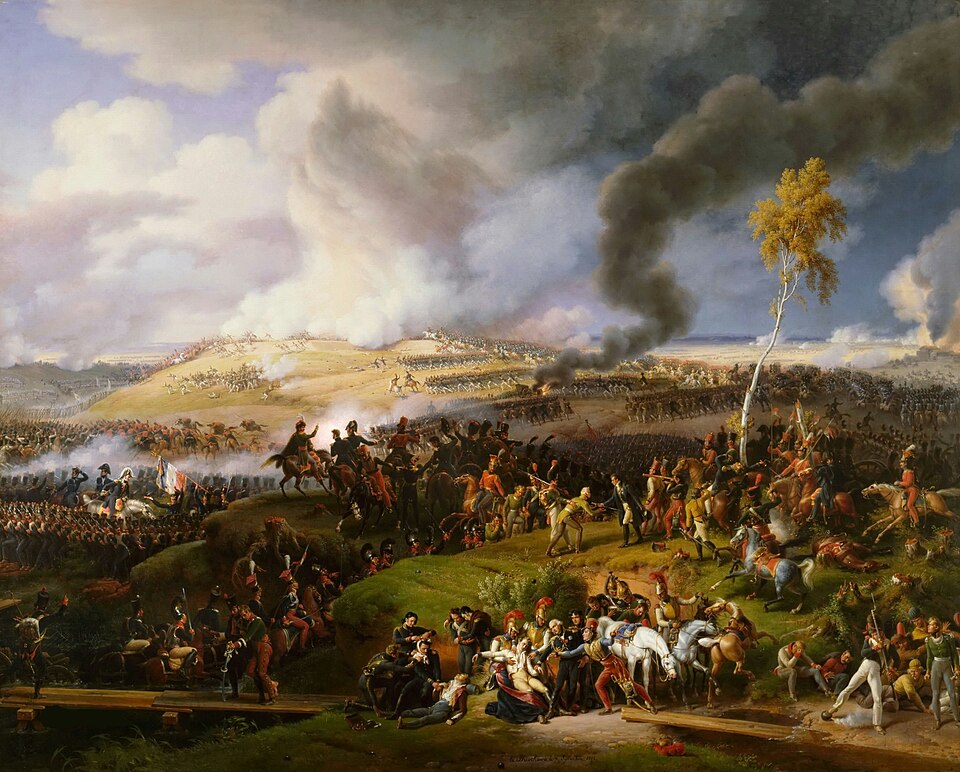
The Battle of Borodino marked the turning point in Napoleon's campaign against Russia. Approximately a quarter of a million soldiers were involved in total, with the French Grande Armée fielding about 130,000 men and 500 guns against roughly 120,000 Russians backed by 600 guns. It became the bloodiest single day of the Napoleonic Wars. Napoleon led the French forces, while the Imperial Russian Army was commanded by General Mikhail Kutuzov. The battle was fought on the outskirts of Moscow, near the village of Borodino, as the French pressed forward after the fall of Smolensk. Napoleon, determined to capture Moscow, hoped to secure a decisive victory that would end the war.
Napoleon's invasion of Russia had begun on 24 June 1812, with his Grande Armée crossing the Niemen River. The Russian army, under the command of Mikhail Barclay de Tolly, initially retreated to delay the French advance. This Fabian strategy allowed the Russians to regroup and prepare for a major confrontation. After the Battle of Smolensk, Tsar Alexander I replaced Barclay with Kutuzov, who had a different plan. Kutuzov believed the French would press on toward Moscow, and he prepared to meet them at Borodino, where the road to the capital was blocked. The location left the Russian center and left flank vulnerable, but there were simply no better positions to be found.
The Russian defensive line at Borodino was built on a field that was too open for effective defense. The line included the Raevsky redoubt and three flèches, or arrow-shaped positions, on the left. These fortifications were meant to slow the French advance and buy time for the Russian army to regroup. The Battle of Shevardino, fought the day before, had already weakened the Russian left flank. The redoubt at Shevardino had been captured by the French, and the Russian army had to retreat to a new position, leaving their left flank exposed to a flanking attack.
As the battle began on 7 September 1812, the French launched a massive assault on the Russian positions. Napoleon ordered a full-scale attack on the Russian center. The French cavalry, led by Marshal Joachim Murat, charged into the Russian lines, while the infantry advanced under the cover of artillery fire. The fighting was brutal, with both sides suffering heavy casualties. The Raevsky redoubt, a key Russian position, was attacked repeatedly, and the French eventually captured it at great cost. Despite the French gains, the Russian army held its ground, and the battle raged throughout the day.
The French and Russian armies clashed in a brutal, chaotic fight that lasted for most of the day. The Russian left flank, already weakened by the Battle of Shevardino, was under constant pressure. The French, led by Murat and Poniatowski, launched repeated assaults on the Russian positions. The Russian defenders, though facing this pressure, fought with determination, and the battle turned into a war of attrition. The French struggled to break through the Russian lines. Kutuzov's army, planning for a defensive battle, was willing to sacrifice men and territory to preserve its forces, with Prince Pyotr Bagration's efforts proving especially effective in blunting the French assaults.
More from History

The Morning Bingham Climbed to Machu Picchu
On a cold July morning in 1911, an American historian scrambled up a jungle-choked ridge above the Urubamba River — and by afternoon, a forgotten Inca citadel would belong to the world.

The Last Half-Hour of the Hindenburg
It was already half a day late, and the public had been told to keep away — but at seven o'clock that evening, the Hindenburg finally turned toward its mooring mast for the last time.

The Last Hours of Pompeii: August 24, 79 AD
By noon it was just another hot day beside the Bay of Naples. By evening, an entire mountain had rewritten the fate of thousands.

The Longest Walk: Mandela's Last Steps to Freedom
After 27 years behind bars, a 71-year-old man had to relearn how to walk out of a prison gate — into a waiting world of cameras, crowds, and a country holding its breath.

The Document Lincoln Signed on the First Day of 1863
On a single January morning, a president's pen would change the legal status of more than three million people — if the ink held and his hand did not shake.

The Day of the Dream: August 28, 1963
Two hundred and fifty thousand people converged on the National Mall that morning — by nightfall, one voice from the steps of the Lincoln Memorial would echo for generations.