The Blue Eye of Siberia: Secrets Beneath Lake Baikal
A lake so old it predates the mountains around it, so deep it hides seven kilometers of sediment beneath its waters — and so mysterious that legends of sunken treasure still cling to its shores.
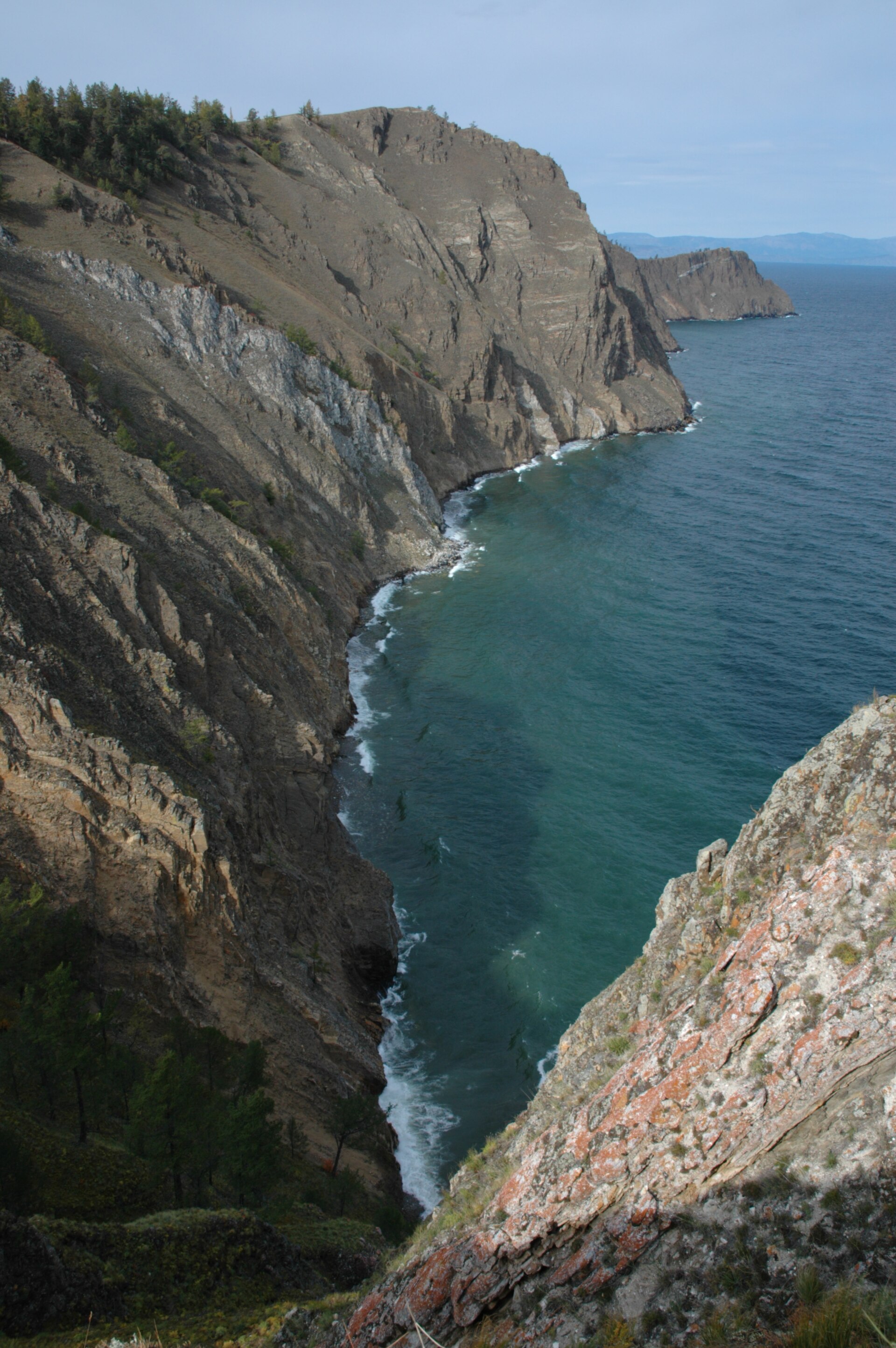
In southern Siberia, between Irkutsk Oblast and the Republic of Buryatia, lies a body of water unlike any other on Earth. Lake Baikal is not merely a lake — it is a scar in the planet's crust, a rift valley slowly tearing apart at a rate of about four millimeters a year. Stretching 636 kilometers long and up to 79 kilometers wide, it covers roughly 31,722 square kilometers, an area slightly larger than Belgium, making it the seventh-largest lake in the world by surface area.
What truly sets Baikal apart is its depth. At 1,642 meters, it is the deepest lake on the planet, plunging so far that its floor sits 1,186.5 meters below sea level. Beneath that floor lies another seven kilometers of accumulated sediment, meaning the true bottom of this ancient rift lies eight to eleven kilometers beneath the surface — the deepest continental rift known to science. This staggering depth gives Baikal its most remarkable distinction: it holds more fresh water than any other lake on Earth, an estimated 23,615 cubic kilometers, or roughly 20 percent of all the unfrozen fresh water on the planet — more than the five Great Lakes of North America combined.
Baikal's age is equally extraordinary. Geologists date it to between 25 and 30 million years old, making it the oldest lake in the world. Its formation began in the Oligocene epoch, likely in fragmented stages, before taking its current vast shape during the Pliocene. Far from being a dormant relic, the lake continues to grow. Researchers at the Baikal Center have compared its expansion to the rate at which Africa and South America once drifted apart, describing Baikal as, in essence, an ocean still being born.
The lake sits within one of the most seismically active regions in Eurasia. Thousands of small earthquakes occur here every year, and hot springs dot the surrounding landscape. Toward the end of the Pliocene, this rifting intensified further, driven by rising mantle material and the tectonic stress generated by the ongoing collision between Asia and India.
Despite this violent geological setting, Baikal supports an astonishing web of life. Its waters are relatively warm compared to the harsh Siberian climate around them — winter air temperatures average around minus six degrees Celsius, while August brings highs near eleven degrees. The lake freezes each January and does not fully thaw until late May. In some places, hydrothermal vents warm the water to as much as 50 degrees Celsius. Baikal hosts more than 320 species of birds, a mammal species, countless fish, and the Baikal seal, or Pusa sibirica — one of only two freshwater seal populations in the world, the other found in Lake Ladoga. Many of Baikal's species exist nowhere else on Earth.
More from Treasures

The Legend of the Nazi Gold Train
Somewhere beneath the hills of Poland, rumor insists, a train loaded with looted treasure vanished into a tunnel and was never seen again. The story survives because the plunder behind it was terrifyingly real.

The Treasure List Carved in Copper
While every other Dead Sea Scroll was written on parchment or papyrus, one was hammered into metal — a list of buried gold and silver that no one has ever found.

The Diamond That Vanished for a Century
For decades, treasure hunters and novelists spun theories about a lost 137-carat gem — sold, recut, melted into legend. It was sitting in a Quebec bank vault the entire time.

Gold, Ghosts, and the Mountain That Keeps Its Secret
For over a century, treasure hunters have vanished into a jagged Arizona range chasing a fortune that may never have existed at all. What they left behind was not gold, but one of America's most enduring legends.

The King Who Buried a River
When Rome finally cornered the Dacian king, it wasn't a sword that gave up his secret — it was a traitor's whisper about a riverbed.

The Fortune Dutch Schultz Took to His Grave
He asked New York's mob bosses for permission to kill a federal prosecutor — and when they said no, he disobeyed them anyway. It was a decision that would end his life and leave behind a fortune that has never been found.