The Boston Tea Party: A Spark of Revolution
On a cold December night in 1773, a group of masked figures boarded a ship and dumped over 300 chests of tea into Boston Harbor. What began as a protest against taxation would ignite a revolution.
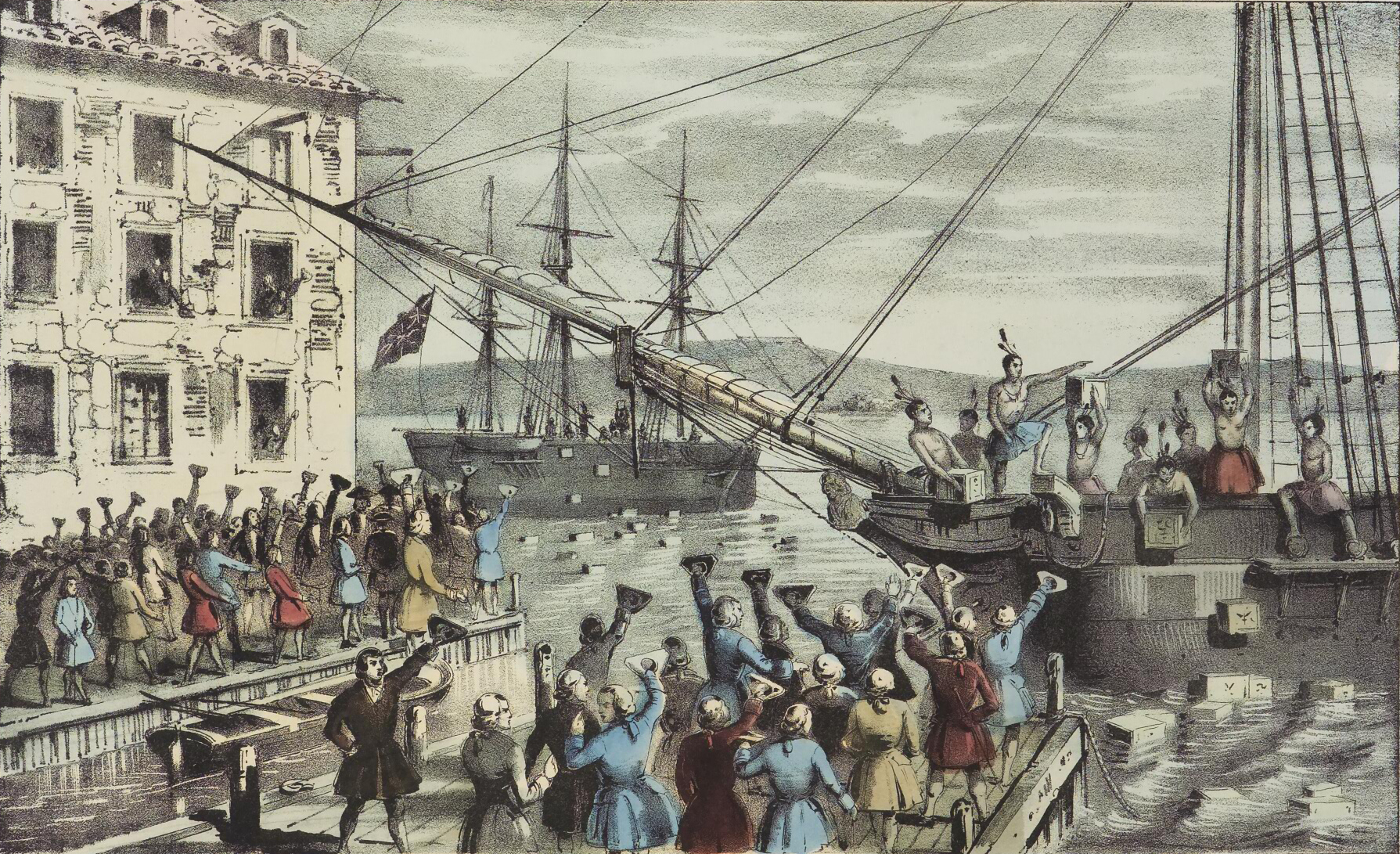
The Boston Tea Party was more than just a protest—it was a bold act of defiance against British rule. On December 16, 1773, members of the Sons of Liberty, disguised as Native Americans, boarded the Dartmouth and dumped 340 chests of tea into the harbor. This act of resistance was a direct response to the Tea Act of 1773, which granted the East India Company a monopoly on tea sales in the colonies. The British government viewed this as treason, setting the stage for further conflict.
The Tea Act had been passed to help the East India Company, which was struggling with massive debts from years of tea imports. By allowing the company to sell tea in the colonies without paying full taxes, the British government hoped to ease its financial burden. However, this act only deepened the colonists’ frustration. The Townshend Acts, which had already imposed taxes on goods like tea, were seen as an affront to their rights as British citizens. The colonists had no representation in Parliament, and they resented being taxed without it.
The protest was not spontaneous; it was carefully planned. The Sons of Liberty, a group of patriot leaders, had long been organizing resistance against British policies. They saw the Tea Act as a clear violation of their rights and a threat to their autonomy. The decision to dump the tea was symbolic, a way to show that they would not accept British authority without representation. The event quickly became a rallying point for colonial resistance, uniting people across the Thirteen Colonies.
The British response was swift and severe. They passed the Intolerable Acts in 1774, which closed Boston’s port and suspended self-government in Massachusetts. These measures only intensified the colonists’ anger, leading to more protests and the formation of the First Continental Congress. The Boston Tea Party had become a catalyst for a larger movement, one that would eventually lead to the American Revolution.
The legacy of the Boston Tea Party extended far beyond the harbor. It became a symbol of resistance against tyranny and a reminder of the power of collective action. The event was initially known as 'The Destruction of the Tea,' but the name 'Boston Tea Party' gained popularity in the early 19th century. The irony of the name—combining the location, the commodity, and the nature of the event—captured the spirit of the protest.
More from History

The Morning Bingham Climbed to Machu Picchu
On a cold July morning in 1911, an American historian scrambled up a jungle-choked ridge above the Urubamba River — and by afternoon, a forgotten Inca citadel would belong to the world.

The Last Half-Hour of the Hindenburg
It was already half a day late, and the public had been told to keep away — but at seven o'clock that evening, the Hindenburg finally turned toward its mooring mast for the last time.

The Last Hours of Pompeii: August 24, 79 AD
By noon it was just another hot day beside the Bay of Naples. By evening, an entire mountain had rewritten the fate of thousands.

The Longest Walk: Mandela's Last Steps to Freedom
After 27 years behind bars, a 71-year-old man had to relearn how to walk out of a prison gate — into a waiting world of cameras, crowds, and a country holding its breath.

The Document Lincoln Signed on the First Day of 1863
On a single January morning, a president's pen would change the legal status of more than three million people — if the ink held and his hand did not shake.

The Day of the Dream: August 28, 1963
Two hundred and fifty thousand people converged on the National Mall that morning — by nightfall, one voice from the steps of the Lincoln Memorial would echo for generations.