The Bridge Experts Said Could Never Be Built
Engineers swore the currents were too violent, the winds too fierce, and the cost too vast. Yet a poet-engineer with drawings of a Bering Strait railroad bridge decided otherwise.
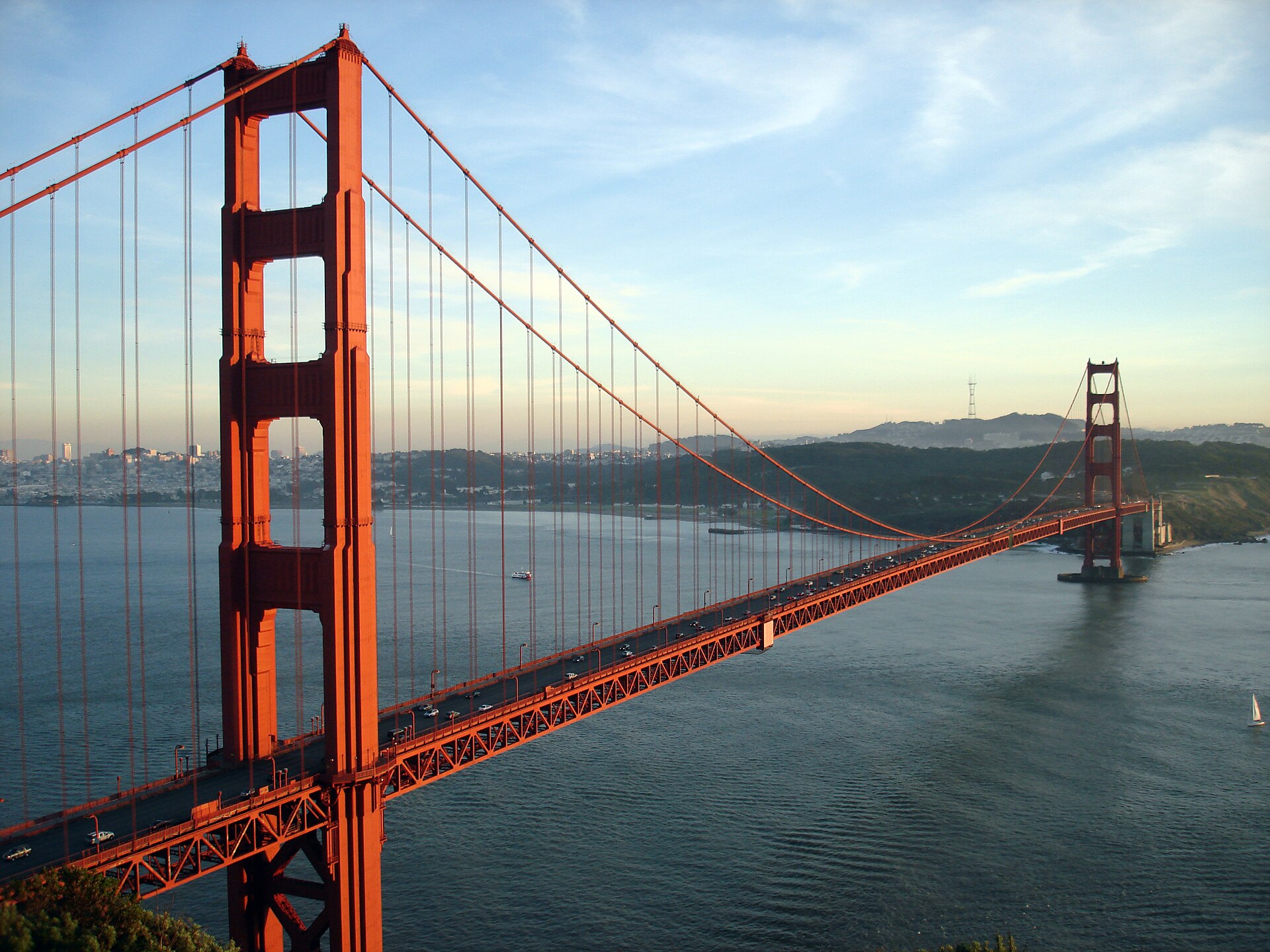
For decades, the only way across the mile-wide strait linking San Francisco Bay to the Pacific was by ferry. Service had begun as early as 1820, and by the 1920s the Southern Pacific-Golden Gate Ferries had become the largest ferry operation in the world, carrying automobiles across in about twenty minutes for a dollar a car. But San Francisco, the largest American city still dependent on boats for its connections, was growing slower than the rest of the country. Without a fixed link to the communities around the bay, its future felt stalled.
The idea of a bridge across the Golden Gate strait was not new, but most experts dismissed it as impossible. The strait was 6,700 feet (2,000 metres) wide, gripped by strong swirling tides, with water 372 feet (113 metres) deep at its center and frequent punishing winds. San Francisco's own City Engineer estimated a bridge would cost $100 million — an impossible sum — and wondered if anyone could do it cheaper.
One engineer answered the call: Joseph Strauss, an ambitious builder and poet who had once designed, as a graduate thesis, a 55-mile railroad bridge across the Bering Strait. Strauss had built some 400 drawbridges, mostly modest and inland, nothing near this scale. His first sketches showed a massive cantilever on each side connected by a central suspension span, which he claimed could be built for just $17 million. Eventually a full suspension-bridge design was adopted, drawing on the latest advances in engineering and metallurgy, with contributions from Leon Moisseiff, Irving Morrow, and Charles Ellis.
Strauss spent more than a decade fighting for the project across Northern California. The War Department worried a bridge would obstruct shipping; the Navy feared a collision or sabotage could seal off one of its key harbors. Unions demanded guarantees for local labor. Southern Pacific Railroad, protecting its lucrative ferry business, sued to stop the project and triggered a boycott of its own ferries in retaliation. Still, in 1923 the California legislature passed the Golden Gate Bridge and Highway District Act, creating a special district to design, finance, and build the crossing — and the name first proposed back in 1917 by Strauss and city engineer M.M. O'Shaughnessy became official.
Construction ran from January 5, 1933, to May 27, 1937, under Strauss's often contentious leadership. It set records at nearly every turn: the tallest tower at 227 meters, the longest span at 2,332 meters, the thickest cables ever made at 92 centimeters, and the largest underwater foundations ever built in such violent currents. The project cost $35 million and consumed 887,000 tons of material, held together by 600,000 rivets — the very last one driven in solid gold. Remarkably, it was built during the depths of unemployment and hunger of the Great Depression.
More from Architecture

Stonehenge: The Stones That Refuse to Explain Themselves
For more than 4,500 years, a ring of leaning giants has watched the sun rise and set on the same two days each year — and no one alive can say for certain why.

The Dome That Refused to Fall
Two thousand years ago, Roman engineers poured a dome so vast that no one has dared build a bigger one from unreinforced concrete since. It still stands, open to the sky.

A Minaret Rising Over Kingsland Road
On a busy London street better known for shops and buses, the tallest minaret in Britain quietly reaches into the sky. Its story began not in Sinan's sixteenth-century Istanbul, but in 1990s Hackney.

The Bridge That Was Killed Twice
For 427 years it arched over the Neretva like a stone rainbow. Then, in a matter of days in 1993, it simply ceased to exist.

Hoover Dam: The Concrete That Tamed a River
In the scorched depths of Black Canyon, thousands of men built the largest concrete structure the world had ever seen — and finished it two years early, at a cost of over a hundred lives.

Neuschwanstein: The Castle Built for a Ghost
A king who despised his own palace built the most famous fairy-tale castle on earth — and died before he ever truly lived in it.