The Cathedral That Refused to Be Finished
For 144 years, one church in Barcelona has been rising stone by stone, funded not by kings but by strangers' donations — and its architect never lived to see even a quarter of it built.
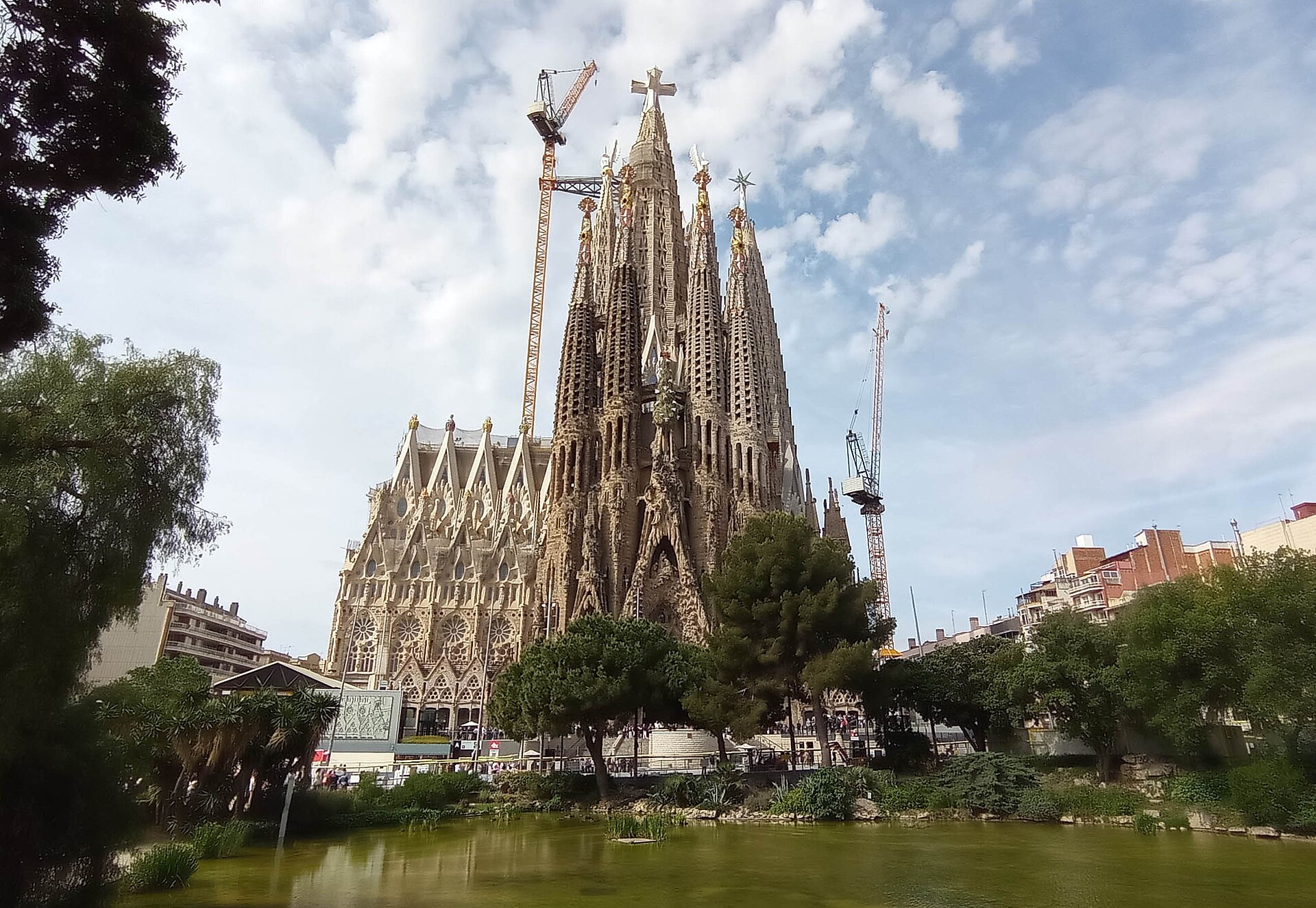
On 19 March 1882, in Barcelona's Eixample district, workers broke ground on a church that its founder, bookseller José María Bocabella, imagined as an 'expiatory temple' — a building funded entirely by the donations of the faithful, meant to counter a growing rejection of the Catholic Church. Bocabella had returned from a trip to the Vatican in 1872 inspired by the basilica at Loreto. The first architect, Francisco de Paula del Villar, envisioned a conventional Gothic revival church and completed the apse crypt before resigning in 1883.
That resignation changed everything. Antoni Gaudí took over, first working on the project in November 1883, though he was not formally appointed Architect Director until 28 March 1884. He discarded Villar's conventional plan and reimagined the church entirely, fusing Gothic structure with the flowing, organic forms of Art Nouveau. Gaudí devoted the rest of his life to the project. He is said to have remarked, when asked about its glacial pace, that 'my client is not in a hurry' — a wry nod to the fact that he was, after all, building for God.
Gaudí died in 1926, struck by a tram, having seen only between fifteen and twenty-five percent of his vision realized. He is buried in the church's own crypt. His disciple Domènec Sugrañes i Gras carried the work forward, but history intervened brutally: in July 1936, during the Spanish Civil War, anarchists from the Iberian Anarchist Federation set fire to the crypt and broke into Gaudí's workshop, destroying much of his original plans and models.
What survived was fragments — burned drawings, photographs, plaster models pieced back together. In 1939, Francesc de Paula Quintana took over site management, rebuilding the design from what could be salvaged and reconstructed. Progress resumed fitfully through the 1950s, continued by architects Isidre Puig Boada, Lluís Bonet i Garí, and Francesc Cardoner, with lighting designed by Carles Buïgas. Jordi Bonet i Armengol, son of Lluís Bonet, led the project until 2012 and began introducing computers into the design process in the 1980s.
Those computers changed the project's fate. Computer-aided design and computerised numerical control milling allowed stone to be shaped off-site with precision no hand-carver could match in the 20th century. The central nave vaulting was finished in 2000, and construction passed its midpoint in 2010 — the same year Pope Benedict XVI consecrated the church and declared it a basilica. Parts of it, the Nativity façade and crypt, had already been named a UNESCO World Heritage Site in 2005 as part of the 'Works of Antoni Gaudí'.
More from Architecture

Stonehenge: The Stones That Refuse to Explain Themselves
For more than 4,500 years, a ring of leaning giants has watched the sun rise and set on the same two days each year — and no one alive can say for certain why.

The Dome That Refused to Fall
Two thousand years ago, Roman engineers poured a dome so vast that no one has dared build a bigger one from unreinforced concrete since. It still stands, open to the sky.

A Minaret Rising Over Kingsland Road
On a busy London street better known for shops and buses, the tallest minaret in Britain quietly reaches into the sky. Its story began not in Sinan's sixteenth-century Istanbul, but in 1990s Hackney.

The Bridge That Was Killed Twice
For 427 years it arched over the Neretva like a stone rainbow. Then, in a matter of days in 1993, it simply ceased to exist.

Hoover Dam: The Concrete That Tamed a River
In the scorched depths of Black Canyon, thousands of men built the largest concrete structure the world had ever seen — and finished it two years early, at a cost of over a hundred lives.

Neuschwanstein: The Castle Built for a Ghost
A king who despised his own palace built the most famous fairy-tale castle on earth — and died before he ever truly lived in it.