The City America Forgot Beneath Its Grass
Long before Paris or London rivaled it in size, a metropolis rose on the Mississippi floodplain, built entirely by hand — then vanished so completely that its own name was lost.
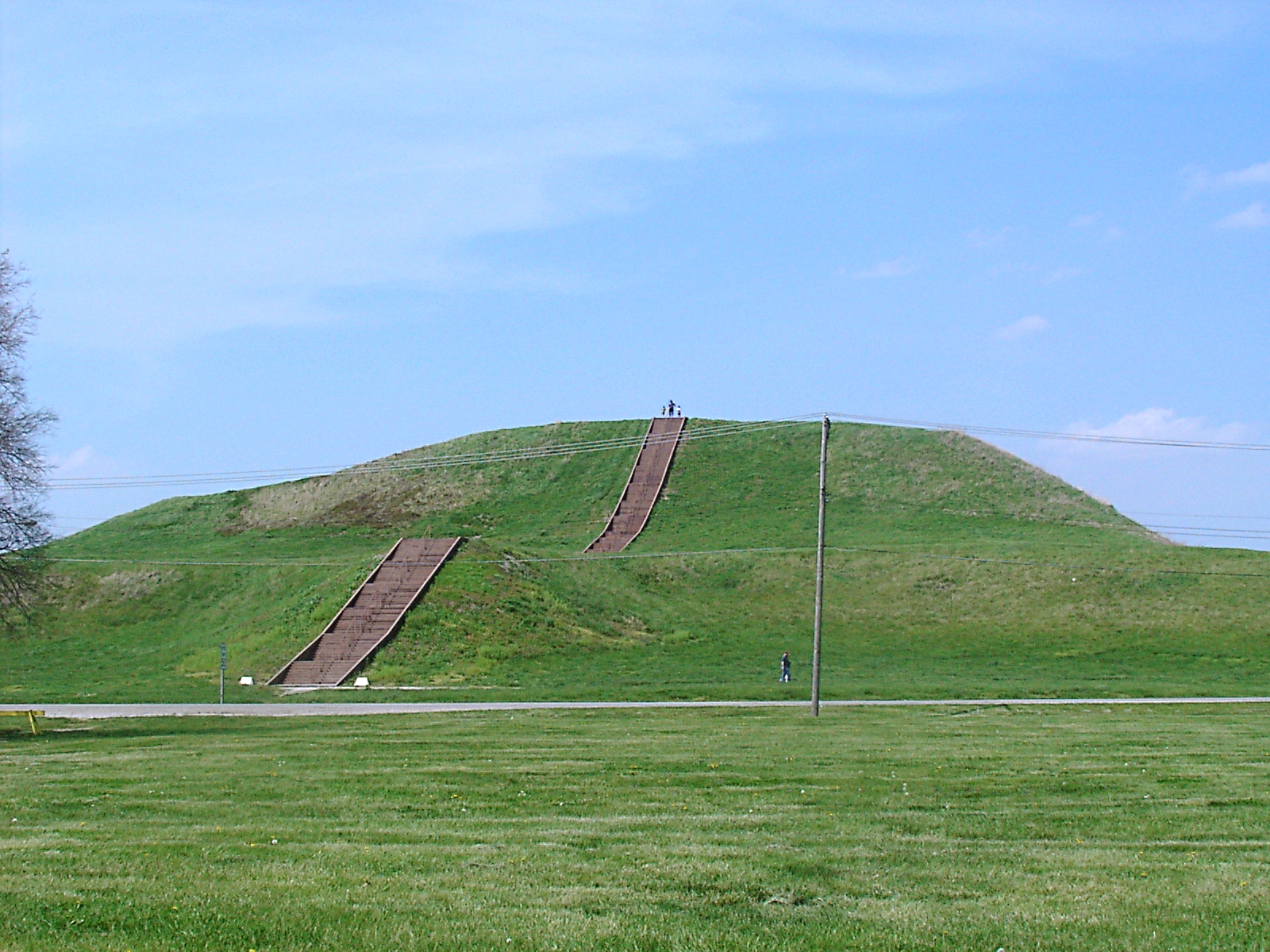
Across the river from present-day St. Louis, in southwestern Illinois, lies a grid of earthen mounds so vast that early European settlers assumed they must have been made by some vanished race of giants, not the ancestors of the people they encountered. This is Cahokia, and at its height around 1100 AD, it was the largest urban settlement north of Mexico's great pre-Columbian cities — a city whose true name has been lost to time.
The roots of Cahokia stretch back further than its famous peak. Evidence suggests occupation as early as 1200 BCE, but the site now recognized as Cahokia was properly settled around 600 CE during the Late Woodland period. Mound building began in earnest around the 9th century, as small farming settlements of 50 to 100 people, occupied for only 5 to 10 years at a time, slowly gave way to something larger and more permanent.
By the end of the 10th century, these scattered villages began aggregating into bigger communities, some organized around cosmological principles emphasizing the cardinal directions. A nucleated settlement sprawling across 35 to 70 hectares had emerged at Cahokia proper by the late 900s CE, home to a few thousand people who farmed maize alongside older crops from the Eastern Agricultural Complex.
Then, around 1050 CE, something remarkable happened — archaeologists call it Cahokia's 'Big Bang.' In a burst of construction, three urban precincts — St. Louis, East St. Louis, and Cahokia itself — rose almost simultaneously. An ordered city grid, aligned north along the Grand Plaza and the Rattlesnake Causeway, was imposed atop the older Woodland settlements. Pottery styles and architecture homogenized across the region, erasing older local distinctions in favor of a unified urban culture.
At its apex, Cahokia covered about 6 square miles and contained roughly 120 earthworks of varying sizes and purposes, home to between 15,000 and 20,000 people, rivaling or exceeding the population of London at the time. Houses were built of clay and wood. The city sat at a strategic crossroads near the confluence of the Mississippi, Missouri, and Illinois Rivers, linking it by trade to the Great Lakes in the north and the Gulf Coast in the south. Copper, Mill Creek chert, shark teeth, and lightning whelk shells moved along these trade networks into and out of the city.
More from History

The Morning Bingham Climbed to Machu Picchu
On a cold July morning in 1911, an American historian scrambled up a jungle-choked ridge above the Urubamba River — and by afternoon, a forgotten Inca citadel would belong to the world.

The Last Half-Hour of the Hindenburg
It was already half a day late, and the public had been told to keep away — but at seven o'clock that evening, the Hindenburg finally turned toward its mooring mast for the last time.

The Last Hours of Pompeii: August 24, 79 AD
By noon it was just another hot day beside the Bay of Naples. By evening, an entire mountain had rewritten the fate of thousands.

The Longest Walk: Mandela's Last Steps to Freedom
After 27 years behind bars, a 71-year-old man had to relearn how to walk out of a prison gate — into a waiting world of cameras, crowds, and a country holding its breath.

The Document Lincoln Signed on the First Day of 1863
On a single January morning, a president's pen would change the legal status of more than three million people — if the ink held and his hand did not shake.

The Day of the Dream: August 28, 1963
Two hundred and fifty thousand people converged on the National Mall that morning — by nightfall, one voice from the steps of the Lincoln Memorial would echo for generations.