The Cloth That Crowned a God
Striped linen, folded just so, turned a mortal skull into the mask of a living god. Few objects have carried so much power with so little material.
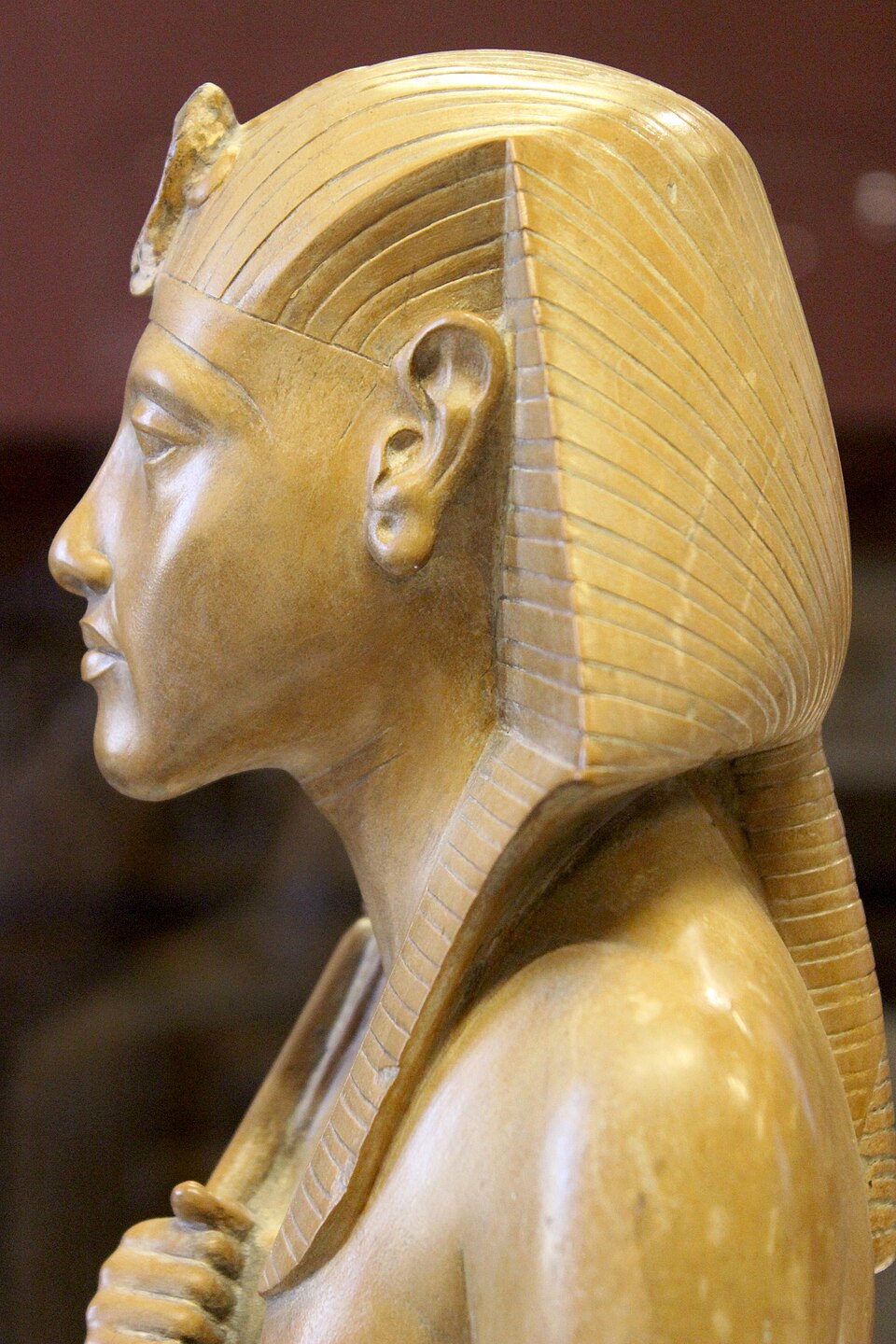
Long before gold or gems, there was cloth. Somewhere in the earliest days of pharaonic Egypt, a piece of striped fabric was folded and fitted around a ruler's head, and with that simple act, a tradition began that would outlast dynasties, invasions, and even the religion that produced it.
The nemes was not a crown in the way we usually imagine crowns — no rigid metal, no jewels fused into a permanent shape. It was a headcloth, striped, draped over the entire crown of the head and down behind it, covering the nape of the neck and sometimes trailing a little further down the back. What made it instantly recognizable, though, were the lappets: two broad flaps of fabric that fell forward, framing the face, hanging down behind the ears and resting in front of both shoulders.
The earliest known depiction of the nemes appears on a statue of Netjerikhet — better known to history as Djoser, builder of the Step Pyramid at Saqqara. That single carved image marks the beginning of a visual language that Egyptian rulers would return to for thousands of years afterward, across shifting capitals, foreign conquests, and changing gods.
The nemes was flexible in more than fabric. It could stand alone as a symbol of kingship, or it could be combined with other regalia to intensify its meaning. At Abu Simbel, the colossal statues of Ramesses II show the nemes worn beneath the double crown — the pschent, which itself fused the white crown of Upper Egypt (the hedjet) with the red crown of Lower Egypt (the deshret). Layered together, cloth and crown announced not just kingship, but the unification of two lands into one ruler's authority.
Unlike a solid crown that might be commissioned once and handed down, the nemes was cloth — practical, replicable, endlessly re-created for statue after statue, relief after relief. That very reproducibility helped cement it as an artistic shorthand. Anyone looking at a striped, lappet-framed head in stone or paint would know instantly: this figure is a pharaoh, divine ruler of Egypt, whether the statue was carved in Djoser's era or wrought centuries later under Ptolemaic rule, where Greek-descended kings still had themselves rendered in the nemes to claim pharaonic legitimacy.
More from Archaeology

The Bronze Disc That Rewrote the Sky
Two looters with a metal detector dug up something illegal, invisible in value, and older than Stonehenge's final stones — a map of the heavens buried for over three thousand years.

The Faceless Women of the Ice Age
Long before writing, before cities, before the wheel, someone carved a woman's body into stone and ivory — and left no name, no face, no explanation.

The Pebble That Might Be Human
A palm-sized stone found on a Moroccan riverbank may be humanity's oldest attempt to see itself — or simply a trick of erosion.

The Crown That Vanished: Deshret and the Red Land
A crown worn by kings for three thousand years has never once been found in a tomb — not one. So where did it go?

The Face That Traveled Between Empires
A farm worker's shovel struck stone in 1897 and unearthed a face so striking it would be sold to France, seized as war booty, and finally traded back for a Velázquez.

The Boy in the Dark Tunnel
A schoolboy fell into black water inside an ancient tunnel and surfaced with his fingers brushing letters no one had noticed for 2,600 years.