The Cup That Was Never Found
A silent knight, a bleeding lance, a girl carrying something so radiant no one dares name it — from that unfinished scene, a legend was born that has haunted seekers for eight centuries.
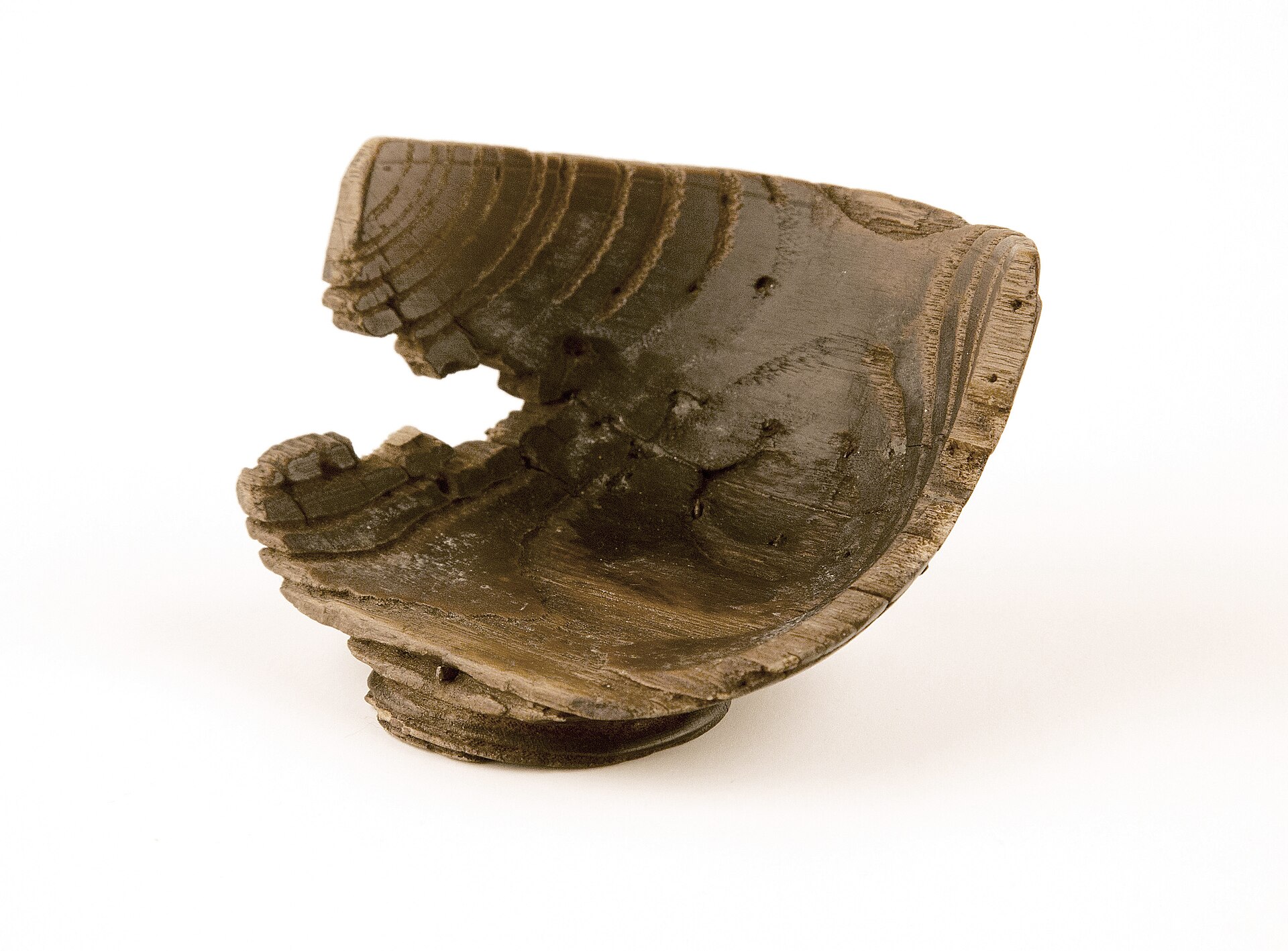
Around 1190, a French poet named Chrétien de Troyes wrote an unfinished chivalric romance he called Perceval, the Story of the Grail, composed sometime between 1180 and 1191. He claimed to be working from a source book given to him by his patron, Count Philip of Flanders. In it, a young knight named Perceval dines in the mysterious castle of the Fisher King and witnesses a strange procession: a young man carrying a bleeding lance, two boys with candelabras, and finally a beautiful girl bearing an elaborately decorated object Chrétien calls simply a 'graal' — at this stage nothing more than a serving dish. Perceval, warned earlier against talking too much, stays silent through the whole spectacle, a choice whose consequences the unfinished poem never fully resolves.
That single, unexplained object would become one of literature's most enduring mysteries. Chrétien never says what the grail truly is or why it matters — its marvelous nature is left deliberately vague. But the story inspired a wave of continuations, translations and reinterpretations across the late twelfth and early thirteenth centuries, each writer reshaping the grail according to their own vision.
Wolfram von Eschenbach, writing his German epic Parzival, transformed the grail entirely: in his telling it is not a cup or dish at all, but a gemstone, linked to the fall of the angels. Other adaptations went further afield still — the Welsh romance Peredur son of Efrawg, a loose retelling of Chrétien's tale, dispenses with the grail altogether, replacing it with a platter bearing a kinsman's severed, bloody head. In Diu Crône, a German poem by Heinrich von dem Türlin, it is not Perceval but Gawain who achieves the grail.
The decisive turn toward Christian meaning came from Robert de Boron. In his Joseph d'Arimathie, he identified the grail explicitly as the vessel from Jesus's Last Supper — the same cup Joseph of Arimathea later used to catch Christ's blood at the crucifixion. From this point on, the Holy Grail became inseparable from the legend of the Holy Chalice. This Christianized version was carried forward and vastly expanded in the Lancelot-Grail cycle, also called the Vulgate Cycle.
That cycle introduced a new hero altogether: Galahad, son of Lancelot. In the Vulgate's Queste del Saint Graal, it is Galahad — not Perceval, not Gawain — who finally achieves the Grail, his purity setting him apart from the more human, flawed knights of Arthur's court, including his own father, whose earthly love for Guinevere stood in stark contrast to Galahad's divine calling. The story was later rewritten again in the Post-Vulgate Cycle and other derivative works, and in the fifteenth century it reached English readers through Thomas Malory's Le Morte d'Arthur, cementing the Grail quest as a centerpiece of Arthurian legend in the English-speaking world.
More from Treasures

The Legend of the Nazi Gold Train
Somewhere beneath the hills of Poland, rumor insists, a train loaded with looted treasure vanished into a tunnel and was never seen again. The story survives because the plunder behind it was terrifyingly real.

The Treasure List Carved in Copper
While every other Dead Sea Scroll was written on parchment or papyrus, one was hammered into metal — a list of buried gold and silver that no one has ever found.

The Diamond That Vanished for a Century
For decades, treasure hunters and novelists spun theories about a lost 137-carat gem — sold, recut, melted into legend. It was sitting in a Quebec bank vault the entire time.

Gold, Ghosts, and the Mountain That Keeps Its Secret
For over a century, treasure hunters have vanished into a jagged Arizona range chasing a fortune that may never have existed at all. What they left behind was not gold, but one of America's most enduring legends.

The King Who Buried a River
When Rome finally cornered the Dacian king, it wasn't a sword that gave up his secret — it was a traitor's whisper about a riverbed.

The Fortune Dutch Schultz Took to His Grave
He asked New York's mob bosses for permission to kill a federal prosecutor — and when they said no, he disobeyed them anyway. It was a decision that would end his life and leave behind a fortune that has never been found.