The Dawn of a New Era
In the 18th century, a quiet revolution began in a corner of England, reshaping the world in ways that would never be the same again.
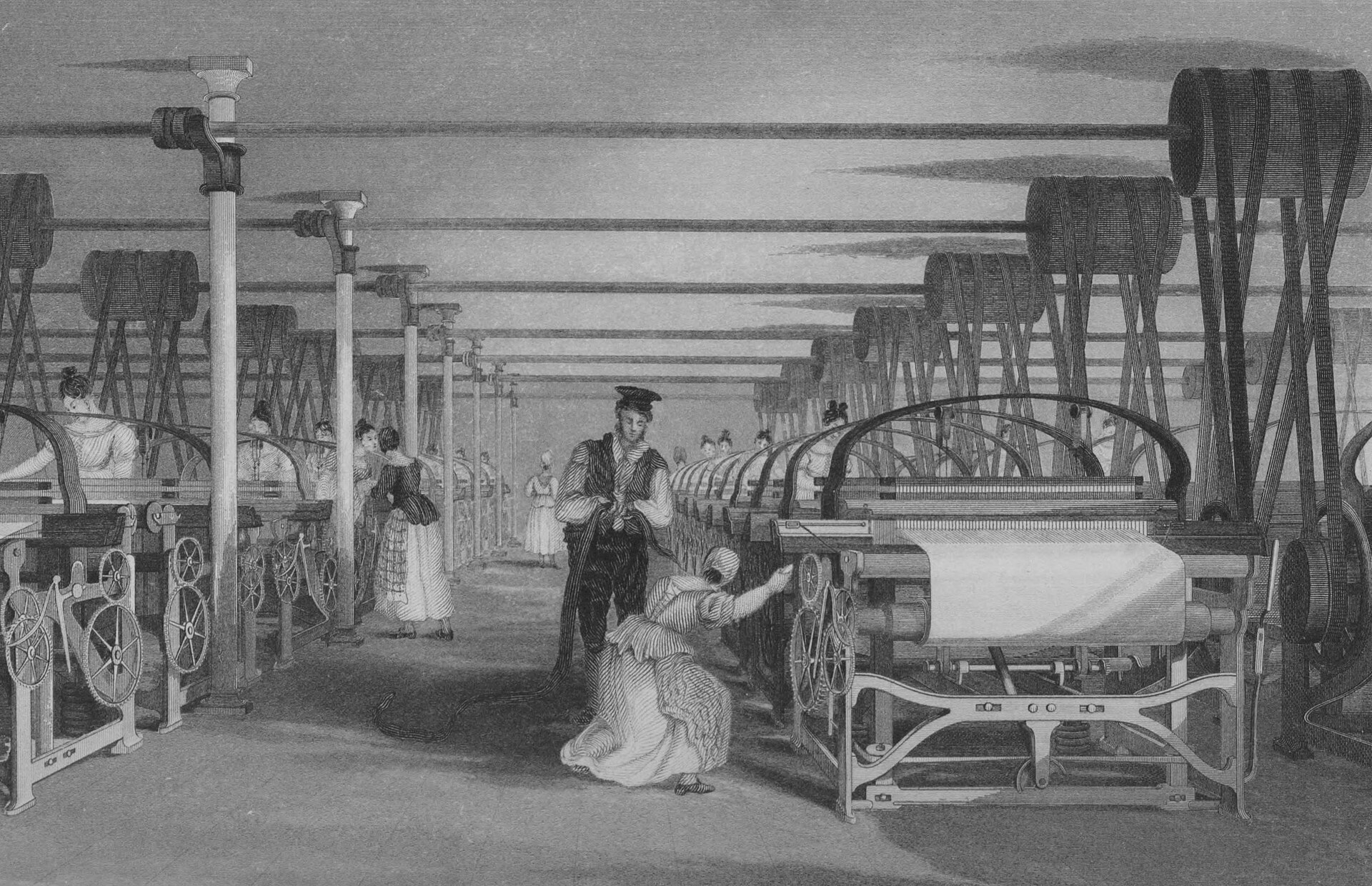
The Industrial Revolution started in Britain around 1760, transforming hand production into mechanized factories. This shift marked the beginning of a new era, one that would redefine economies and societies across the globe. The first major industry to embrace these changes was textiles, where machines multiplied output and reshaped labor patterns. Cotton spinning and weaving, once done by hand, now relied on water and steam power, leading to unprecedented growth in productivity and employment.
The revolution was not just about machines; it was about power. The efficiency of steam engines improved dramatically, with new designs using only a fraction of the fuel of their predecessors. The adaptation of stationary steam engines to rotary motion made them suitable for industrial uses, while the high power-to-weight ratio of the high-pressure engine made it suitable for transportation. Steam power underwent a rapid expansion after 1800, becoming indispensable for industrial growth.
Iron production also saw a dramatic transformation. The switch from charcoal to coke in blast furnaces reduced costs and increased output, and allowed larger furnaces that brought economies of scale. This innovation allowed for the creation of stronger and more durable materials, essential for building the machines and infrastructure of the new industrial age. The development of the cast iron blowing cylinder and the puddling process further revolutionized iron-making, making it faster and more cost-effective.
The spread of the Industrial Revolution was not immediate. It began in Britain and slowly moved to continental Europe and the United States by the early 19th century. The adoption of mechanized textile spinning in the 1780s and the rapid growth in steam power and iron production after 1800 marked key turning points. These advancements laid the groundwork for the Second Industrial Revolution, which would bring even more technological breakthroughs in the late 19th century.
The impact of the Industrial Revolution was profound. It led to an unprecedented rise in population and improved living standards in the Western world, though the benefits were not evenly distributed. While some saw it as a period of immense progress, others lamented the harsh conditions of factory work and the displacement of traditional crafts. The revolution also changed the landscape of manufacturing, shifting production from China and India to North America and Western Europe.
More from History

The Morning Bingham Climbed to Machu Picchu
On a cold July morning in 1911, an American historian scrambled up a jungle-choked ridge above the Urubamba River — and by afternoon, a forgotten Inca citadel would belong to the world.

The Last Half-Hour of the Hindenburg
It was already half a day late, and the public had been told to keep away — but at seven o'clock that evening, the Hindenburg finally turned toward its mooring mast for the last time.

The Last Hours of Pompeii: August 24, 79 AD
By noon it was just another hot day beside the Bay of Naples. By evening, an entire mountain had rewritten the fate of thousands.

The Longest Walk: Mandela's Last Steps to Freedom
After 27 years behind bars, a 71-year-old man had to relearn how to walk out of a prison gate — into a waiting world of cameras, crowds, and a country holding its breath.

The Document Lincoln Signed on the First Day of 1863
On a single January morning, a president's pen would change the legal status of more than three million people — if the ink held and his hand did not shake.

The Day of the Dream: August 28, 1963
Two hundred and fifty thousand people converged on the National Mall that morning — by nightfall, one voice from the steps of the Lincoln Memorial would echo for generations.