The Dawn of a New Japan
In 1868, Japan stood at a crossroads. The centuries-old rule of the shoguns was crumbling, and a new era was about to begin.
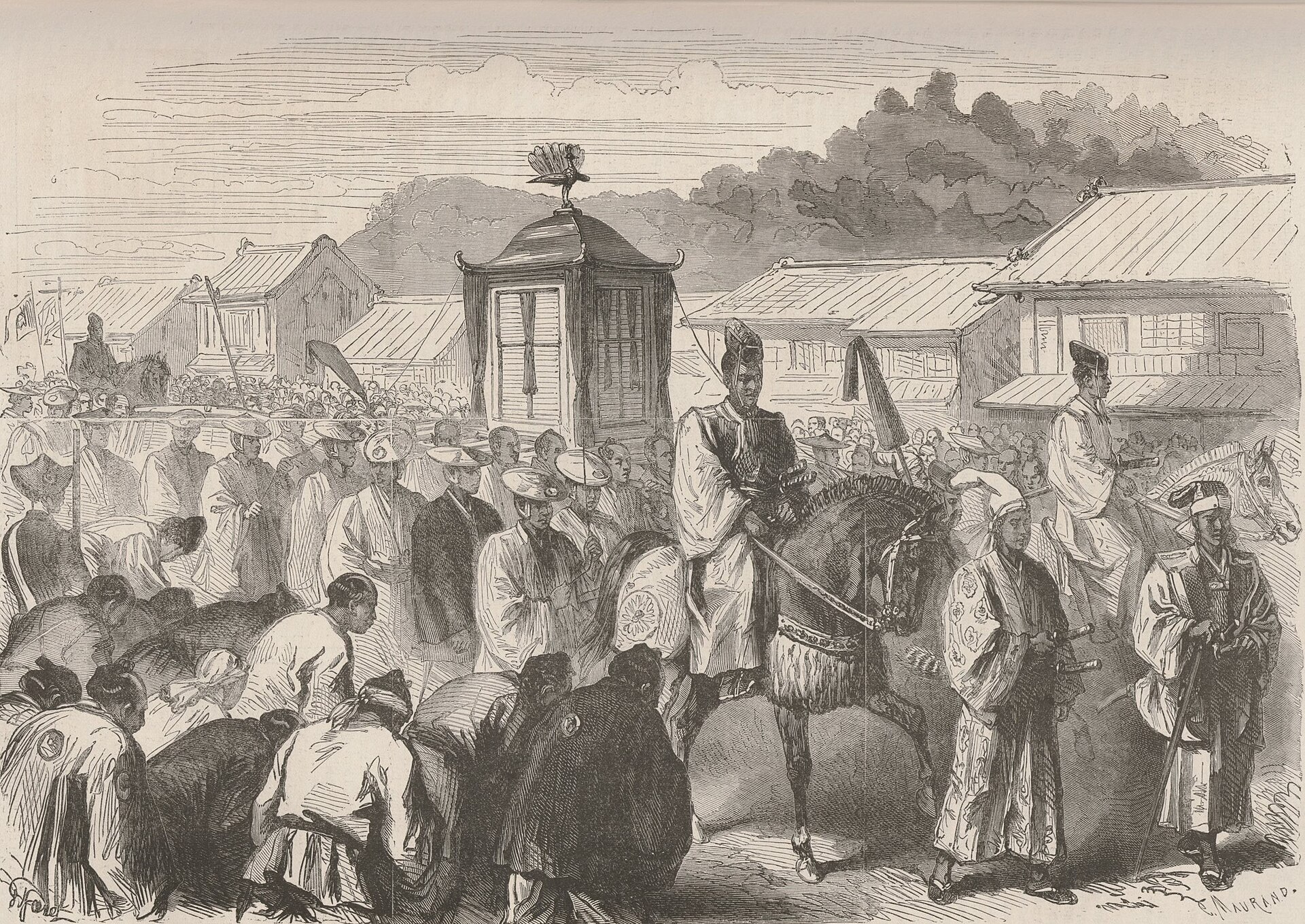
The Meiji Restoration marked a pivotal moment in Japanese history, when imperial rule was restored after centuries of shogunate government. This event, which took place in the last third of the 19th century, transformed Japan into a modern nation-state. The restoration was not just a political shift but a sweeping reorganization of society, driven by a desire to modernize and strengthen Japan against foreign encroachment.
The Tokugawa shogunate, which had ruled Japan for over two centuries, faced mounting challenges. Economic and political difficulties were compounded by the encroachment of foreign powers, most dramatically the arrival of the Perry Expedition from the United States, led by Commodore Matthew Perry. Under the unequal treaties that followed, Japan was forced to open to the West, undermining the shogunate's policy of isolation, known as sakoku, and calling into question its ability to protect Japanese sovereignty.
As Japan grappled with these changes, a deep ideological divide emerged within the samurai class. Some samurai, known as shishi, became devoted to the Emperor, believing that Japan's future lay in expelling the foreign intruders. This movement, rooted in a revival of Shinto and a growing interest in Dutch studies, challenged the old feudal order. The Mito School, which emphasized national learning and focused attention on the Emperor and Shinto, played a key role in shaping this new vision for Japan.
The samurai, once the elite warrior class, found themselves at a crossroads. The rigid social hierarchy of the Edo period, which placed the Emperor and his court at the top, with the shogun and the samurai below, was being questioned. Many lower and middle-ranking samurai, frustrated by the limits their inherited positions placed on advancement, embraced the idea of a new Japan. This shift was not just about power but about identity—what it meant to be Japanese in a rapidly changing world.
The restoration culminated in a dramatic event on January 3, 1868, when Emperor Meiji declared political power restored to the Imperial House. This act returned practical authority to an Emperor whose role had been largely ceremonial under the shogunate. The goals of the restored government were expressed by the new emperor in the Charter Oath. Led by reformers, the new government set out to modernize the country, and Japan rapidly industrialized while adopting Western ideas, production methods, and technology.
More from History

The Morning Bingham Climbed to Machu Picchu
On a cold July morning in 1911, an American historian scrambled up a jungle-choked ridge above the Urubamba River — and by afternoon, a forgotten Inca citadel would belong to the world.

The Last Half-Hour of the Hindenburg
It was already half a day late, and the public had been told to keep away — but at seven o'clock that evening, the Hindenburg finally turned toward its mooring mast for the last time.

The Last Hours of Pompeii: August 24, 79 AD
By noon it was just another hot day beside the Bay of Naples. By evening, an entire mountain had rewritten the fate of thousands.

The Longest Walk: Mandela's Last Steps to Freedom
After 27 years behind bars, a 71-year-old man had to relearn how to walk out of a prison gate — into a waiting world of cameras, crowds, and a country holding its breath.

The Document Lincoln Signed on the First Day of 1863
On a single January morning, a president's pen would change the legal status of more than three million people — if the ink held and his hand did not shake.

The Day of the Dream: August 28, 1963
Two hundred and fifty thousand people converged on the National Mall that morning — by nightfall, one voice from the steps of the Lincoln Memorial would echo for generations.