The Dawn of a New World
In 1492, a single voyage changed the course of history. Christopher Columbus's accidental landing in the Bahamas set off a chain of events that reshaped continents and lives across the globe.
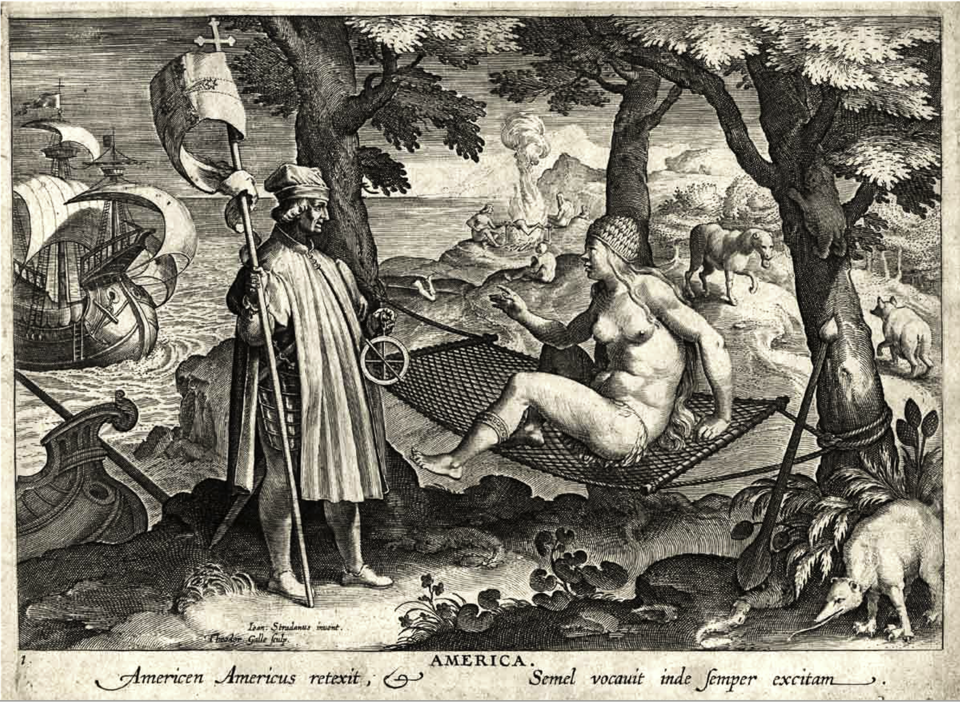
The European colonization of the Americas began with the voyages of explorers seeking new trade routes. The Ottoman Empire's control of traditional trade routes to Asia pushed Western European powers to look for alternatives. Christopher Columbus's expedition, intended to reach the East Indies, instead landed in the Caribbean, sparking a new era of exploration. This accidental discovery set the stage for centuries of European expansion and transformation in the Americas.
The Treaty of Tordesillas in 1494 divided the newly discovered lands between Spain and Portugal. This agreement, ratified by the Pope, gave Spain dominion over the western half of the non-European world, including most of the Americas. Portugal was granted the eastern half, which came to include Brazil. This division laid the groundwork for the vast colonial empires that would soon emerge, reshaping the political and cultural landscapes of the New World.
Spain's colonization of the Americas was driven by a mix of religious zeal, economic ambition, and the desire for territorial expansion. The Spanish Crown justified its conquests through the ideals of the Reconquista, the Christian reconquest of Iberia from Muslim rule, completed in 1492. This ideology framed the colonization of the New World as a divine mission to spread Christianity among the indigenous peoples. The phrase 'gold, glory, and God' encapsulated the motivations behind Spanish exploration and conquest.
The impact of European colonization on Indigenous peoples was profound and often devastating. The arrival of Europeans brought not only new technologies and ideas but also Old World diseases that decimated native populations. Smallpox was especially devastating, spreading rapidly among Indigenous communities who had no prior exposure or immunity. These diseases, combined with forced labor and removal from homelands, led to a dramatic decline in the native population, with estimates suggesting a drop of around 80% between 1492 and 1650—from some 50 million people to eight million.
The Spanish encomienda system was one of the most exploitative mechanisms used to extract labor from Indigenous peoples. Under this system, the labor and tribute of native communities were granted to Spanish colonizers. This practice, rooted in the treatment of conquered Muslims in Spain, entrenched a system of exploitation and control that lasted for generations. The encomienda system not only disrupted Indigenous economies but also eroded their social and cultural structures.
More from History

The Morning Bingham Climbed to Machu Picchu
On a cold July morning in 1911, an American historian scrambled up a jungle-choked ridge above the Urubamba River — and by afternoon, a forgotten Inca citadel would belong to the world.

The Last Half-Hour of the Hindenburg
It was already half a day late, and the public had been told to keep away — but at seven o'clock that evening, the Hindenburg finally turned toward its mooring mast for the last time.

The Last Hours of Pompeii: August 24, 79 AD
By noon it was just another hot day beside the Bay of Naples. By evening, an entire mountain had rewritten the fate of thousands.

The Longest Walk: Mandela's Last Steps to Freedom
After 27 years behind bars, a 71-year-old man had to relearn how to walk out of a prison gate — into a waiting world of cameras, crowds, and a country holding its breath.

The Document Lincoln Signed on the First Day of 1863
On a single January morning, a president's pen would change the legal status of more than three million people — if the ink held and his hand did not shake.

The Day of the Dream: August 28, 1963
Two hundred and fifty thousand people converged on the National Mall that morning — by nightfall, one voice from the steps of the Lincoln Memorial would echo for generations.