The Day Ankara Answered Istanbul's Silence
On a spring Friday in 1920, a half-finished building in a dusty Anatolian town became the seat of a nation that did not yet officially exist.
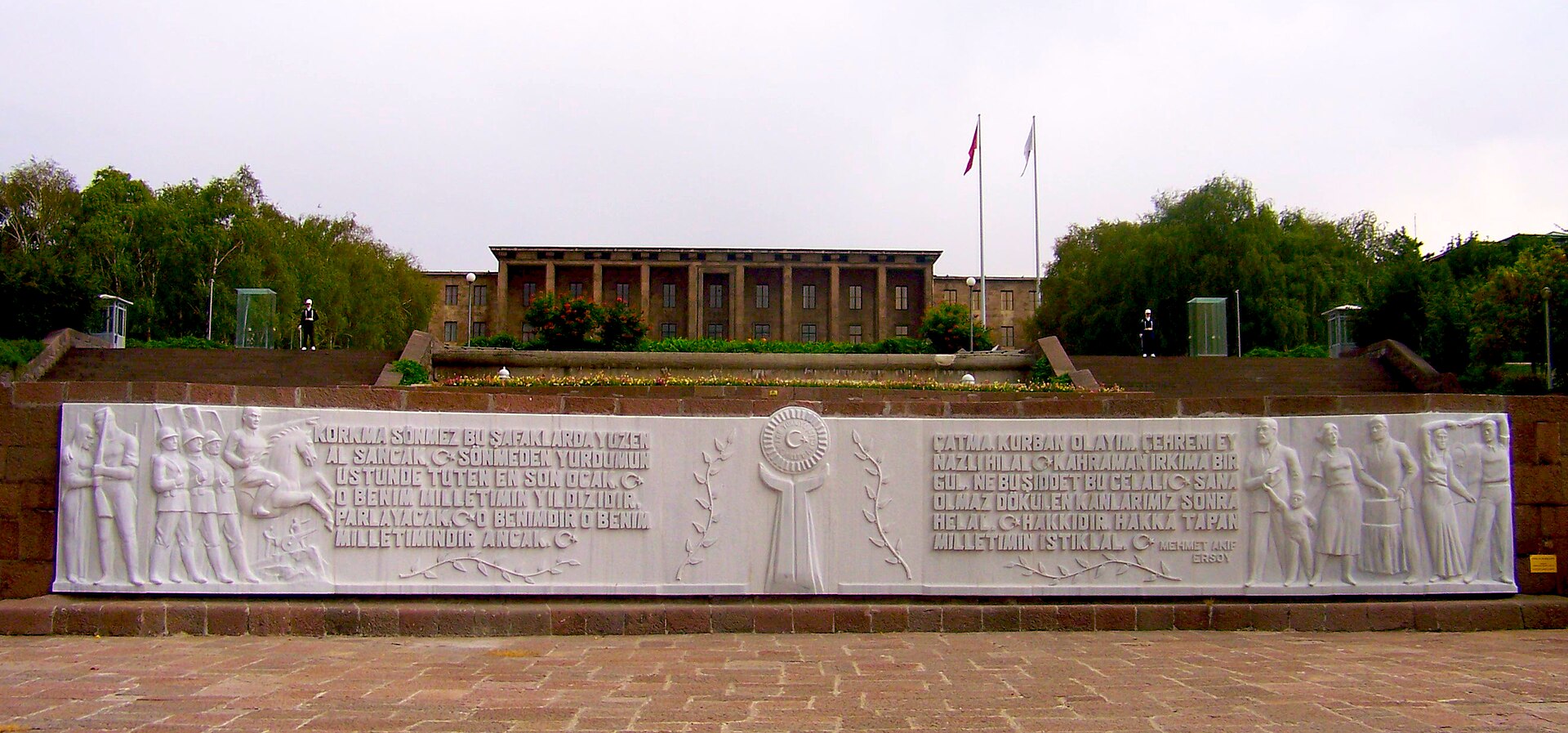
The morning of 23 April 1920 broke over Ankara with the weight of an empire's collapse pressing on the city. Istanbul, the Ottoman capital, lay under the control of the victorious Allied powers, and the Ottoman parliament, the Chamber of Deputies, had already been shut down in the occupation's aftermath. Into this vacuum stepped Mustafa Kemal and his comrades, who had spent weeks summoning delegates from across Anatolia to gather in a town far from the reach of foreign warships and Ottoman authority.
The building chosen for this act was modest by the standards of empire: the former Ankara headquarters of the Committee of Union and Progress, designed by the architect Hasip Bey. It was not a palace or a grand parliamentary hall, but a functional structure repurposed for a moment that demanded improvisation rather than pageantry. Delegates filed in through its doors that day, men drawn from provinces still reeling from war and occupation, carrying with them the authority of local resistance movements rather than any formal Ottoman mandate.
What convened that day was not merely a meeting but the founding session of the Grand National Assembly of Turkey, an assembly born explicitly in resistance to two facts: the occupation of the Ottoman state by the Allied powers, and the dissolution of the Meclis-i Mebûsan in occupied Istanbul. The delegates who gathered in Ankara understood their task as a direct answer to that closure, a declaration that Anatolia would not accept the silencing of representative government simply because Istanbul had fallen under foreign control.```
The atmosphere inside carried none of the settled ceremony of an established government. This was an assembly asserting legitimacy through the act of assembling itself, a body that would soon need to organize its own executive functions from scratch. Within weeks, by May 1920, it would establish what became known as the first Executive Ministers of Turkey, a governing structure improvised to fill the void left by the collapsed imperial administration.
Mustafa Kemal's role that day was central, though the assembly was framed not as his personal creation but as the collective will of delegates drawn from the wider National Campaign then spreading through Anatolia. The gathering represented towns and regions that had, in various forms, been organizing resistance to foreign occupation since the war's end, and April 23rd became the moment those scattered efforts converged into a single legislative body.
More from History

The Morning Bingham Climbed to Machu Picchu
On a cold July morning in 1911, an American historian scrambled up a jungle-choked ridge above the Urubamba River — and by afternoon, a forgotten Inca citadel would belong to the world.

The Last Half-Hour of the Hindenburg
It was already half a day late, and the public had been told to keep away — but at seven o'clock that evening, the Hindenburg finally turned toward its mooring mast for the last time.

The Last Hours of Pompeii: August 24, 79 AD
By noon it was just another hot day beside the Bay of Naples. By evening, an entire mountain had rewritten the fate of thousands.

The Longest Walk: Mandela's Last Steps to Freedom
After 27 years behind bars, a 71-year-old man had to relearn how to walk out of a prison gate — into a waiting world of cameras, crowds, and a country holding its breath.

The Document Lincoln Signed on the First Day of 1863
On a single January morning, a president's pen would change the legal status of more than three million people — if the ink held and his hand did not shake.

The Day of the Dream: August 28, 1963
Two hundred and fifty thousand people converged on the National Mall that morning — by nightfall, one voice from the steps of the Lincoln Memorial would echo for generations.