The Fifty Days That Erased Carthage
A city of a hundred thousand souls, burned street by street for six days straight — and then simply ceased to exist. This is how Rome finished what Hannibal could not.
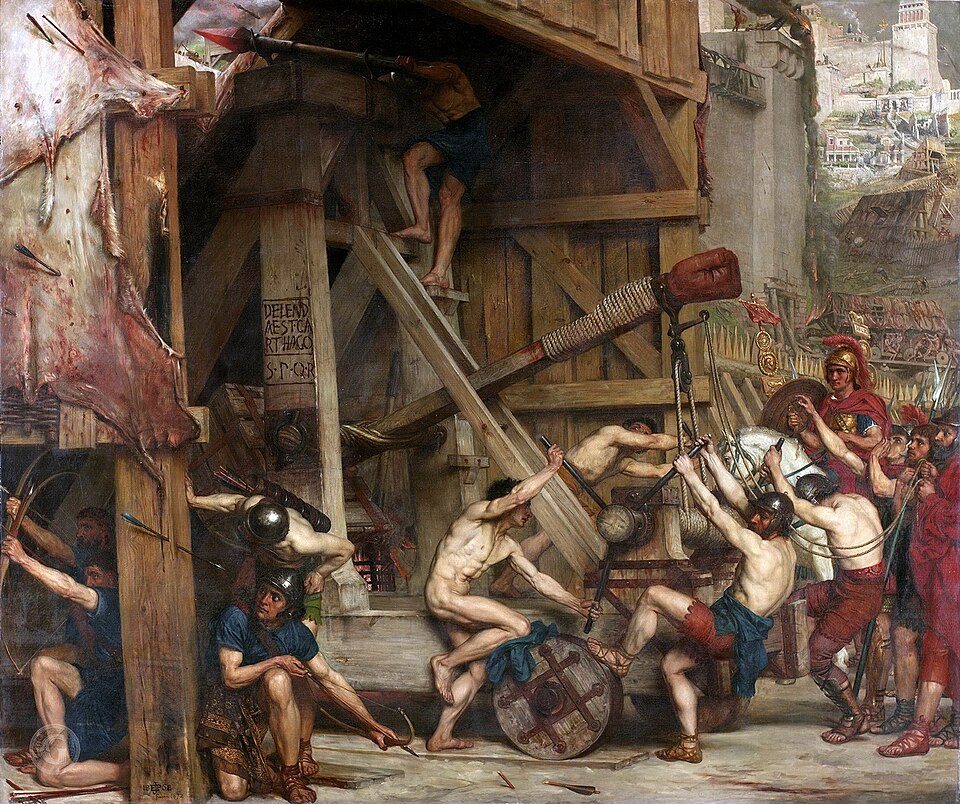
When the Second Punic War ended in 201 BC, Rome imposed a peace so punishing it was designed to leave Carthage permanently subordinate. Scipio Africanus stripped the city of its overseas territories, demanded 10,000 silver talents paid over fifty years, took hostages, and forbade Carthage from waging war outside Africa — or even inside it — without Rome's permission. Hannibal himself, the war's greatest general, urged his countrymen to accept these terms rather than continue fighting. They did, in the spring of 201 BC, and Carthage's political subordination to Rome was sealed.
For the next fifty years, Rome's ally King Masinissa of Numidia exploited that treaty ruthlessly. He raided and seized Carthaginian territory again and again, knowing Carthage could not retaliate without Roman consent — consent Rome never granted, since Rome consistently backed its Numidian ally. The humiliations piled up until 149 BC, when Carthage finally sent an army under a general named Hasdrubal to strike back at Masinissa, treaty or no treaty. The gamble collapsed at the Battle of Oroscopa: the Carthaginian force was defeated and surrendered outright.
Rome had what it needed. Anti-Carthaginian factions, including the famously implacable Cato the Elder, seized on this illicit military action as pretext for the punitive war they had long wanted. Later in 149 BC a large Roman army landed at Utica in North Africa. Desperate to appease Rome, Carthage surrendered every weapon in the city. It made no difference — the Romans pressed forward and laid siege to Carthage itself.
The siege dragged on through repeated Roman setbacks in 149 BC, relieved only by the distinguished conduct of a mid-ranking officer named Scipio Aemilianus. A new commander took over in 148 BC and fared no better. By the spring of 147 BC, public support for Scipio Aemilianus was so overwhelming that Rome waived its own age restrictions to make him consul and commander in Africa.
Scipio's command began with two Carthaginian successes, but he tightened the siege methodically, building a massive mole to choke off blockade runners supplying the city. The Carthaginians, who had partially rebuilt their fleet, launched a surprise sortie; the engagement was indecisive, but their withdrawal was badly mismanaged and cost them many ships. The Romans then erected a large brick structure in the harbor that loomed over the city wall itself.
More from History

The Morning Bingham Climbed to Machu Picchu
On a cold July morning in 1911, an American historian scrambled up a jungle-choked ridge above the Urubamba River — and by afternoon, a forgotten Inca citadel would belong to the world.

The Last Half-Hour of the Hindenburg
It was already half a day late, and the public had been told to keep away — but at seven o'clock that evening, the Hindenburg finally turned toward its mooring mast for the last time.

The Last Hours of Pompeii: August 24, 79 AD
By noon it was just another hot day beside the Bay of Naples. By evening, an entire mountain had rewritten the fate of thousands.

The Longest Walk: Mandela's Last Steps to Freedom
After 27 years behind bars, a 71-year-old man had to relearn how to walk out of a prison gate — into a waiting world of cameras, crowds, and a country holding its breath.

The Document Lincoln Signed on the First Day of 1863
On a single January morning, a president's pen would change the legal status of more than three million people — if the ink held and his hand did not shake.

The Day of the Dream: August 28, 1963
Two hundred and fifty thousand people converged on the National Mall that morning — by nightfall, one voice from the steps of the Lincoln Memorial would echo for generations.