The Gold the Desert Kept Secret
Beneath the mudbrick ruins of an Assyrian capital, archaeologists found something the ancient kings never mentioned in their inscriptions: the tombs of their queens, glittering with gold.
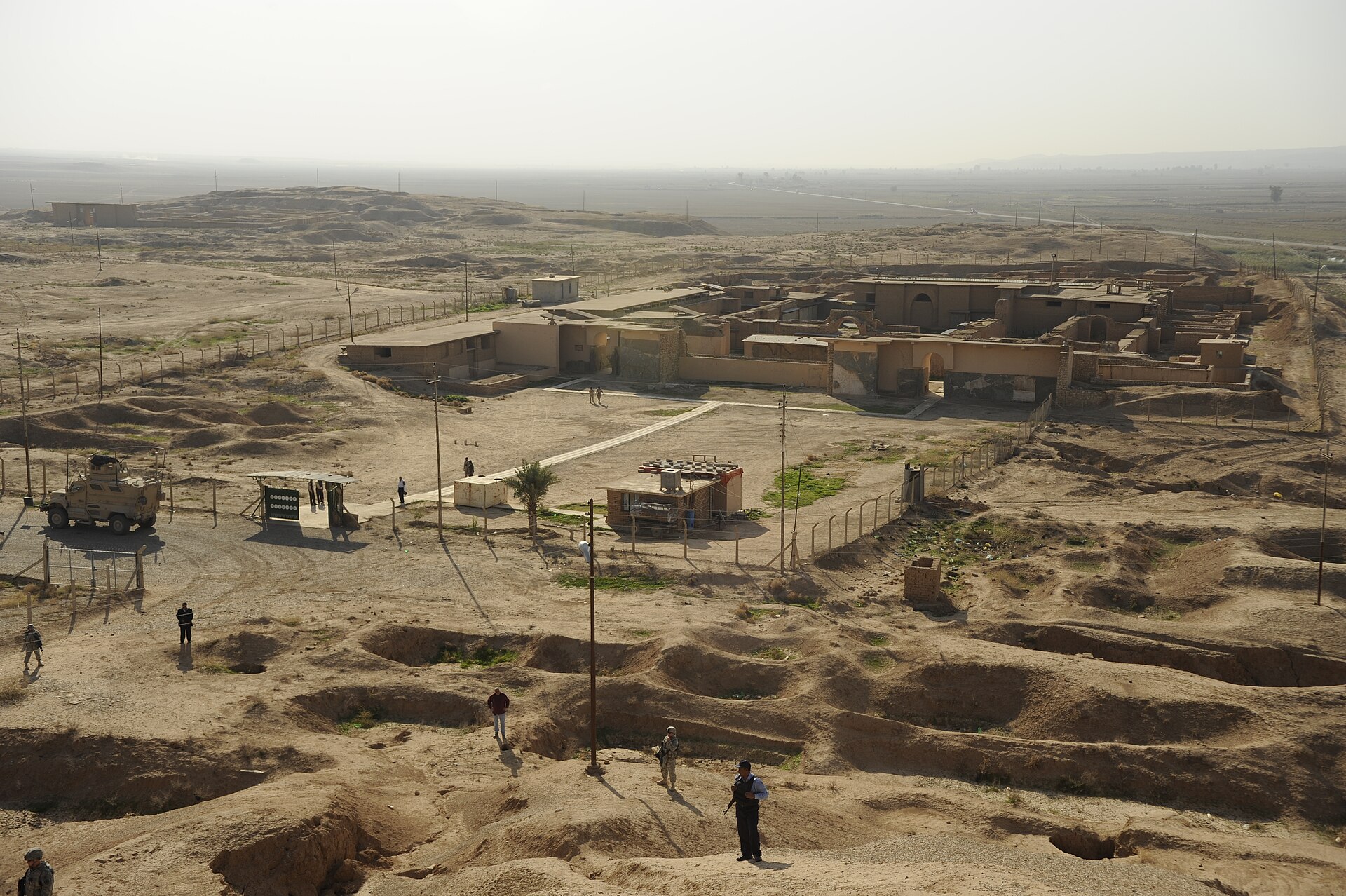
Thirty kilometers south of Mosul, in the Nineveh Plains of Upper Mesopotamia, lies a low mound that was once one of the greatest cities on Earth. The city sat in a strategic position 10 kilometers north of where the Tigris meets its tributary the Great Zab. Its ancient name was Kalhu, though the world now knows it as Nimrud, a name given by 18th-century cartographer Carsten Niebuhr after 19th-century archaeologists mistakenly linked it to the biblical Nimrod. By 800 BCE, this city held roughly 75,000 people, making it the most populous urban center in the world at that moment in history.
Nimrud's rise began humbly, as a trading settlement founded under Shalmaneser I around 1274–1245 BCE. It fell into disrepair for centuries until King Ashurnasirpal II chose it as his new imperial capital. He cleared the ruined defenses and raised an entirely new city: a royal palace meant to outshine every palace before it, city walls stretching 7.5 kilometers, botanical gardens filled with exotic plants gathered from his campaigns, and what may have been the first large zoo ever built.
In 864 BC, Ashurnasirpal marked the completion of his new capital with a celebration so lavish that some historians call it perhaps the greatest party in world history. Over ten days, 69,574 guests attended — 16,000 residents of the new capital and 5,000 foreign dignitaries. The palace inscriptions record staggering quantities of provisions: 10,000 pigeons, 10,000 jugs of beer, and 10,000 skins of wine, among countless other supplies.
His son, Shalmaneser III, continued the ambitious building program, constructing a palace twice the size of his father's, sprawling across five hectares with more than 200 rooms. He also raised the Great Ziggurat and its associated temple. Nimrud remained the beating heart of the Assyrian Empire through the reigns of Shamshi-Adad V, Adad-nirari III, Queen Semiramis, Shalmaneser IV, Ashur-dan III, Ashur-nirari V, Tiglath-Pileser III, and Shalmaneser V, serving as imperial capital from 879 to 706 BC.
While Assyrian kings were traditionally buried in the older capital of Ashur, their queens were laid to rest at Nimrud. It is here that archaeologists uncovered royal tombs belonging to the queens of Ashurnasirpal II, Tiglath-Pileser III, Shalmaneser V, Sargon II, and others — burials that would eventually yield extraordinary troves of gold jewelry, crowns, and precious ornaments, offering a rare glimpse into the private wealth of women whose names barely survive in the historical record compared to their husbands.
More from Archaeology

The Bronze Disc That Rewrote the Sky
Two looters with a metal detector dug up something illegal, invisible in value, and older than Stonehenge's final stones — a map of the heavens buried for over three thousand years.

The Faceless Women of the Ice Age
Long before writing, before cities, before the wheel, someone carved a woman's body into stone and ivory — and left no name, no face, no explanation.

The Pebble That Might Be Human
A palm-sized stone found on a Moroccan riverbank may be humanity's oldest attempt to see itself — or simply a trick of erosion.

The Crown That Vanished: Deshret and the Red Land
A crown worn by kings for three thousand years has never once been found in a tomb — not one. So where did it go?

The Face That Traveled Between Empires
A farm worker's shovel struck stone in 1897 and unearthed a face so striking it would be sold to France, seized as war booty, and finally traded back for a Velázquez.

The Boy in the Dark Tunnel
A schoolboy fell into black water inside an ancient tunnel and surfaced with his fingers brushing letters no one had noticed for 2,600 years.