The Gold Under the Old Tin Can
A couple walking their dog on their own land noticed a rusty can poking from the dirt near an oddly shaped rock — and stumbled onto the largest buried treasure ever found in America.
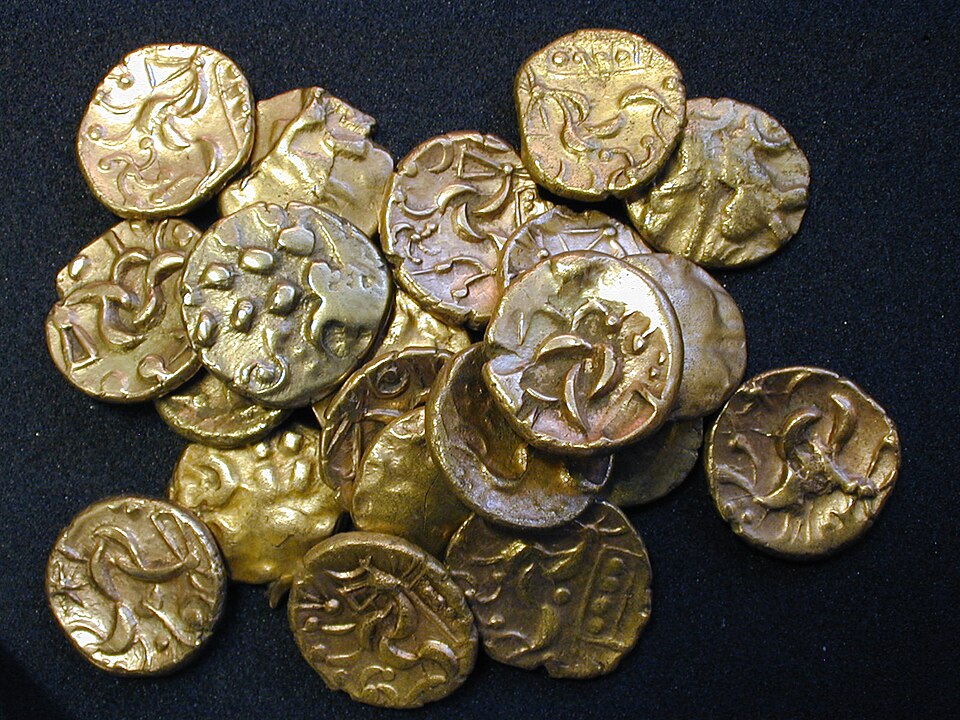
In February 2013, on a rural hillside in Northern California, a couple known publicly only as John and Mary set out on a walk they had taken countless times before. This time, something caught Mary's eye: a rust-covered metal can jutting from the ground along a familiar trail. It was the kind of detail easy to miss, except that they had already noticed strange markers nearby — an old tin can hanging from a tree that had grown around it over the years, and a jagged, saddle-shaped rock on the hill they had nicknamed 'Saddle Ridge.'
John crouched to lift the can but found it wedged firmly in the earth. He pried at it with a piece of wood, and the two were startled by its weight, assuming it might be full of old lead paint. As they carried it home, the lid cracked open, and the edge of a gold coin glinted into view. They rushed back to the spot with hand tools and, about a foot away, unearthed a second, more decomposed can holding still more coins.
Over repeated trips, using shovels and eventually a metal detector, the couple recovered eight cans in total, packed with 1,427 gold coins dating from 1847 to 1894. They later realized the hanging can and the oddly shaped rock had likely been deliberate markers left by whoever buried the treasure — the coins' center point sat exactly ten steps from the jagged rock, in the direction of the North Star.
The coins' face value added up to just $27,980 — $27,460 in twenty-dollar pieces, $500 in ten-dollar pieces, and $20 in five-dollar pieces. But face value meant almost nothing here. Once conserved and authenticated, the hoard was assessed at roughly $10 million, dwarfing the previous record for buried gold coin discoveries in the United States: a $4,500 face-value hoard found by city workers in Jackson, Tennessee, in 1985, which had sold for about $1 million.
Fearing trespassers and treasure hunters, John and Mary kept the location of their 200-acre property secret and hid the coins in an old ice chest buried under a woodpile while they figured out what to do next. Eventually they contacted Kagin's, a numismatics firm in Tiburon, California. Numismatist David J. McCarthy led the initial evaluation, and the coins were sent to the Professional Coin Grading Service in Irvine for independent authentication.
More from Archaeology

The Bronze Disc That Rewrote the Sky
Two looters with a metal detector dug up something illegal, invisible in value, and older than Stonehenge's final stones — a map of the heavens buried for over three thousand years.

The Faceless Women of the Ice Age
Long before writing, before cities, before the wheel, someone carved a woman's body into stone and ivory — and left no name, no face, no explanation.

The Pebble That Might Be Human
A palm-sized stone found on a Moroccan riverbank may be humanity's oldest attempt to see itself — or simply a trick of erosion.

The Crown That Vanished: Deshret and the Red Land
A crown worn by kings for three thousand years has never once been found in a tomb — not one. So where did it go?

The Face That Traveled Between Empires
A farm worker's shovel struck stone in 1897 and unearthed a face so striking it would be sold to France, seized as war booty, and finally traded back for a Velázquez.

The Boy in the Dark Tunnel
A schoolboy fell into black water inside an ancient tunnel and surfaced with his fingers brushing letters no one had noticed for 2,600 years.