The Golden Coffin That Vanished
A body stolen mid-funeral, paraded through empires, worshipped by emperors — and then, one day, simply gone. Where is Alexander the Great?
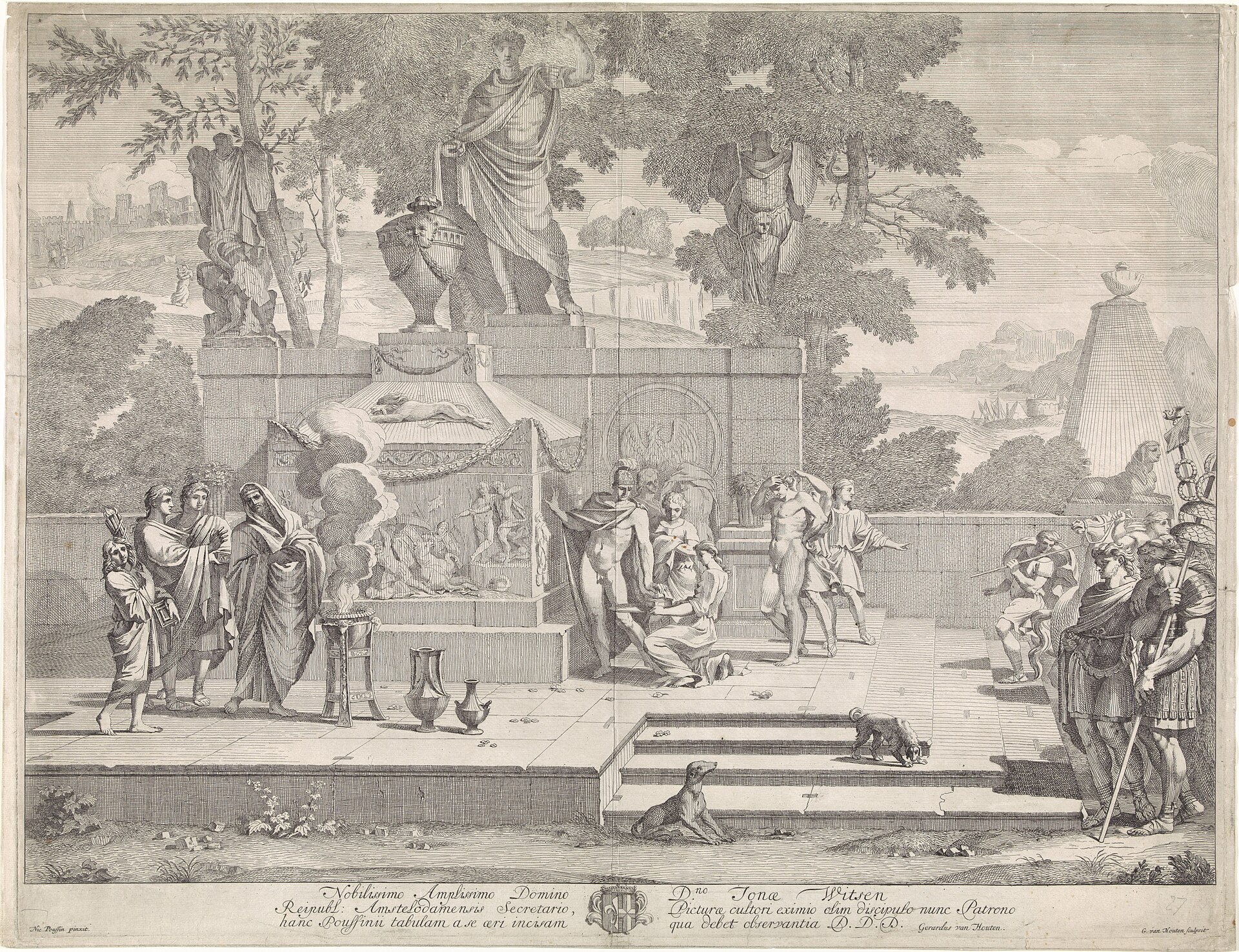
When Alexander the Great died in Babylon, his corpse became one of the most contested objects in the ancient world. According to Diodorus, it was sealed in a coffin of hammered gold, fitted precisely to his body — a vessel fit for a man who called himself the son of Zeus Ammon. Quintus Curtius Rufus and Justin write that Alexander himself had asked to be buried at the temple of Zeus Ammon in the Siwa Oasis, refusing to lie beside his mortal father at Aegae. That wish was never honored.
Instead, his body became a bargaining chip among his own generals. Perdiccas, Ptolemy I Soter, and Seleucus I Nicator all negotiated over its possession. In 321 BC, as the funeral cart carried Alexander's remains back toward Macedonia, Ptolemy hijacked it in Syria and diverted it to Egypt. There, in Memphis — the seat of his own government in Egypt — Alexander was buried, a fact confirmed by Pausanias and the contemporary Parian Chronicle.
The body did not stay in Memphis. Plutarch records that Python of Catana and Seleucus consulted an oracle at a serapeum about moving Alexander to Alexandria, and received a favorable answer. Sometime in the late 4th or early 3rd century BC — Pausanias credits Ptolemy Philadelphus around 280 BC — the body was transferred and reburied in Alexandria. Later, Ptolemy Philopator placed it in the city's communal mausoleum, known to Strabo as the Soma, from the Greek for 'body'. By 274 BC, Alexander lay entombed there, at the heart of the Ptolemaic royal cult built around his memory.
For centuries, the tomb was a pilgrimage site for the powerful. In 48 BC, Alexander's tomb in Alexandria was visited by Caesar. Cleopatra VII later stripped gold from the tomb to fund her war against Octavian. After her death, Augustus came, laid flowers, and placed a golden diadem on Alexander's head. Suetonius records that Caligula later looted the tomb further, removing its breastplate. Septimius Severus sealed it in 199 AD, and in 215, Caracalla removed items from it — his tunic, ring, and belt — leaving them on the coffin, according to the chronicler John of Antioch.
By 400 AD, something had already gone wrong. When John Chrysostom visited Alexandria and asked to see Alexander's tomb, he was told, 'his tomb even his own people know not.' Around the same time, Cyril of Alexandria claimed the tomb had been opened and looted on the orders of Emperor Theodosius I. Yet the story doesn't end there — later writers, including Ibn 'Abd al-Hakam, Al-Masudi, and Leo the African, claimed to have seen it. Leo, visiting as a young man, described a small chapel-like structure amid the ruins of Alexandria, drawing crowds of pilgrims from distant lands who came to pay homage and leave donations.
More from Treasures

The Legend of the Nazi Gold Train
Somewhere beneath the hills of Poland, rumor insists, a train loaded with looted treasure vanished into a tunnel and was never seen again. The story survives because the plunder behind it was terrifyingly real.

The Treasure List Carved in Copper
While every other Dead Sea Scroll was written on parchment or papyrus, one was hammered into metal — a list of buried gold and silver that no one has ever found.

The Diamond That Vanished for a Century
For decades, treasure hunters and novelists spun theories about a lost 137-carat gem — sold, recut, melted into legend. It was sitting in a Quebec bank vault the entire time.

Gold, Ghosts, and the Mountain That Keeps Its Secret
For over a century, treasure hunters have vanished into a jagged Arizona range chasing a fortune that may never have existed at all. What they left behind was not gold, but one of America's most enduring legends.

The King Who Buried a River
When Rome finally cornered the Dacian king, it wasn't a sword that gave up his secret — it was a traitor's whisper about a riverbed.

The Fortune Dutch Schultz Took to His Grave
He asked New York's mob bosses for permission to kill a federal prosecutor — and when they said no, he disobeyed them anyway. It was a decision that would end his life and leave behind a fortune that has never been found.