The Graveyard That Was Never There
For a century, hunters and explorers chased whispers of a secret place where elephants crawl off to die alone — a hidden fortune in ivory waiting to be found. It never existed, but the myth refused to die.
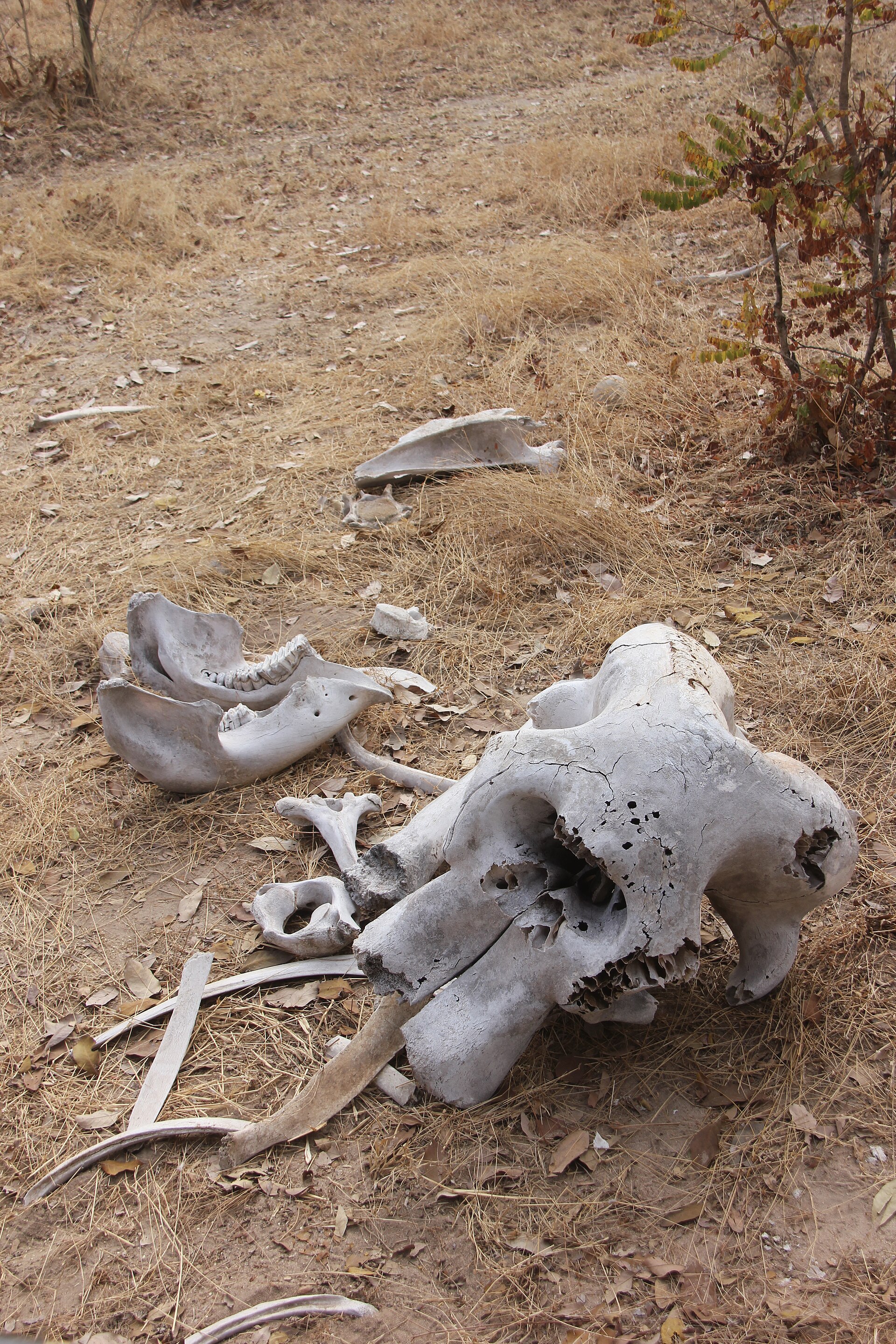
Somewhere in the African bush, so the story goes, old elephants sense the end approaching and slip away from their herds, walking alone toward a hidden valley where generations of their kind have gone before them to die. There, bones pile up in staggering quantities — a fortune in ivory glinting under the sun, guarded by nothing but silence and legend. Explorers, hunters, and treasure-seekers spent decades searching for this place. None ever found it, because it does not exist.
The legend of the elephants' graveyard has no basis in fact, but it did not spring from nowhere. Several theories try to explain how such a vivid myth took root. One suggests that people occasionally stumbled upon clusters of elephant skeletons lying together, or saw old elephants living near the remains of others, and assumed some deliberate ritual was at work rather than coincidence.
Another theory points to mass die-off sites, such as one excavated at Neumark Nord in Saxony-Anhalt, Germany, where twenty-seven skeletons of straight-tusked elephants were found together. At first glance, such a site might look like proof of elephants gathering to die. But later analysis told a very different story: the bones bore extensive butchery marks, revealing that Neanderthals had hunted these elephants deliberately, over a span of decades or even centuries. The graveyard was not chosen by elephants at all — it was made by human hands.
Other explanations look to elephant biology itself. As elephants age, their teeth wear down until they can no longer chew tougher vegetation. Starving or elderly elephants may then gravitate toward places where softer food is easier to find, and it is there that they eventually die. Repeated over time, this pattern could create the illusion of elephants choosing a final resting place, when in truth they were simply following the last available food.
Not everyone believed the myth, even in its heyday. Walter 'Karamojo' Bell, a prolific elephant hunter whose career depended on knowing the animals intimately, dismissed the idea outright. He noted that bones and tusks were simply scattered through the bush where they had lain for years — no secret chamber, no hidden trove, just the ordinary scatter of death across a vast landscape.
More from History

The Morning Bingham Climbed to Machu Picchu
On a cold July morning in 1911, an American historian scrambled up a jungle-choked ridge above the Urubamba River — and by afternoon, a forgotten Inca citadel would belong to the world.

The Last Half-Hour of the Hindenburg
It was already half a day late, and the public had been told to keep away — but at seven o'clock that evening, the Hindenburg finally turned toward its mooring mast for the last time.

The Last Hours of Pompeii: August 24, 79 AD
By noon it was just another hot day beside the Bay of Naples. By evening, an entire mountain had rewritten the fate of thousands.

The Longest Walk: Mandela's Last Steps to Freedom
After 27 years behind bars, a 71-year-old man had to relearn how to walk out of a prison gate — into a waiting world of cameras, crowds, and a country holding its breath.

The Document Lincoln Signed on the First Day of 1863
On a single January morning, a president's pen would change the legal status of more than three million people — if the ink held and his hand did not shake.

The Day of the Dream: August 28, 1963
Two hundred and fifty thousand people converged on the National Mall that morning — by nightfall, one voice from the steps of the Lincoln Memorial would echo for generations.