The Handshake at Ujiji
A ragged American journalist walks into a lakeside village in Central Africa and utters four words that will echo for a century — but the man he finds is barely alive.
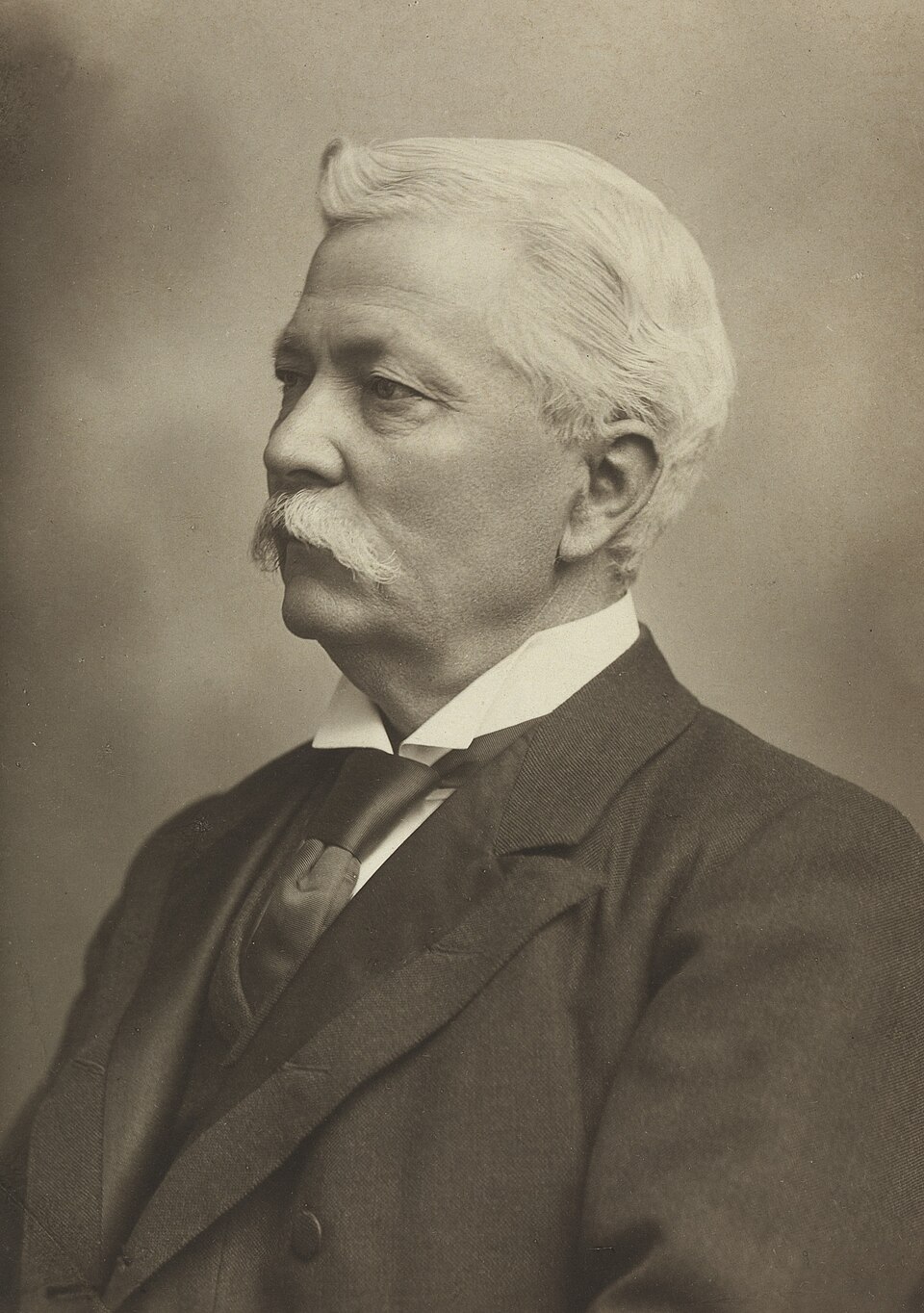
Henry Morton Stanley was born John Rowlands in Denbigh, Wales, in 1841, the illegitimate son of a mother who abandoned him and a father who died weeks after his birth. Raised briefly by a grandfather, then shuffled among relatives, he ended up in the St Asaph Union Workhouse, where he suffered abuse and neglect. At eighteen he emigrated to the United States in 1859, sailing to New Orleans, where, by his own account, he was taken in by a merchant named Henry Hope Stanley, whose name he adopted out of gratitude — though biographers later doubted the story's accuracy.
The Civil War pulled him through an improbable sequence of allegiances: he fought for the Confederacy at Shiloh, was captured, joined the Union Army as a 'Galvanized Yankee,' was discharged for illness, and eventually served in the US Navy. Afterward he drifted into journalism, covering the 1868 British expedition to Abyssinia for the New York Herald and scooping every other correspondent by bribing a telegraph operator to send his report first.
His defining assignment came in 1871, when the Herald sent him to find David Livingstone, the missionary-explorer who had vanished into Central Africa years earlier. Stanley arrived in Zanzibar and assembled an expedition of 192 porters, sparing no expense. The journey was brutal: malaria killed two of his assistants, and clashes with local people battered the caravan. On 10 November 1871, Stanley walked into Ujiji through a crowd of astonished villagers and found Livingstone alive but gravely weakened.
Stanley's supplies of food and medicine restored Livingstone's strength, and the two men explored the northern shore of Lake Tanganyika together, spending three weeks in each other's company before parting at Tabora. Stanley returned to Zanzibar, and eventually to Britain, but continued sending Livingstone provisions. When news reached him that Livingstone had died, Stanley was deeply affected — and resolved to return to Africa to finish what Livingstone had begun.
His second expedition, launched in 1874, aimed to map Lake Tanganyika fully and settle the question of the Nile's source, a mystery John Hanning Speke had proposed but not conclusively proven. Despite attacks from hippopotamuses and hostile groups along the rivers, Stanley confirmed that Speke had been right. In 1876 his caravan pushed on along the Lualaba River, enduring ambushes and passing through dense rainforest inhabited by peoples his accounts described as cannibals, at one point passing a path lined with 186 human skulls. Following the Lualaba into the Congo River, the expedition eventually reached Boma on the Atlantic coast, completing the exploration of Africa's last unmapped major river. Of the 356 people who had set out, only 114 survived; the rest had died or deserted, including three of Stanley's close companions.
More from Explorations

Humboldt: The Man Who Measured the World
A Prussian noble's son, once mocked as a sickly child, would climb a volcano to a world-record height and rewrite how humanity understood nature itself.

The Man Who Named Canada
A Breton mariner planted a wooden cross on a foreign shore and claimed a kingdom he did not understand — then spent a winter frozen into its river, praying a stranger's remedy would save his men.

Sixty Ships Into the Unknown: Hanno's Voyage Down the African Coast
A Carthaginian fleet of sixty ships and thousands of settlers vanished past the Pillars of Hercules to found cities on an unmapped coast — and came home with the skins of hairy, hostile 'gorillas' as proof of how far they had gone.

HMS Challenger: The Voyage That Charted the Deep
A stripped-down warship, its guns torn out to make room for microscopes, set sail from Portsmouth to answer a question no one had ever properly asked: what lies at the bottom of the sea?

Scott's Last Expedition: The Letters Written at the End of the World
Five men reached the bottom of the world only to find a Norwegian flag already planted there. What followed was not glory, but a slow, frozen unraveling that the world would remember for a century.

Marco Polo: In the Court of Kublai Khan
A fifteen-year-old boy meets the father he barely knew — and is soon swept toward the richest court on Earth. Twenty-four years later, he returns home with tales so vast that Venice simply calls him 'Mister Millions'.