The Horse That May Never Have Existed
Everyone pictures Greek soldiers creeping out of a giant wooden horse at midnight — but the oldest sources barely mention it, and some ancient writers doubted a horse was ever built at all.
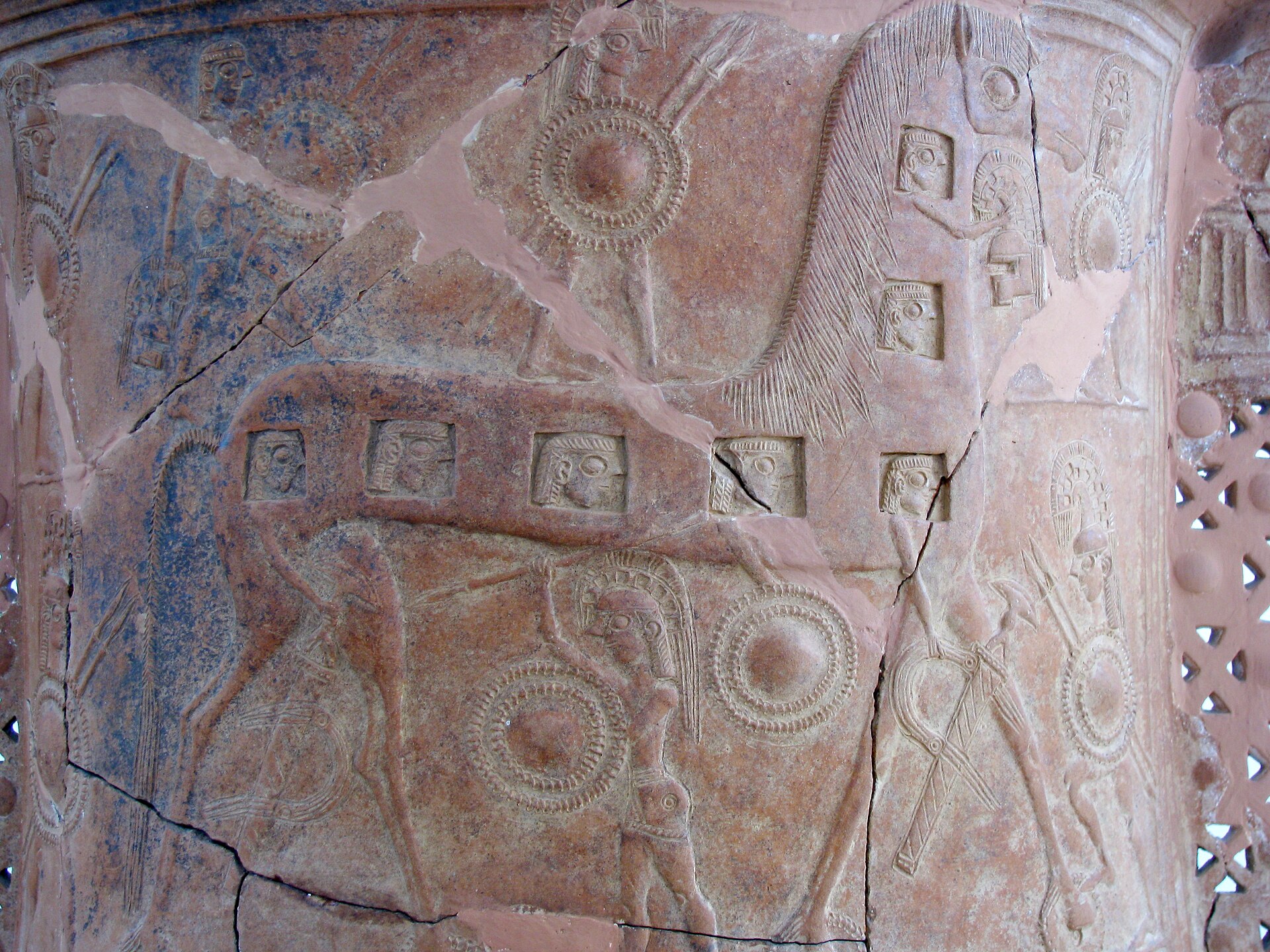
The common belief is simple: the Greeks built an enormous wooden horse, hid warriors inside its hollow belly, and the Trojans foolishly dragged their own destruction through the gates. This image feels ancient and solid, as if it came straight from Homer. In reality, the story's textual foundations are far shakier than most people assume.
Homer's Iliad, the earliest and most authoritative epic about the Trojan War, never mentions the horse at all — the poem ends before the war concludes. The Odyssey, also attributed to Homer, only refers to it briefly, almost in passing, with Helen recognizing the ruse and testing the hidden soldiers by mimicking their wives' voices, while Odysseus silences Anticlus by hand.
The fullest, most vivid version — the one everyone actually imagines, with Sinon's deception, Laocoön's warning, and the sea serpents — comes not from Greek epic at all, but from Virgil's Aeneid, a Latin poem written around 19 BC, roughly seven centuries after Homer. Virgil was a Roman poet retelling and dramatizing a much older tale for a Roman audience under Augustus. Earlier Greek versions existed in the Little Iliad and the Sack of Troy, part of the lost Epic Cycle, but these survive only in fragments and summaries.
So the 'definitive' Trojan Horse story most people know is essentially a Roman literary elaboration built centuries after the events it claims to describe, layered onto scraps of earlier Greek material.
Even within antiquity, some writers openly doubted the literal wooden horse. Palaephatus, who tried to rationalize Greek myths, rejected the idea that soldiers hid inside a hollow horse as too fantastical. Instead, he proposed the Greeks built an oversized wooden horse too large to fit through Troy's gates, hid soldiers nearby in a place called the 'Argive Company,' and used Sinon's deception to convince the Trojans to tear down part of their own wall to bring it in — while the real army was hiding elsewhere, not inside the horse at all.
More from History

The Morning Bingham Climbed to Machu Picchu
On a cold July morning in 1911, an American historian scrambled up a jungle-choked ridge above the Urubamba River — and by afternoon, a forgotten Inca citadel would belong to the world.

The Last Half-Hour of the Hindenburg
It was already half a day late, and the public had been told to keep away — but at seven o'clock that evening, the Hindenburg finally turned toward its mooring mast for the last time.

The Last Hours of Pompeii: August 24, 79 AD
By noon it was just another hot day beside the Bay of Naples. By evening, an entire mountain had rewritten the fate of thousands.

The Longest Walk: Mandela's Last Steps to Freedom
After 27 years behind bars, a 71-year-old man had to relearn how to walk out of a prison gate — into a waiting world of cameras, crowds, and a country holding its breath.

The Document Lincoln Signed on the First Day of 1863
On a single January morning, a president's pen would change the legal status of more than three million people — if the ink held and his hand did not shake.

The Day of the Dream: August 28, 1963
Two hundred and fifty thousand people converged on the National Mall that morning — by nightfall, one voice from the steps of the Lincoln Memorial would echo for generations.