The Man Who Walked to the Bottom of the World
He set out to conquer the top of the world — but when two rivals beat him there, he quietly turned his ship south instead, toward a prize no one had ever claimed.
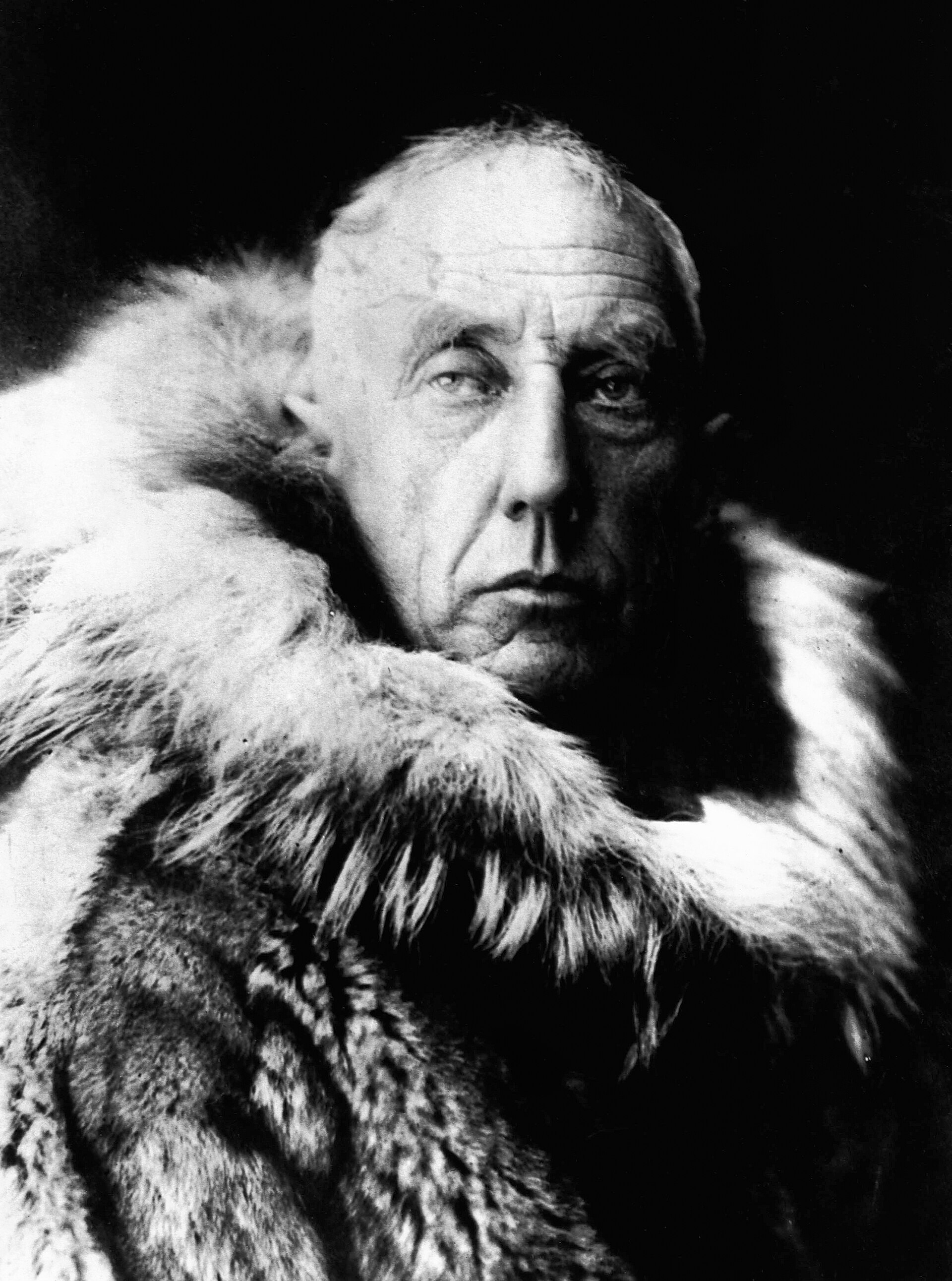
Roald Amundsen was born on 16 July 1872 in Borge, Norway, into a family of shipowners and sea captains. His mother wanted something different for him: she pushed him toward medicine, and out of love he obeyed, studying at university until she died when he was twenty-one. Within days he abandoned his books for the sea. As a boy he had devoured Sir John Franklin's accounts of Arctic overland expeditions, later writing that he read them 'with a fervid fascination which has shaped the whole course of my life.'
His polar career began in 1897, at age twenty-five, as first mate on the Belgian Antarctic Expedition aboard the RV Belgica, led by Adrien de Gerlache. The ship became trapped in sea ice off Alexander Island at 70°30′S, forcing the crew to become the first expedition to overwinter in Antarctica — unprepared and vulnerable to scurvy. Amundsen credited the expedition's American doctor, Frederick Cook, with saving the crew by hunting fresh meat, whose vitamin C likely staved off the disease.
In 1903, Amundsen led his own expedition, aiming to conquer Canada's Northwest Passage. He chose a small, shallow-draft fishing vessel, the 45-ton Gjøa, fitted with a modest 13-horsepower engine, and a crew of just six men — flexibility over size. The ship threaded Baffin Bay, the Parry Channel, and a chain of narrow straits, wintering twice near King William Island at what is now Gjoa Haven. There, Amundsen and his men learned invaluable survival skills from the local Netsilik Inuit: using sled dogs for transport and wearing animal skins instead of wool, which failed to insulate once wet.
By August 1905, the Gjøa had cleared the Canadian Arctic Archipelago, but ice forced another winter before reaching Nome, Alaska. Eager to announce his success, Amundsen trekked 500 miles overland to a telegraph station at Eagle, sending word of his triumph on 5 December before returning to his ship. While in Alaska, he also learned that Norway had dissolved its union with Sweden and gained a new king, Haakon VII, to whom Amundsen wired congratulations and loyalty. He returned to Oslo in November 1906, after nearly three and a half years away — the first person to traverse the Northwest Passage.
Amundsen next set his sights on the North Pole. But in 1909, both Frederick Cook and Robert Peary claimed to have reached it first. Amundsen, without publicly announcing his change of plans — a silence that left Robert Falcon Scott and Norwegian backers feeling misled — quietly redirected his ambitions southward. He left Norway in June 1910 aboard the Fram, the ship once used by Fridtjof Nansen, and reached Antarctica in January 1911.
More from Explorations

Humboldt: The Man Who Measured the World
A Prussian noble's son, once mocked as a sickly child, would climb a volcano to a world-record height and rewrite how humanity understood nature itself.

The Man Who Named Canada
A Breton mariner planted a wooden cross on a foreign shore and claimed a kingdom he did not understand — then spent a winter frozen into its river, praying a stranger's remedy would save his men.

Sixty Ships Into the Unknown: Hanno's Voyage Down the African Coast
A Carthaginian fleet of sixty ships and thousands of settlers vanished past the Pillars of Hercules to found cities on an unmapped coast — and came home with the skins of hairy, hostile 'gorillas' as proof of how far they had gone.

HMS Challenger: The Voyage That Charted the Deep
A stripped-down warship, its guns torn out to make room for microscopes, set sail from Portsmouth to answer a question no one had ever properly asked: what lies at the bottom of the sea?

Scott's Last Expedition: The Letters Written at the End of the World
Five men reached the bottom of the world only to find a Norwegian flag already planted there. What followed was not glory, but a slow, frozen unraveling that the world would remember for a century.

Marco Polo: In the Court of Kublai Khan
A fifteen-year-old boy meets the father he barely knew — and is soon swept toward the richest court on Earth. Twenty-four years later, he returns home with tales so vast that Venice simply calls him 'Mister Millions'.