The Midnight Hour: August 14–15, 1947
At the stroke of midnight, two nations were born from one empire — and no one in the room could say what the morning would bring.
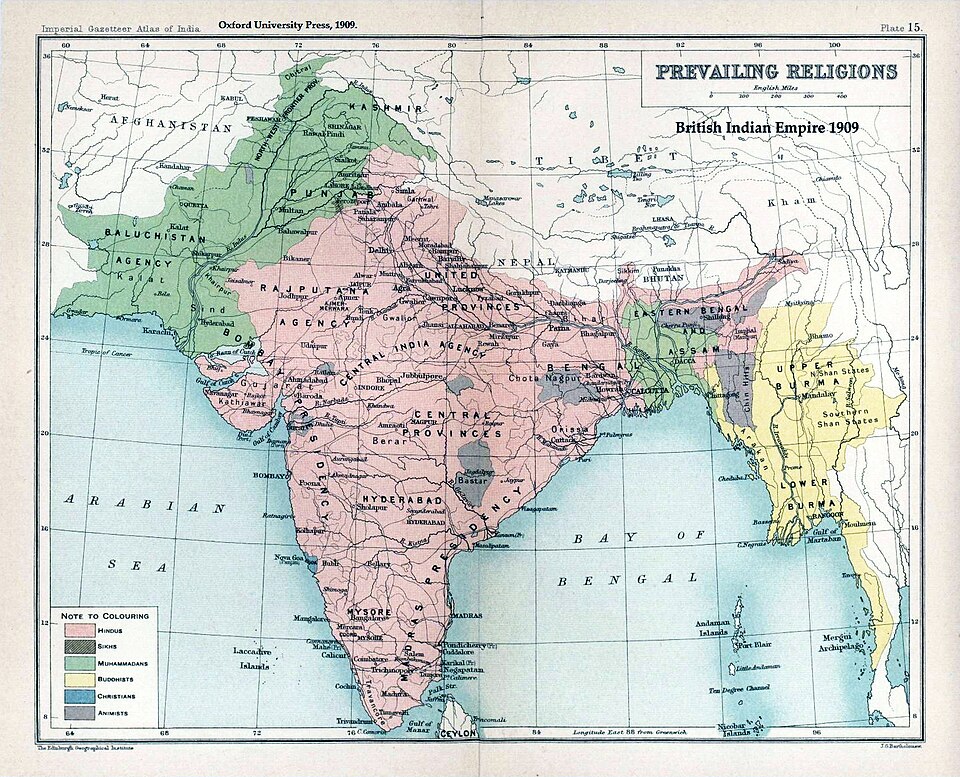
As the evening of 14 August 1947 wore on in New Delhi, the machinery of the British Raj was quietly grinding to a halt. For nearly two centuries Crown rule had governed the subcontinent; now, in a matter of hours, it would legally cease to exist. The Indian Independence Act 1947, passed by the British Parliament, had set this precise midnight as the moment of transition — not a symbolic date chosen for convenience, but a hard legal deadline written into law.
In the Constituent Assembly hall, lawmakers gathered as the clock ticked toward twelve. The division of British India into two dominions — the Union of India and the Dominion of Pakistan — was not an abstraction that night. It meant that a shared army, the Royal Indian Navy, the Indian Civil Service, the railways, and even the central treasury were, in that instant, being cut in two, their assets and personnel divided between governments that had not existed the day before.
The geography of the split was already fixed on paper: the provinces of Bengal and Punjab had been carved along district-wide religious majorities, non-Muslim districts going to India, Muslim-majority ones to Pakistan. But on this night, the lines were still just ink; the human consequences of those boundaries had not yet fully unfolded on the ground.
At midnight precisely, between 14 and 15 August, two self-governing countries came into legal existence simultaneously. In that single moment, British sovereignty over the subcontinent ended. The Raj that had ruled through viceroys, treaties, and garrisons was gone, replaced by two dominions that would chart their own courses within the Commonwealth.
Elsewhere across the subcontinent that night, the princely states faced a stark new reality created by the same Act: their subsidiary alliances with the British Crown had lapsed. Rulers who had governed under British paramountcy for generations now had to decide, in the days ahead, whether to accede to India, to Pakistan, or to attempt to stand alone — a decision Sardar Patel would later describe in January 1948 as the moment 'every Indian State became a separate independent entity.'
More from History

The Morning Bingham Climbed to Machu Picchu
On a cold July morning in 1911, an American historian scrambled up a jungle-choked ridge above the Urubamba River — and by afternoon, a forgotten Inca citadel would belong to the world.

The Last Half-Hour of the Hindenburg
It was already half a day late, and the public had been told to keep away — but at seven o'clock that evening, the Hindenburg finally turned toward its mooring mast for the last time.

The Last Hours of Pompeii: August 24, 79 AD
By noon it was just another hot day beside the Bay of Naples. By evening, an entire mountain had rewritten the fate of thousands.

The Longest Walk: Mandela's Last Steps to Freedom
After 27 years behind bars, a 71-year-old man had to relearn how to walk out of a prison gate — into a waiting world of cameras, crowds, and a country holding its breath.

The Document Lincoln Signed on the First Day of 1863
On a single January morning, a president's pen would change the legal status of more than three million people — if the ink held and his hand did not shake.

The Day of the Dream: August 28, 1963
Two hundred and fifty thousand people converged on the National Mall that morning — by nightfall, one voice from the steps of the Lincoln Memorial would echo for generations.