The Moon Landing That Changed Everything
On July 20, 1969, a small step on the Moon echoed across the globe, marking a defining moment in human history. The Apollo 11 mission was not just a scientific achievement—it was a testament to ambition, resilience, and the unyielding spirit of exploration.
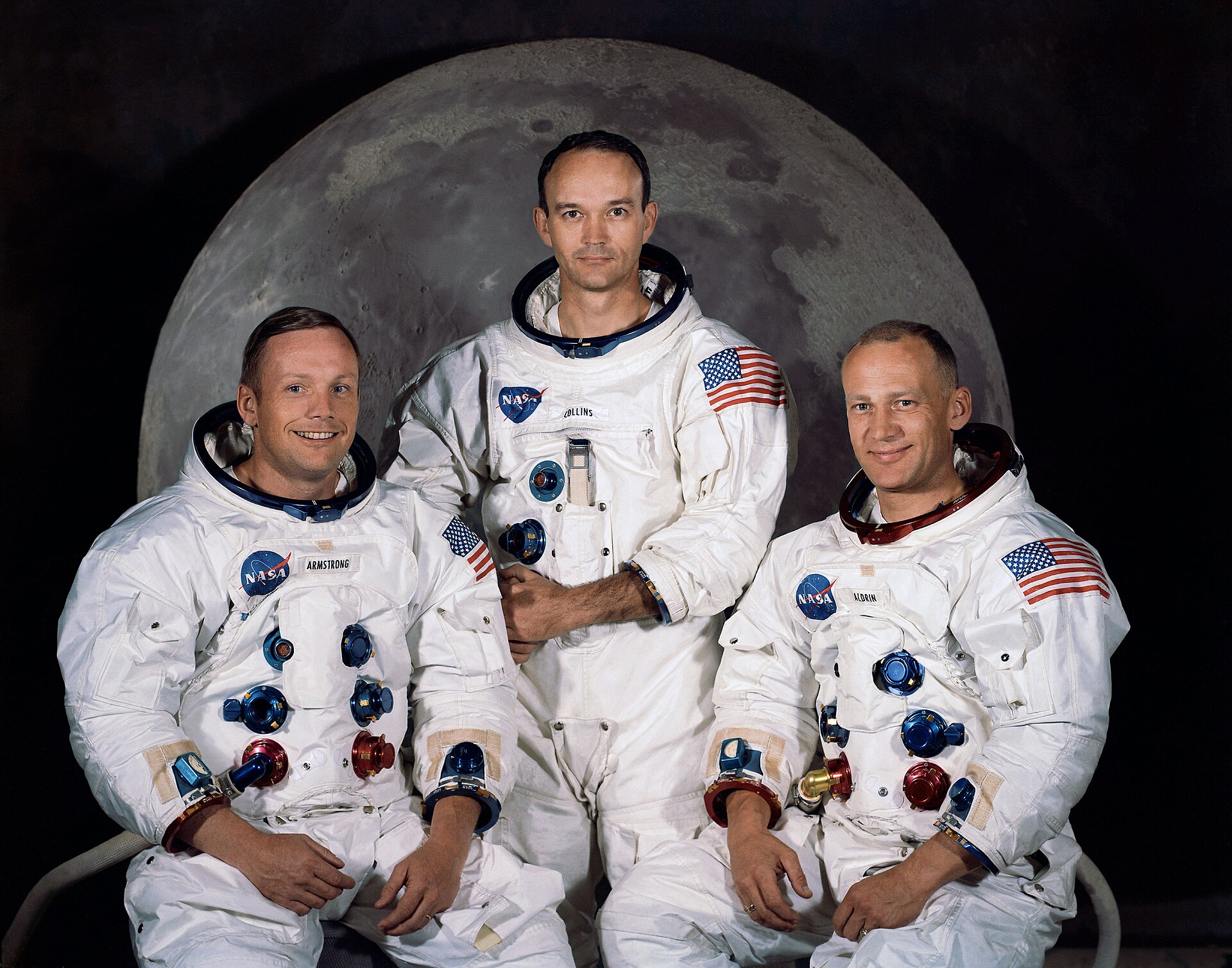
The Apollo 11 mission was the culmination of years of effort, driven by the Cold War rivalry between the United States and the Soviet Union. In 1961, President John F. Kennedy set a bold goal: to land a man on the Moon and return him safely before the end of the decade. This challenge sparked a race for technological and scientific superiority, pushing NASA to develop the Saturn V rocket and the Apollo spacecraft. The mission was not only about reaching the Moon—it was about proving that the United States could achieve the impossible.
The spacecraft, consisting of a command module, service module, and lunar module, was a marvel of engineering. Launched from Kennedy Space Center on July 16, 1969, it carried three astronauts: Neil Armstrong, Michael Collins, and Buzz Aldrin. After a three-day journey, Armstrong and Aldrin descended to the Moon's surface aboard the lunar module Eagle, landing in the Sea of Tranquility, while Collins remained in lunar orbit aboard the command module Columbia.
As Armstrong stepped onto the lunar surface, he uttered words that would echo through history: 'That's one small step for [a] man, one giant leap for mankind.' The phrase captured the essence of the mission—human ingenuity and the collective effort of a nation. Armstrong and Aldrin spent about two and a half hours walking on the Moon, collecting samples, deploying scientific instruments, and planting an American flag. Their work laid the foundation for future lunar exploration and scientific understanding.
The mission was not without its challenges. The fatal Apollo 1 launchpad fire in 1967 had been a severe setback for the program, but the team pressed on. The Soviet Union, despite early leads in spaceflight, was unable to match the Saturn V rocket, and its uncrewed Luna 15 probe crashed on the Moon on July 21—while Armstrong and Aldrin were still on the lunar surface. The success of Apollo 11 was the culmination of the Space Race, showcasing the United States' technological prowess and determination.
Armstrong's moonwalk was broadcast live to an estimated 600 million people, roughly one-fifth of the world's population at the time, making it among the most-watched television events in history. The world watched in awe as humans took their first steps on another celestial body. The mission also brought back valuable lunar samples, leading to the identification of three previously unrecognized minerals, and the scientific instruments deployed on the surface continued returning data for years afterwards.
More from History

The Morning Bingham Climbed to Machu Picchu
On a cold July morning in 1911, an American historian scrambled up a jungle-choked ridge above the Urubamba River — and by afternoon, a forgotten Inca citadel would belong to the world.

The Last Half-Hour of the Hindenburg
It was already half a day late, and the public had been told to keep away — but at seven o'clock that evening, the Hindenburg finally turned toward its mooring mast for the last time.

The Last Hours of Pompeii: August 24, 79 AD
By noon it was just another hot day beside the Bay of Naples. By evening, an entire mountain had rewritten the fate of thousands.

The Longest Walk: Mandela's Last Steps to Freedom
After 27 years behind bars, a 71-year-old man had to relearn how to walk out of a prison gate — into a waiting world of cameras, crowds, and a country holding its breath.

The Document Lincoln Signed on the First Day of 1863
On a single January morning, a president's pen would change the legal status of more than three million people — if the ink held and his hand did not shake.

The Day of the Dream: August 28, 1963
Two hundred and fifty thousand people converged on the National Mall that morning — by nightfall, one voice from the steps of the Lincoln Memorial would echo for generations.