The Myth of the Slave-Built Pyramids
For centuries, the image of whip-driven slaves dragging stone blocks across the desert has defined how the world imagines the pyramids. The archaeological record tells a very different, more logistical story.
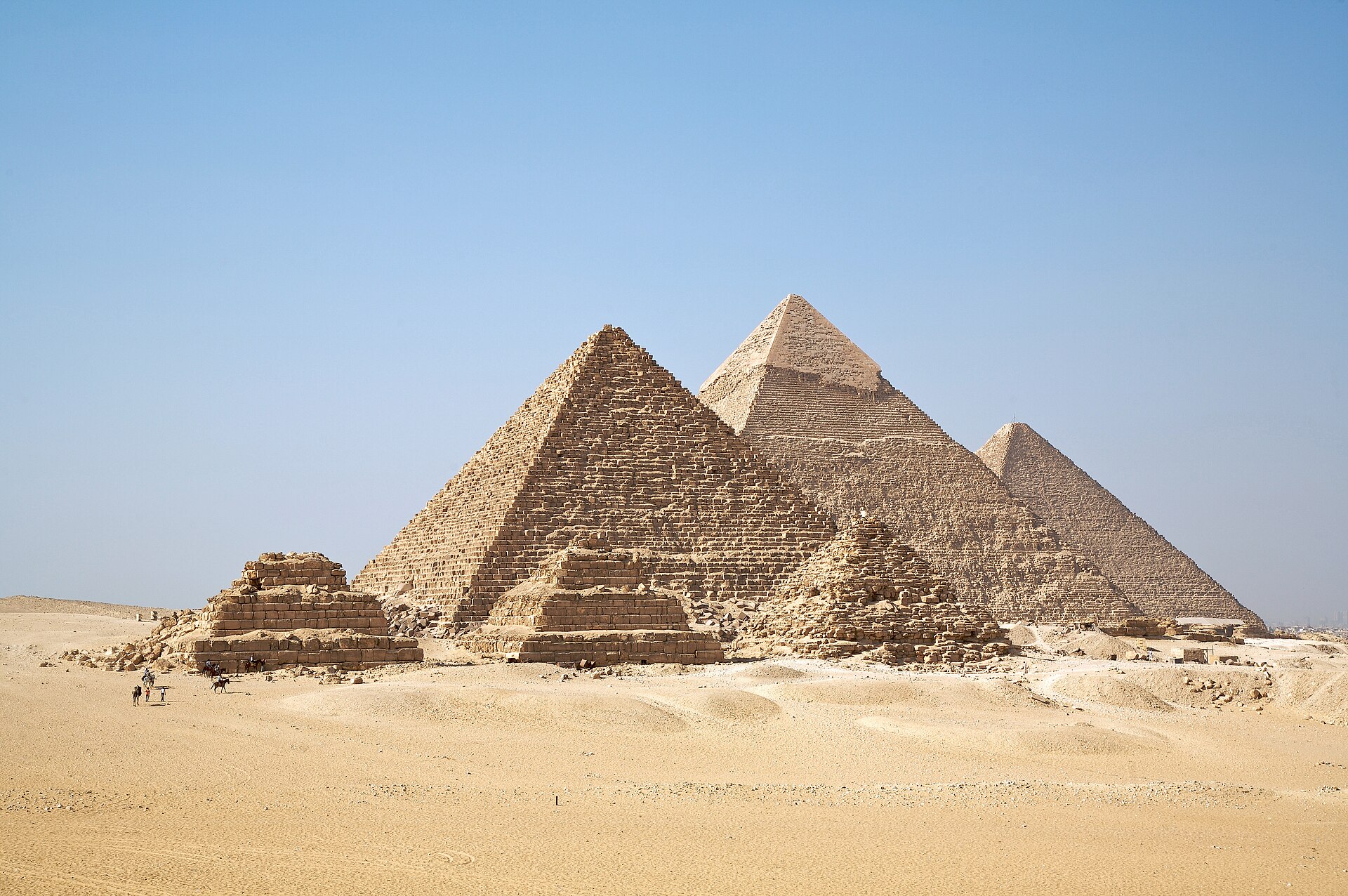
Ask most people how the pyramids of Giza were built, and they will describe gangs of enslaved people, chained together under a punishing Egyptian sun, forced to haul limestone blocks for a tyrant pharaoh's tomb. It is one of the most durable images in popular history — repeated in films, textbooks, and casual conversation for generations.
But the available record of how these monuments actually came together tells a different story, one centered on engineering, organization, and the Nile River rather than chained captives. Recent archaeological research at the Giza plateau has focused not on quarries and taskmasters, but on water. Sediment cores taken from the site show evidence of a Nile-connected harbor that functioned right at the base of the plateau during the reign of Khufu, the pharaoh for whom the Great Pyramid was built.
That harbor mattered enormously. Researchers argue it was central to a large-scale transport system that moved limestone blocks and other construction materials from quarries to the building site by boat rather than by brute overland dragging alone. This picture — of engineered waterways, seasonal flooding used to advantage, and coordinated logistics — points to a construction operation that required skill, planning, and manpower management on an industrial scale, not simply forced misery.
The broader history of pyramid-building reinforces this picture of evolving technical mastery rather than static brutal labor. The earliest pyramid-like structure, Mastaba 3808 attributed to the pharaoh Anedjib, may predate even the Pyramid of Djoser, built around 2630–2610 BC in the Third Dynasty. Djoser's stepped pyramid, expanded through a series of accretion layers atop an original square mastaba, represents an evolving architectural experiment, refined over generations of builders — not a single brutal one-off project.
That experimentation carried into the Fourth Dynasty, when pyramid design shifted from stepped to true smooth-sided forms, producing the great pyramids at Meidum, Dahshur, and finally Giza. The Pyramid of Khufu, the largest ever built and the last surviving Wonder of the Ancient World, sits at the peak of this long refinement — the product of accumulated knowledge passed between builders across decades, not a single brutal campaign.
More from History

The Morning Bingham Climbed to Machu Picchu
On a cold July morning in 1911, an American historian scrambled up a jungle-choked ridge above the Urubamba River — and by afternoon, a forgotten Inca citadel would belong to the world.

The Last Half-Hour of the Hindenburg
It was already half a day late, and the public had been told to keep away — but at seven o'clock that evening, the Hindenburg finally turned toward its mooring mast for the last time.

The Last Hours of Pompeii: August 24, 79 AD
By noon it was just another hot day beside the Bay of Naples. By evening, an entire mountain had rewritten the fate of thousands.

The Longest Walk: Mandela's Last Steps to Freedom
After 27 years behind bars, a 71-year-old man had to relearn how to walk out of a prison gate — into a waiting world of cameras, crowds, and a country holding its breath.

The Document Lincoln Signed on the First Day of 1863
On a single January morning, a president's pen would change the legal status of more than three million people — if the ink held and his hand did not shake.

The Day of the Dream: August 28, 1963
Two hundred and fifty thousand people converged on the National Mall that morning — by nightfall, one voice from the steps of the Lincoln Memorial would echo for generations.