The Myth of the 'Unsinkable' Ship
Everyone knows Titanic was advertised as unsinkable — right before it sank. Except the record shows something far stranger.
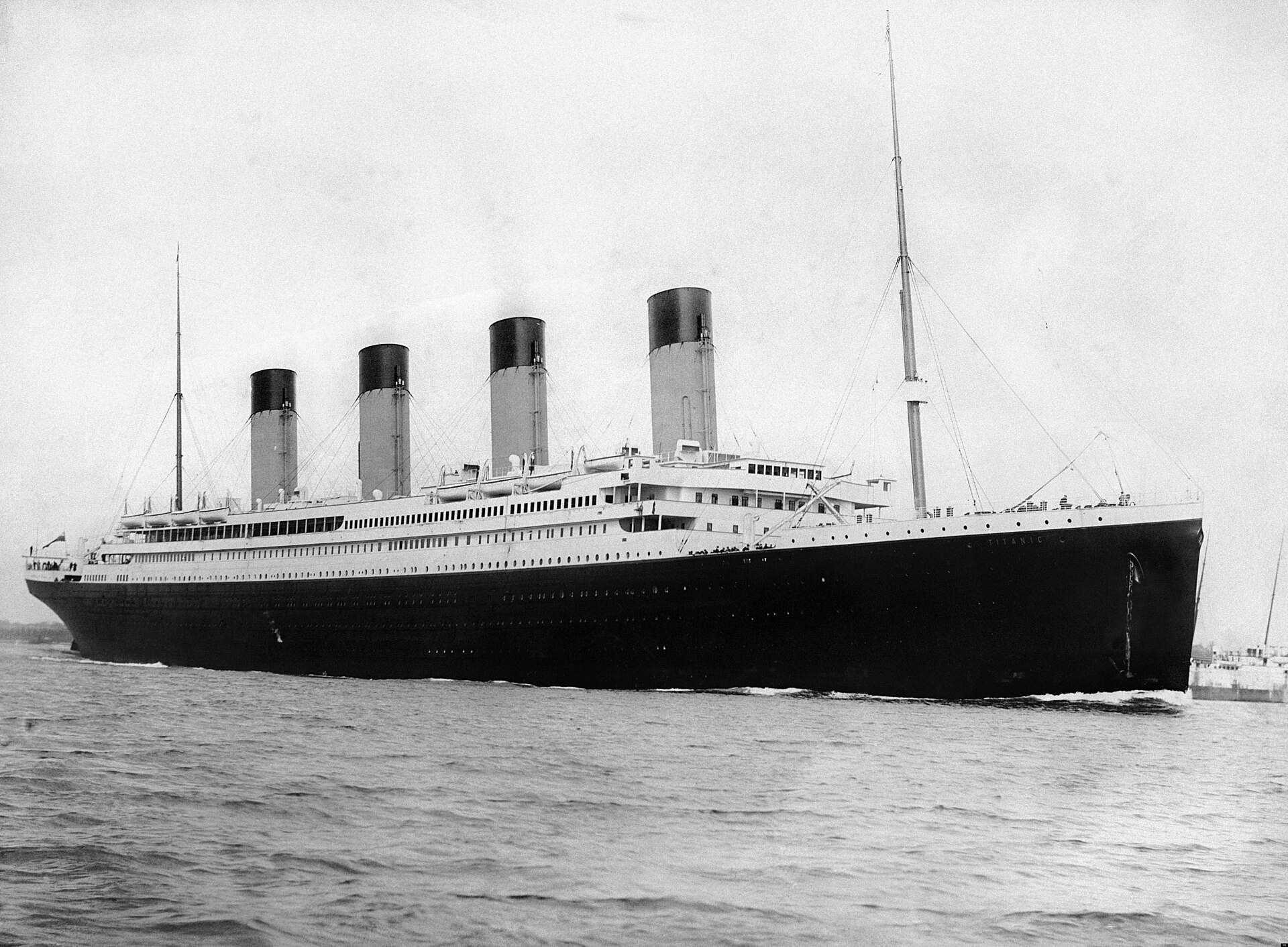
The story goes that White Star Line plastered posters and brochures with a boastful promise: this ship cannot sink. Then fate, or hubris, punished the claim on a freezing April night in 1912. It is one of the most repeated 'facts' about the disaster, and it is, at best, a distortion of how the reputation actually formed.
What the record actually shows is that Titanic earned its 'unsinkable' label not from an advertising slogan but from engineering. The ship had watertight compartments and remotely activated watertight doors — genuinely advanced safety features for 1912. These systems, combined with the ship's sheer size and the general confidence surrounding the new Olympic-class liners, contributed to a public and press reputation of near-invincibility. That reputation grew organically, through admiration of the technology, rather than being stamped onto tickets as a corporate guarantee.
Titanic was the second of three Olympic-class liners built by Harland and Wolff in Belfast for White Star Line, designed under Lord Pirrie, Thomas Andrews, Edward Wilding and Alexander Carlisle. It was, on entering service, the largest ship afloat — 269 metres long, over 52,000 tons, capable of roughly 43 km/h. Its first-class amenities were unmatched: a gymnasium, swimming pool, Turkish bath, smoking rooms, fine restaurants, and a powerful radiotelegraph system for passenger messages. This was a ship built to dazzle, not merely to float.
The lifeboat numbers tell a more uncomfortable truth than any slogan could. Titanic's davits could have lowered 48 boats, but the ship carried only 20 — fourteen standard lifeboats, two cutters, and four collapsibles that proved difficult to launch as the ship sank. Together they could hold 1,178 people, roughly half of those aboard and a third of the ship's full capacity. Yet this was not a violation of the rules; British Board of Trade regulations required only fourteen lifeboats for a vessel of 10,000 tonnes, and Titanic exceeded that minimum by six boats, providing room for 338 more people than the legal standard demanded.
So the ship was not under-equipped by the law of its time — it was over-equipped relative to an outdated law. The regulations had not been revised since 1894, when the largest ship afloat was a fraction of Titanic's size. No one had rewritten the rules to account for vessels of this new scale, and White Star Line was not obligated to. This regulatory gap, not corporate arrogance about unsinkability, explains why so few lifeboats existed for so many souls.
More from History

The Morning Bingham Climbed to Machu Picchu
On a cold July morning in 1911, an American historian scrambled up a jungle-choked ridge above the Urubamba River — and by afternoon, a forgotten Inca citadel would belong to the world.

The Last Half-Hour of the Hindenburg
It was already half a day late, and the public had been told to keep away — but at seven o'clock that evening, the Hindenburg finally turned toward its mooring mast for the last time.

The Last Hours of Pompeii: August 24, 79 AD
By noon it was just another hot day beside the Bay of Naples. By evening, an entire mountain had rewritten the fate of thousands.

The Longest Walk: Mandela's Last Steps to Freedom
After 27 years behind bars, a 71-year-old man had to relearn how to walk out of a prison gate — into a waiting world of cameras, crowds, and a country holding its breath.

The Document Lincoln Signed on the First Day of 1863
On a single January morning, a president's pen would change the legal status of more than three million people — if the ink held and his hand did not shake.

The Day of the Dream: August 28, 1963
Two hundred and fifty thousand people converged on the National Mall that morning — by nightfall, one voice from the steps of the Lincoln Memorial would echo for generations.