The Myth That Refuses to Die: Did Everyone in the Middle Ages Really Die at 30?
You've heard it a thousand times: in the Middle Ages, thirty was old age and forty was a miracle. But the record historians actually left behind tells a stranger, messier story.
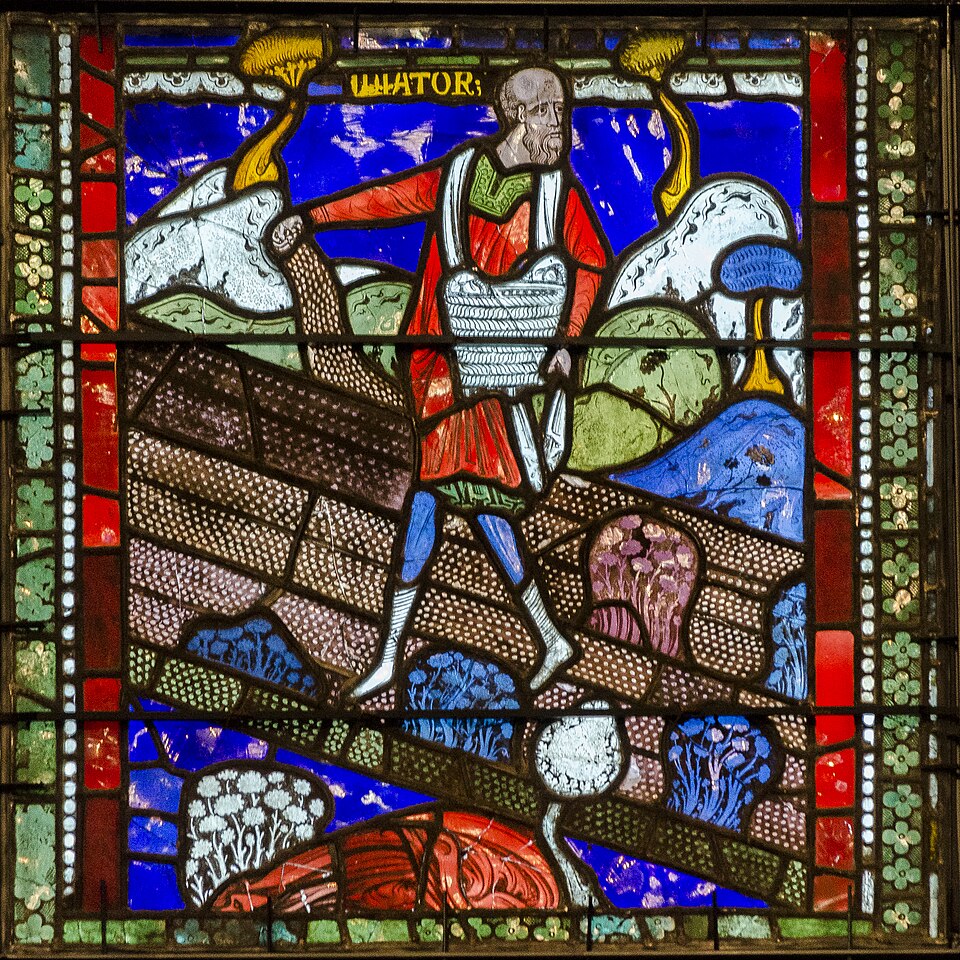
The claim is everywhere in casual conversation: medieval people were doomed to die young, worn out and toothless by their thirties, existing in some perpetual state of decrepitude that modern medicine has since rescued us from. It's repeated so often it feels like settled fact. Yet when you look at what historians of the period actually document, the picture that emerges is not a single grim statistic about universal early death, but a long, uneven story of population booms, catastrophic collapses, and everything in between.
The truth the sources reveal is that the Middle Ages was not one static condition lasting a thousand years — it was roughly a millennium, from the 5th to the late 15th century, broken into distinct phases with wildly different demographic realities. The Early Middle Ages saw population decline, counterurbanization, and mass migrations as centralized Roman authority collapsed. But the High Middle Ages, beginning after 1000, tells a completely different story: the population of Europe increased significantly, driven by technological and agricultural innovations and a warmer climate that boosted crop yields. People were not dying off in some flat, unchanging way — they were living through centuries of growth as often as centuries of crisis.
Where the myth of universal early death seems to get its most legitimate grounding is in specific catastrophes, not a constant baseline. The Late Middle Ages brought genuine demographic disaster: famine, plague, and war significantly diminished Europe's population, and between 1347 and 1350 the Black Death killed about a third of Europeans. That is a real, documented mass death event — but it was a discrete catastrophe within a few years, not proof that every medieval person's life was uniformly cut short across ten centuries.
It's also worth being honest about what the historical record does and doesn't say here: the specific claim that 'everyone died around age 30' as a routine life expectancy isn't something the source material directly confirms or explains as a statistic. What it does show is a period of enormous variation — eras of Roman institutional collapse in the 5th to 8th centuries, followed by growth, trade, and university-founding intellectual flourishing in the 11th and 12th centuries, followed by the plague-driven devastation of the 14th century.
This variation matters because it undercuts the flattening instinct behind the myth. The same thousand years that included the Black Death also included the rise of centralized nation-states that reduced crime and violence, the founding of universities, and cultural achievements like the theology of Thomas Aquinas, the paintings of Giotto, and the poetry of Dante and Chaucer — hardly the output of a civilization uniformly gripped by early death and despair.
More from History

The Morning Bingham Climbed to Machu Picchu
On a cold July morning in 1911, an American historian scrambled up a jungle-choked ridge above the Urubamba River — and by afternoon, a forgotten Inca citadel would belong to the world.

The Last Half-Hour of the Hindenburg
It was already half a day late, and the public had been told to keep away — but at seven o'clock that evening, the Hindenburg finally turned toward its mooring mast for the last time.

The Last Hours of Pompeii: August 24, 79 AD
By noon it was just another hot day beside the Bay of Naples. By evening, an entire mountain had rewritten the fate of thousands.

The Longest Walk: Mandela's Last Steps to Freedom
After 27 years behind bars, a 71-year-old man had to relearn how to walk out of a prison gate — into a waiting world of cameras, crowds, and a country holding its breath.

The Document Lincoln Signed on the First Day of 1863
On a single January morning, a president's pen would change the legal status of more than three million people — if the ink held and his hand did not shake.

The Day of the Dream: August 28, 1963
Two hundred and fifty thousand people converged on the National Mall that morning — by nightfall, one voice from the steps of the Lincoln Memorial would echo for generations.