The Ninety-five Theses: A Spark That Changed the World
In a quiet university town in Germany, a professor’s act of defiance would echo across continents and centuries. A single document, written in ink and inked with controversy, would ignite a movement that would reshape the world.
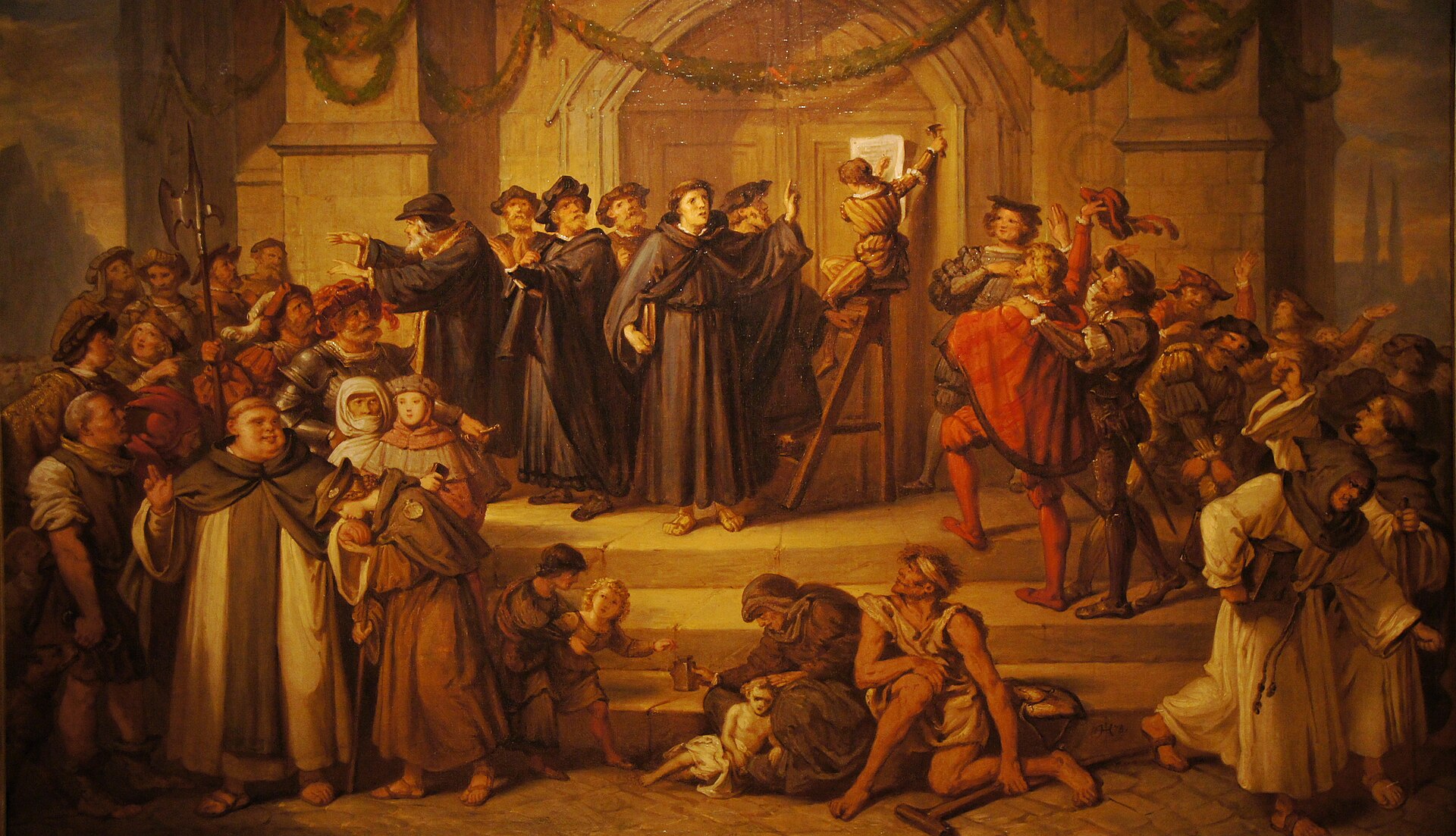
Martin Luther, a professor of moral theology at the University of Wittenberg, was not a revolutionary in the traditional sense. He was a man of faith, deeply rooted in the traditions of the Church. Yet, his writings would challenge the very foundation of the Church's teachings. The Ninety-five Theses, written in 1517, were not a manifesto but a list of academic propositions meant for debate. They were meant to spark discussion, not to declare war on the Church. Yet, the ideas contained within would set in motion a chain of events that would change the course of history.
The Theses were a response to the growing scandal surrounding indulgences, a practice that had become both a source of controversy and a means of financial gain. Indulgences were certificates that promised to reduce the temporal punishment of sin, and under abuses of the system they were sold by clergy who benefited from the trade. Luther was troubled by the way these indulgences had been used to exploit the faithful. He believed they cheapened the true nature of repentance and undermined the spiritual life of the people.
Luther's concerns were not born in a vacuum. For years, he had been preaching against the abuses of indulgences, warning that they did not replace the need for genuine repentance. His parishioners, however, were returning from buying indulgences with a sense of complacency, believing that their sins were forgiven simply by purchasing a certificate. This troubled Luther deeply. He saw the indulgences as a distraction from the true purpose of faith: a life of repentance and devotion to God.
In 1515, Pope Leo X had granted a plenary indulgence to fund the construction of St. Peter's Basilica in Rome, a decision that further fueled the controversy. This indulgence would apply to almost any sin, including adultery and theft. To many, the message seemed clear: salvation could be bought. Luther saw this as a direct challenge to the teachings of Christ, who had called for repentance, not payment.
Luther's Theses were a careful and scholarly critique of the indulgence system. He argued that true repentance was an internal struggle, not a transaction. The pope, he claimed, could release people only from the punishments he himself had administered through the church's system of penance, not from the guilt of sin. He attacked the false certainty that the indulgence preachers offered, emphasizing that the pope could only announce God's forgiveness in His name, and that the ultimate power to forgive belonged to God alone.
More from History

The Morning Bingham Climbed to Machu Picchu
On a cold July morning in 1911, an American historian scrambled up a jungle-choked ridge above the Urubamba River — and by afternoon, a forgotten Inca citadel would belong to the world.

The Last Half-Hour of the Hindenburg
It was already half a day late, and the public had been told to keep away — but at seven o'clock that evening, the Hindenburg finally turned toward its mooring mast for the last time.

The Last Hours of Pompeii: August 24, 79 AD
By noon it was just another hot day beside the Bay of Naples. By evening, an entire mountain had rewritten the fate of thousands.

The Longest Walk: Mandela's Last Steps to Freedom
After 27 years behind bars, a 71-year-old man had to relearn how to walk out of a prison gate — into a waiting world of cameras, crowds, and a country holding its breath.

The Document Lincoln Signed on the First Day of 1863
On a single January morning, a president's pen would change the legal status of more than three million people — if the ink held and his hand did not shake.

The Day of the Dream: August 28, 1963
Two hundred and fifty thousand people converged on the National Mall that morning — by nightfall, one voice from the steps of the Lincoln Memorial would echo for generations.