The Pass That Would Not Yield
For three days, a handful of Greeks held back the largest army the ancient world had ever seen. When the pass finally fell, it was not swords that broke them, but a secret path and a traitor's tongue.
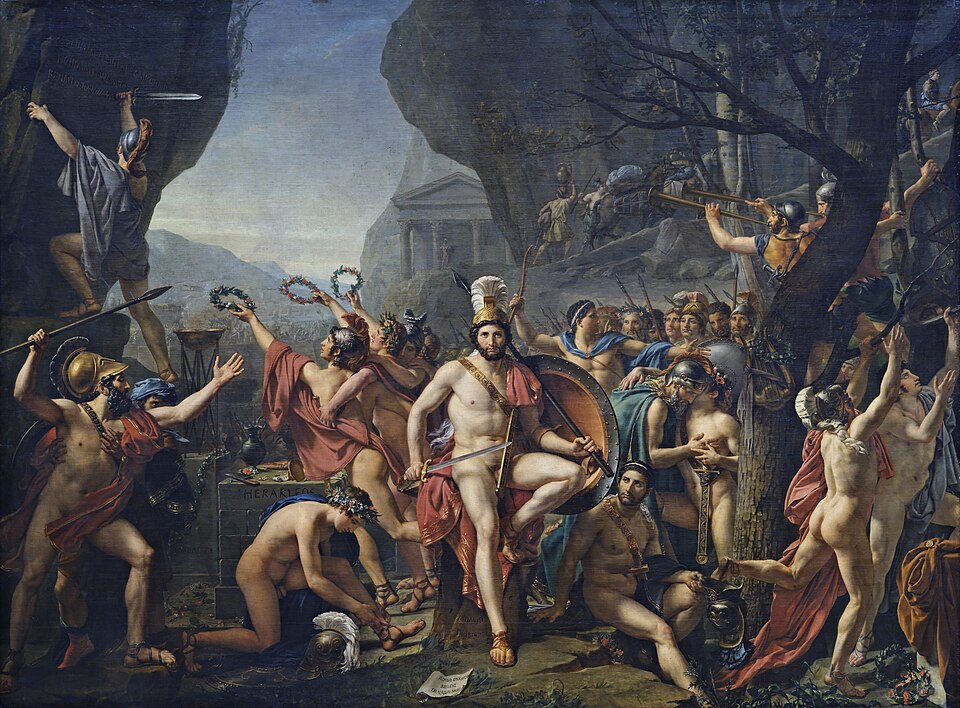
In the summer of 480 BC, the Persian king Xerxes marched south into Greece with a force modern scholars place between 120,000 and 300,000 soldiers, seeking to finish what his father Darius I had failed to do a decade earlier at Marathon. Ancient writers, awed and horrified, inflated the Persian host into the millions, but even the sober modern estimate describes an army of staggering scale, moving in tandem with a massive fleet along the coast.
The Athenian statesman Themistocles proposed a twin defense: block the Persian army on land at the narrow mountain pass of Thermopylae, while the Greek navy simultaneously held the Persians at the Straits of Artemisium. It was a plan built on geography — narrow spaces where numbers meant less than nerve and terrain.
A Greek force of roughly 7,000 men, including about 300 Spartans, marched north under the Spartan king Leonidas I to hold that pass. They arrived by late August or early September, just as the Persian army closed in. The outnumbered Greeks held the pass for seven days in total, including three days of direct battle, and for two full days of that fighting they blocked the only road through the pass, their discipline and use of the narrow terrain turning the Persian numerical advantage into a liability.
Then came the betrayal. After the second day of fighting, a local man named Ephialtes revealed to the Persians a hidden path that curled behind the Greek lines. Leonidas, realizing his force was about to be outflanked, made his decision: he sent the bulk of the Greek army away to fight another day, and stayed behind with 300 Spartans and 700 Thespians to guard the retreat. Reports also place up to 900 helots and 400 Thebans among those who remained.
With the exception of most of the Thebans, who reportedly surrendered, the men who stayed fought the Persians to the death. It became one of history's most famous last stands — not a victory in the tactical sense, but a demonstration of what disciplined defenders on native soil could do against overwhelming odds.
More from History

The Morning Bingham Climbed to Machu Picchu
On a cold July morning in 1911, an American historian scrambled up a jungle-choked ridge above the Urubamba River — and by afternoon, a forgotten Inca citadel would belong to the world.

The Last Half-Hour of the Hindenburg
It was already half a day late, and the public had been told to keep away — but at seven o'clock that evening, the Hindenburg finally turned toward its mooring mast for the last time.

The Last Hours of Pompeii: August 24, 79 AD
By noon it was just another hot day beside the Bay of Naples. By evening, an entire mountain had rewritten the fate of thousands.

The Longest Walk: Mandela's Last Steps to Freedom
After 27 years behind bars, a 71-year-old man had to relearn how to walk out of a prison gate — into a waiting world of cameras, crowds, and a country holding its breath.

The Document Lincoln Signed on the First Day of 1863
On a single January morning, a president's pen would change the legal status of more than three million people — if the ink held and his hand did not shake.

The Day of the Dream: August 28, 1963
Two hundred and fifty thousand people converged on the National Mall that morning — by nightfall, one voice from the steps of the Lincoln Memorial would echo for generations.