The Peace of Westphalia: A Turning Point in History
In the heart of a war that had ravaged Europe for decades, two cities became the stage for a historic peace. Osnabrück and Münster, once battlegrounds, now held the power to reshape the future of nations.
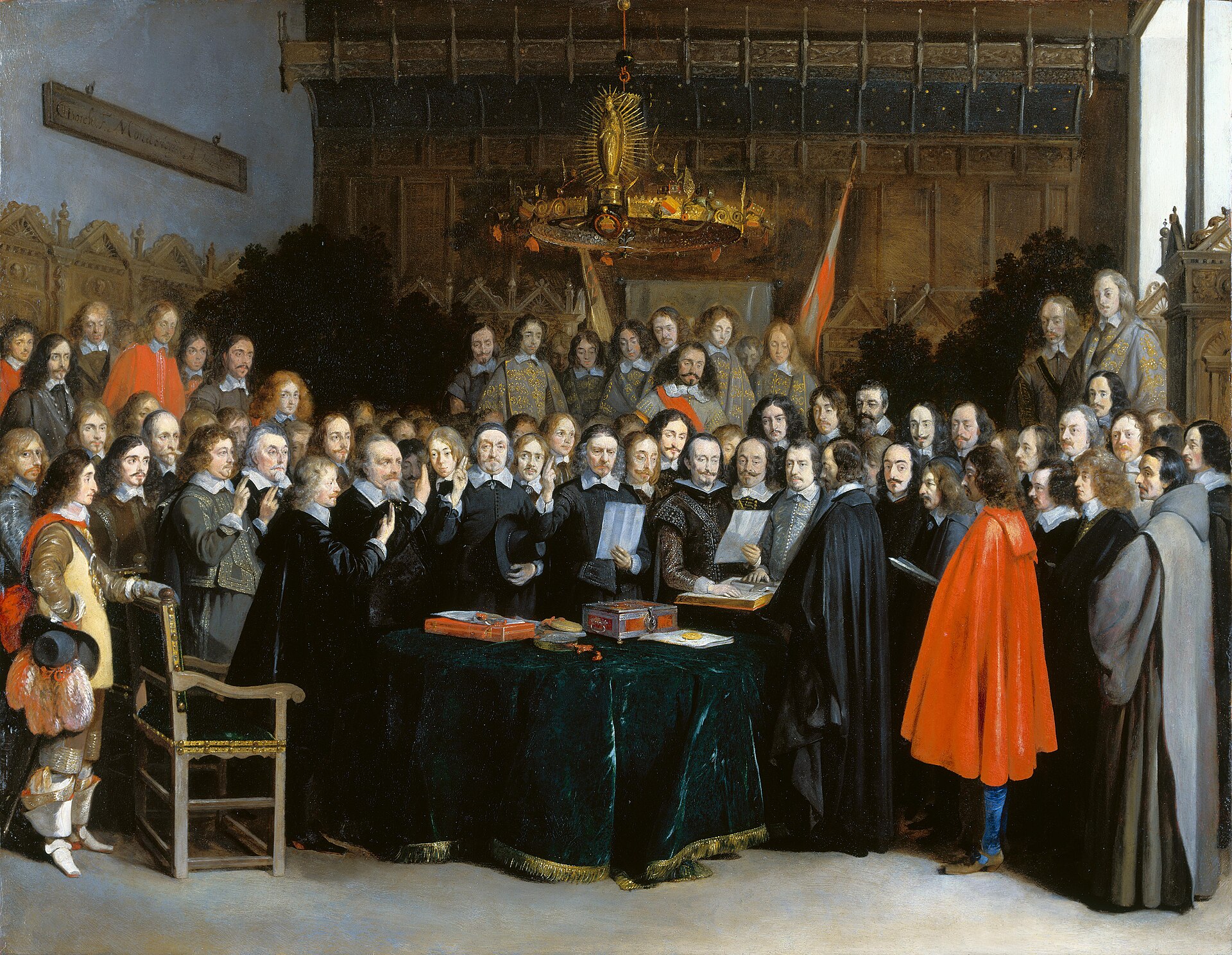
The Peace of Westphalia marked the end of the Thirty Years' War, a conflict that had torn through Europe for three decades. The war, rooted in religious strife and political power struggles, had left millions dead and much of Central Europe in ruins. By 1648, the need for peace had become undeniable, and the cities of Osnabrück and Münster became the unlikely birthplace of a new era. These two German cities, once war-torn, now hosted the negotiations that would bring an end to a brutal conflict.
The negotiations were complex, involving over 100 delegations from across Europe. Because each side wanted to negotiate on territory it could trust, the talks were split between Münster and Osnabrück, both maintained as neutral and demilitarized zones. Münster, a strictly Catholic city, hosted talks between the Holy Roman Empire and France, while Osnabrück, then under Protestant control, hosted discussions between the Empire and Sweden. This division reflected the deep religious and political divides that had fueled the war.
The process was long and filled with tension. Delegates from France, Sweden, and the Holy Roman Empire arrived with their own agendas. French diplomats, led by Henri II d'Orléans, sought to weaken Habsburg power, while Swedish representatives, including Count Johan Oxenstierna, aimed to secure religious freedom and territorial gains. The Holy Roman Emperor, Ferdinand III, struggled to maintain control over his empire as rival states carved out their own power.
Despite the tensions, the negotiations eventually led to two treaties: the Treaty of Münster and the Treaty of Osnabrück. These agreements ended the Thirty Years' War in the Holy Roman Empire. In Münster, parallel negotiations between the Dutch Republic and Spain had already produced a separate peace in January 1648, ending the Eighty Years' War and confirming Dutch independence. Within the Empire, power shifted as Protestant states gained more autonomy, while France and Sweden emerged as major powers, reshaping the balance of power in Europe.
The treaties had far-reaching consequences beyond the immediate peace. They came to be associated with the principle of Westphalian sovereignty, a cornerstone of modern international relations. This concept emphasized the sovereignty of states and the right of each nation to govern itself without external interference. While some historians debate whether the Peace of Westphalia was the true origin of these ideas, its influence on legal and political thought is undeniable.
More from History

The Morning Bingham Climbed to Machu Picchu
On a cold July morning in 1911, an American historian scrambled up a jungle-choked ridge above the Urubamba River — and by afternoon, a forgotten Inca citadel would belong to the world.

The Last Half-Hour of the Hindenburg
It was already half a day late, and the public had been told to keep away — but at seven o'clock that evening, the Hindenburg finally turned toward its mooring mast for the last time.

The Last Hours of Pompeii: August 24, 79 AD
By noon it was just another hot day beside the Bay of Naples. By evening, an entire mountain had rewritten the fate of thousands.

The Longest Walk: Mandela's Last Steps to Freedom
After 27 years behind bars, a 71-year-old man had to relearn how to walk out of a prison gate — into a waiting world of cameras, crowds, and a country holding its breath.

The Document Lincoln Signed on the First Day of 1863
On a single January morning, a president's pen would change the legal status of more than three million people — if the ink held and his hand did not shake.

The Day of the Dream: August 28, 1963
Two hundred and fifty thousand people converged on the National Mall that morning — by nightfall, one voice from the steps of the Lincoln Memorial would echo for generations.