The Search for the Source of the Nile
For millennia the world's longest river kept its birthplace a secret — until nineteenth-century explorers went looking for it around a great African lake.
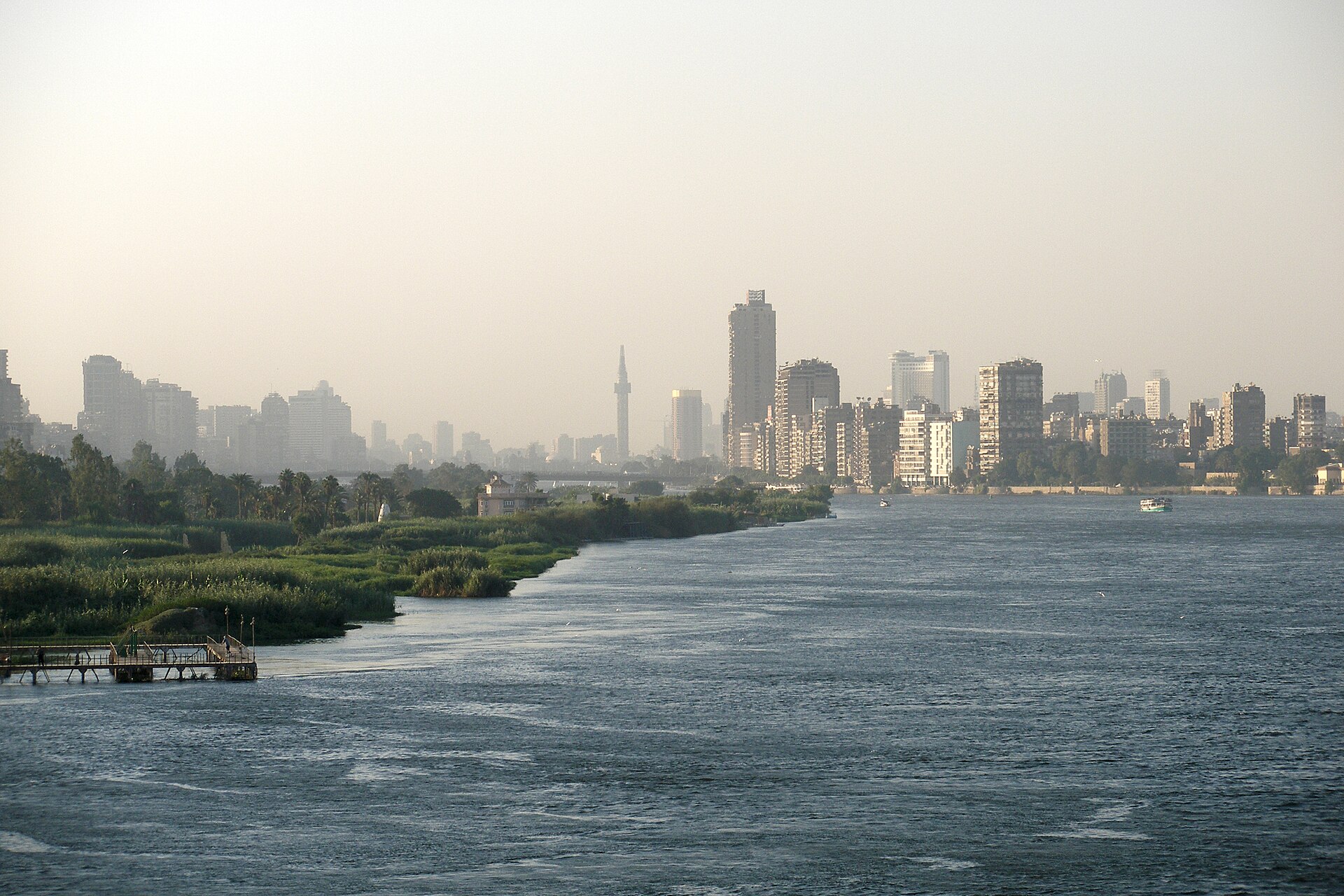
The Nile stretches 7,088 kilometers from its farthest source to the Mediterranean, the longest river on Earth, yet for most of human history no one could say with certainty where it began. Ancient Egyptians, who depended on the river for nearly every aspect of life, imagined it descending from the heavens, its floodwaters arriving through hidden passages from the underworld. They deified it as Hapi, giving human form to a mystery they could not otherwise explain.
The Greek historian Herodotus collected several competing stories about the Nile's origin. One held that it flowed from Oceanus, the great river believed to encircle the entire world. Another claimed it rose in Libya, passed through Ethiopia, and finally reached Egypt. The most detailed account he recorded came from treasury officials at Sais, who described a source near Syene and Elephantine, close to modern Aswan — though even this fell short of the river's true beginnings far to the south.
Centuries later, the astronomer Ptolemy located the Nile's headwaters in a legendary range he called the Mountains of the Moon. That name has since been associated with the Rwenzori Mountains in Uganda, whose slopes hold some of the highest sources feeding the river's basin — a striking case of ancient guesswork brushing close to geographic truth.
It was only in the late nineteenth century that Europeans undertook systematic explorations to resolve the question, focusing their search around Lake Victoria, the vast lake shared today by Tanzania, Uganda, and Kenya. Lake Victoria feeds the White Nile at its outflow in Jinja, Uganda, and these expeditions are credited with locating what was long considered the source of the river.
But Lake Victoria itself is only part of the answer. The White Nile's most distant headwaters lie further south still, in the Nile Basin's farthest reaches. In Burundi, one of the heads of the Ruvyironza River — which feeds into the Kagera River, itself a tributary flowing into Lake Victoria — was long regarded as the river's southernmost source. In 1937, the geographer Burkhart Waldecker erected a monument near the town of Rutovu, close to Mount Kikizi, marking this remote spot as the beginning of the world's longest waterway.
More from Explorations

Humboldt: The Man Who Measured the World
A Prussian noble's son, once mocked as a sickly child, would climb a volcano to a world-record height and rewrite how humanity understood nature itself.

The Man Who Named Canada
A Breton mariner planted a wooden cross on a foreign shore and claimed a kingdom he did not understand — then spent a winter frozen into its river, praying a stranger's remedy would save his men.

Sixty Ships Into the Unknown: Hanno's Voyage Down the African Coast
A Carthaginian fleet of sixty ships and thousands of settlers vanished past the Pillars of Hercules to found cities on an unmapped coast — and came home with the skins of hairy, hostile 'gorillas' as proof of how far they had gone.

HMS Challenger: The Voyage That Charted the Deep
A stripped-down warship, its guns torn out to make room for microscopes, set sail from Portsmouth to answer a question no one had ever properly asked: what lies at the bottom of the sea?

Scott's Last Expedition: The Letters Written at the End of the World
Five men reached the bottom of the world only to find a Norwegian flag already planted there. What followed was not glory, but a slow, frozen unraveling that the world would remember for a century.

Marco Polo: In the Court of Kublai Khan
A fifteen-year-old boy meets the father he barely knew — and is soon swept toward the richest court on Earth. Twenty-four years later, he returns home with tales so vast that Venice simply calls him 'Mister Millions'.