The Shepherd, the Jar, and the Library of the Wilderness
A thrown stone, the crack of shattering clay, and a goat that was never found — this is how the modern world stumbled into a library buried for nearly two thousand years.
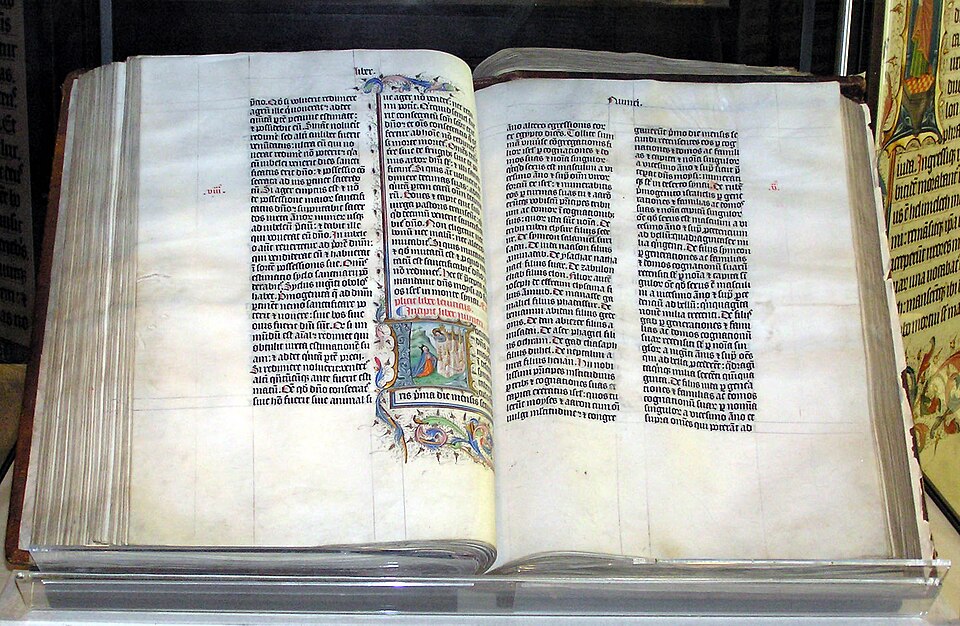
Sometime in late 1946 or early 1947, a young Bedouin shepherd went looking for a lost goat on a hillside above the Dead Sea, west of the Jordan River, not far from Jericho. Idly tossing a stone into a dark opening in the rock, he heard something break. Curiosity pulled him down into the cave, and there, on the floor, sat large clay jars. Inside them, wrapped in linen, lay leather scrolls that had rested undisturbed for centuries.
The shepherd — later identified in different accounts as Muhammed edh-Dhib, alongside his cousin Jum'a Muhammed and Khalil Musa — had found what would become known as Cave 1 at Qumran. He pulled out a handful of scrolls, among them what scholars would come to call the Isaiah Scroll, the Habakkuk Commentary, and the Community Rule. None were destroyed in the retrieval. For a time, the Bedouins simply hung the scrolls from a tent pole while they debated what to do with such strange objects, showing them around to family and neighbors.
When they finally tried to sell them, the first dealer they approached, a man named Ibrahim 'Ijha in Bethlehem, waved them off as worthless. It would take more educated eyes to grasp what had been found. Eventually, five scrolls from Cave 1 were purchased by the Syrian Orthodox Archbishop of Jerusalem, and three more by Professor E. L. Sukenik of the Hebrew University — the men who first understood that the tent-pole curiosities were, in fact, among the oldest biblical manuscripts ever discovered.
Word spread, and between 1946 and 1956 a combination of Bedouin searchers and professional archaeologists combed the cliffs near Qumran, eventually locating eleven caves in total. Cave 4, nicknamed the Cave of the Partridge, proved the richest: excavated in September 1952, it yielded thousands of fragments belonging to hundreds of manuscripts, later distilled into some four hundred identifiable texts covering every book of the Old Testament except Esther. Cave 11, opened in 1956, gave up thirty-six well-preserved Psalms, a Hebrew Leviticus scroll in excellent condition, fragments of an Apocalypse of New Jerusalem, and an Aramaic translation of Job.
Altogether, scholars would eventually assemble roughly 15,000 fragments representing about 850 scrolls, drawn from the eleven Qumran caves. Most were written in Hebrew, some in Aramaic, a few in Greek — inked onto parchment and papyrus, with one unusual scroll engraved on copper. Dated by paleography and radiocarbon analysis to between the 3rd century BCE and the 1st century CE, and corroborated by bronze coins spanning the reign of the Hasmonean ruler John Hyrcanus through the First Jewish–Roman War, the scrolls capture Judaism at a hinge moment in its history.
More from Archaeology

The Bronze Disc That Rewrote the Sky
Two looters with a metal detector dug up something illegal, invisible in value, and older than Stonehenge's final stones — a map of the heavens buried for over three thousand years.

The Faceless Women of the Ice Age
Long before writing, before cities, before the wheel, someone carved a woman's body into stone and ivory — and left no name, no face, no explanation.

The Pebble That Might Be Human
A palm-sized stone found on a Moroccan riverbank may be humanity's oldest attempt to see itself — or simply a trick of erosion.

The Crown That Vanished: Deshret and the Red Land
A crown worn by kings for three thousand years has never once been found in a tomb — not one. So where did it go?

The Face That Traveled Between Empires
A farm worker's shovel struck stone in 1897 and unearthed a face so striking it would be sold to France, seized as war booty, and finally traded back for a Velázquez.

The Boy in the Dark Tunnel
A schoolboy fell into black water inside an ancient tunnel and surfaced with his fingers brushing letters no one had noticed for 2,600 years.