The Ship That Waited 363 Years
When a hurricane swallowed a fleet off the Florida Keys in 1622, it took with it more silver and gold than most kingdoms saw in a lifetime. It would take three and a half centuries — and one obsessed treasure hunter's family — to bring it back.
Nuestra Señora de Atocha was built for the Spanish Crown in Havana in 1620, a 550-ton galleon stretching 112 feet with a beam of 34 feet, armed and hardened for one specific job: guarding the rear of Spain's treasure fleets as their almirante, ready to fend off attack from behind while the rest of the convoy sailed ahead. Named for the Basilica of Nuestra Señora de Atocha in Madrid, she was built to carry riches, not just protect them.
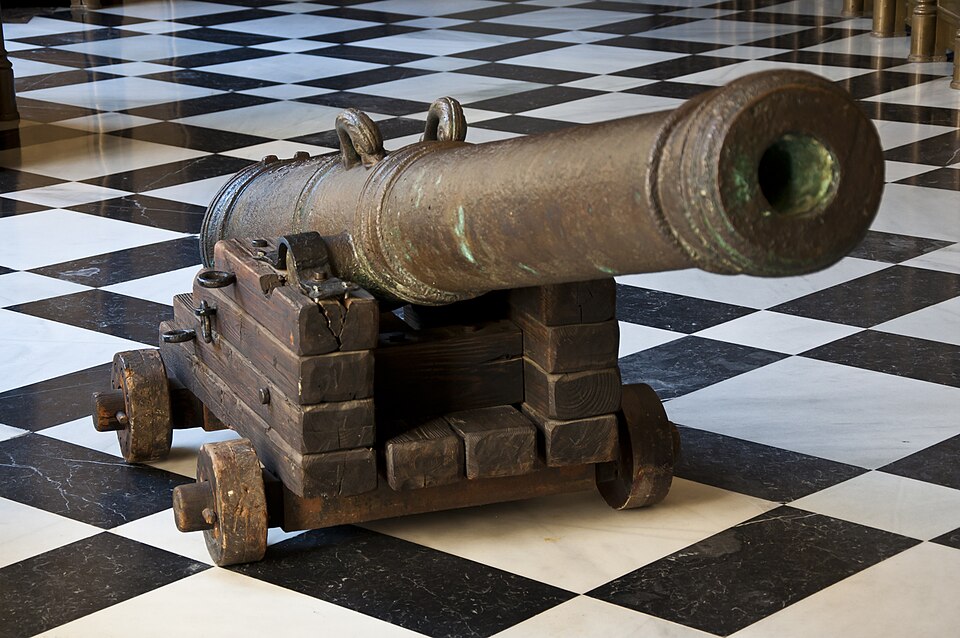
In 1622 she was loaded almost beyond belief. Treasure arriving by mule train into Panama City took two months just to record and stow aboard her — silver from Bolivia, Peru, and Mexico, gold and emeralds from Colombia, pearls from Venezuela, alongside tobacco, worked silverware, and bronze cannons. Delays in Veracruz and then Havana pushed her convoy's departure six weeks behind schedule; the 28-ship fleet finally left Havana on 4 September 1622, carrying crew, soldiers, and passengers from across Spanish America.
Disaster struck almost immediately after departure. On the second day of the voyage, a hurricane overtook the ships in the Florida Straits. By the morning of 6 September, eight vessels had sunk, their wreckage scattered from Marquesas Key to the Dry Tortugas. Of the 265 people aboard the Atocha, all but three sailors and two enslaved men perished; the survivors clung to the ship's mizzenmast until rescue. Among the dead was Bartolomé García de Nodal, explorer of the Straits of Magellan surrounding Cape Horn. Every ounce of treasure went down with the ship, roughly 30 leagues — about 140 kilometers — from Havana.
Spain moved quickly once news reached Havana, sending five ships to salvage the Atocha and her sister ship Santa Margarita, which had run aground nearby. But the Atocha rested in about 17 meters of water, far too deep for the diving methods of the day, and a second hurricane on 5 October scattered her remains even further. Salvagers did recover nearly half of Santa Margarita's cargo over the following years, using a brass diving bell with a small glass window: enslaved divers were lowered to the seabed to grab what they could and were hauled back up, a process so dangerous that their deaths were logged as simple business expenses. Despite decades of searching, Spain never found the Atocha.
The loss reverberated far beyond the Florida Straits. Spain's crown, already straining to fund its part in the Thirty Years' War, was forced to borrow heavily and sell off galleons to cover the shortfall left by the sunken fleet. The treasure that might have eased that burden simply vanished beneath the waves, waiting.
More from Treasures

The Legend of the Nazi Gold Train
Somewhere beneath the hills of Poland, rumor insists, a train loaded with looted treasure vanished into a tunnel and was never seen again. The story survives because the plunder behind it was terrifyingly real.

The Treasure List Carved in Copper
While every other Dead Sea Scroll was written on parchment or papyrus, one was hammered into metal — a list of buried gold and silver that no one has ever found.

The Diamond That Vanished for a Century
For decades, treasure hunters and novelists spun theories about a lost 137-carat gem — sold, recut, melted into legend. It was sitting in a Quebec bank vault the entire time.

Gold, Ghosts, and the Mountain That Keeps Its Secret
For over a century, treasure hunters have vanished into a jagged Arizona range chasing a fortune that may never have existed at all. What they left behind was not gold, but one of America's most enduring legends.

The King Who Buried a River
When Rome finally cornered the Dacian king, it wasn't a sword that gave up his secret — it was a traitor's whisper about a riverbed.

The Fortune Dutch Schultz Took to His Grave
He asked New York's mob bosses for permission to kill a federal prosecutor — and when they said no, he disobeyed them anyway. It was a decision that would end his life and leave behind a fortune that has never been found.