The Spanish Armada: A Clash of Empires
In the summer of 1588, the seas around England were set to witness a battle that would shape the course of history. A vast Spanish fleet, the Armada, aimed to overthrow the Protestant Queen Elizabeth I and restore Catholicism to England. But the tide of fate had already begun to turn.
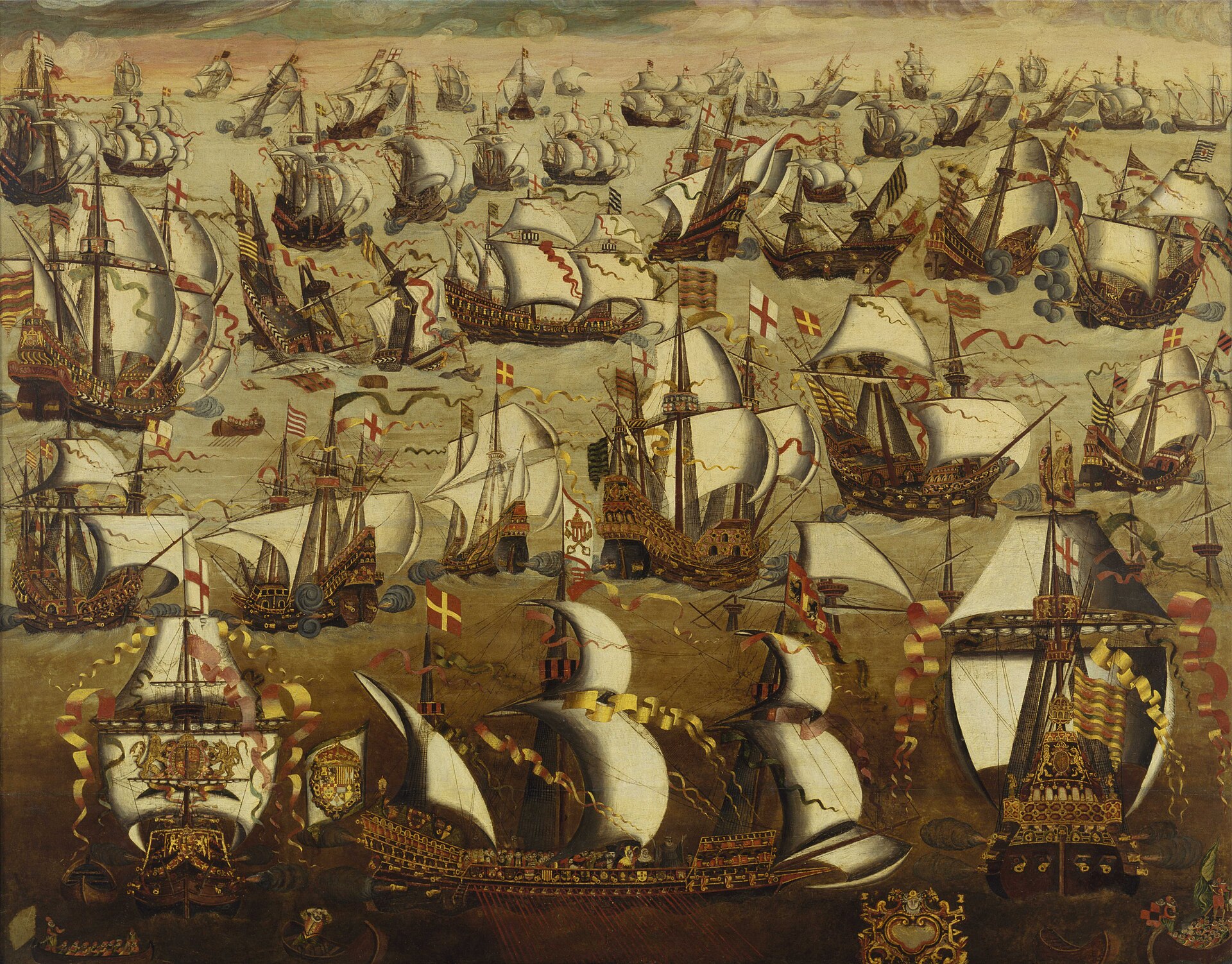
The Spanish Armada was the largest fleet ever assembled, a symbol of Philip II's power and ambition. Commissioned to invade England and depose Elizabeth I, it was a formidable force, with galleons and smaller ships ready to confront the English navy. The plan was to sail up the English Channel, join forces with the Duke of Parma's army in Flanders, and launch a coordinated invasion of England. Yet the Armada faced an enemy that was both agile and determined. The English fleet, based in Plymouth, was faster and more maneuverable, allowing it to attack the Spanish as they moved through the Channel.
Alonso de Guzmán, Duke of Medina Sidonia, led the Armada with strict adherence to his orders. Despite advice from his subordinates to first attack the English fleet at Plymouth and then anchor in the Solent, he refused to deviate from his mission to reach Parma. This rigid adherence to protocol proved costly. As the Armada reached Calais, still awaiting word from Parma, it was attacked at night by English fire ships, forcing the Spanish to cut their anchor lines and scatter.
Despite the Armada's initial advantages in discipline and formation, the English navy, with superior gunnery and tactics, gained the upper hand from that moment on. The battle for the English Channel turned brutal. The Armada, now scattered and vulnerable, faced the English fleet in the Battle of Gravelines. The Spanish suffered heavy losses, and as the wind shifted, they found themselves in danger of running aground on the Dutch coast before a change in wind allowed them to escape into the North Sea.
With no clear path forward and Parma's forces unreached, the Armada turned back, navigating the long way home through Scotland and Ireland. The journey was fraught with peril: up to 24 ships were wrecked along the way before the survivors managed to reach home. The Spanish were battered by bad weather and outmaneuvered by English tactics and gunnery throughout.
The Spanish Armada's defeat marked a turning point in the Anglo-Spanish War. The English had not only repelled an invasion but had also demonstrated their naval capability. The failure of the Armada emboldened Protestant Europe and dented Spain's aura of invincibility, even as Spain remained a dominant naval power for years afterward.
More from History

The Morning Bingham Climbed to Machu Picchu
On a cold July morning in 1911, an American historian scrambled up a jungle-choked ridge above the Urubamba River — and by afternoon, a forgotten Inca citadel would belong to the world.

The Last Half-Hour of the Hindenburg
It was already half a day late, and the public had been told to keep away — but at seven o'clock that evening, the Hindenburg finally turned toward its mooring mast for the last time.

The Last Hours of Pompeii: August 24, 79 AD
By noon it was just another hot day beside the Bay of Naples. By evening, an entire mountain had rewritten the fate of thousands.

The Longest Walk: Mandela's Last Steps to Freedom
After 27 years behind bars, a 71-year-old man had to relearn how to walk out of a prison gate — into a waiting world of cameras, crowds, and a country holding its breath.

The Document Lincoln Signed on the First Day of 1863
On a single January morning, a president's pen would change the legal status of more than three million people — if the ink held and his hand did not shake.

The Day of the Dream: August 28, 1963
Two hundred and fifty thousand people converged on the National Mall that morning — by nightfall, one voice from the steps of the Lincoln Memorial would echo for generations.