The Storm, the Silver, and the Standoff Off Plantation Key
A hurricane sank her in 1733. Two centuries later, a treasure hunter's shovel — and a lawsuit — would make her famous all over again.
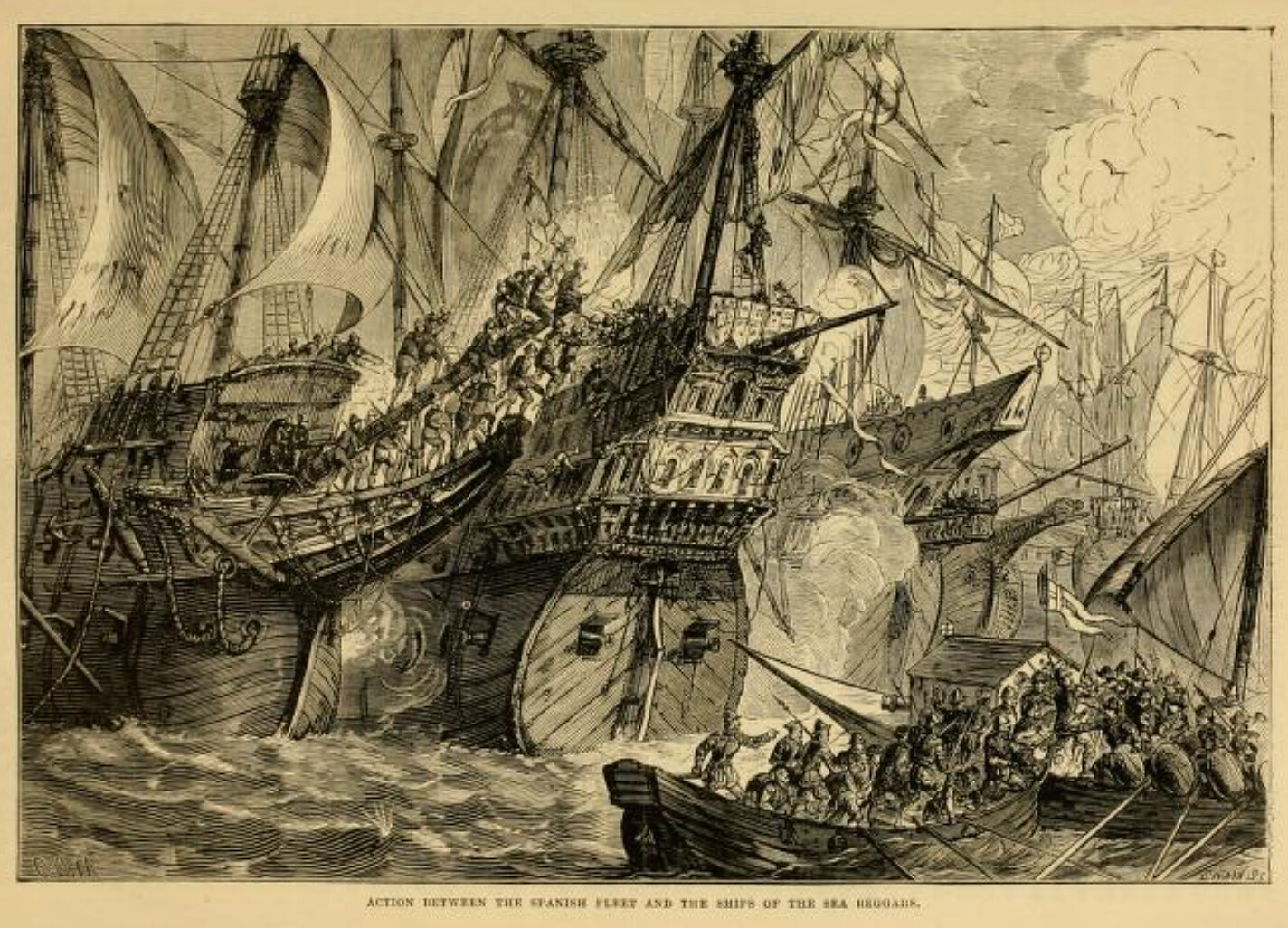
On July 15, 1733, a hurricane tore through the Florida Straits and caught the Spanish fleet in the open water. Among the eighteen merchant ships sailing home from Cuba to Spain was the San José y Las Animas, a 327-ton vessel built in England in 1728 for the Spanish crown. She carried twenty-six guns and was under the command of Captain Cristóbal Fernando Franco.
As the storm intensified, the San José ran aground off Tavernier Key, near what is now Plantation Key. Water poured into her hull as her crew huddled beneath the deck, waiting out the worst of the wind before finally abandoning ship. They made it to shore on makeshift rafts. Remarkably, every member of the crew survived, even as their vessel settled into twenty-eight feet of water, her cargo scattered and unreachable.
The San José's manifest listed 30,435 pesos in silver and bullion, along with Chinese porcelain, brazilwood, cocoa, and vanilla — a cargo typical of the trade routes linking the Spanish Caribbean to Europe and Asia. For more than two centuries, that cargo lay buried beneath sand roughly four miles southeast of Plantation Key, forgotten beneath the waves.
In 1968, treasure hunters rediscovered the wreck at coordinates 24 degrees North, 80 degrees 29.334 West. Using a magnetometer, they traced a ballast pile 135 feet long and about 40 feet wide, along with twenty-three cannons and two anchors scattered roughly 200 feet from the main site — silent evidence of the ship breaking apart in the storm two centuries earlier.
The man who found her was Tom Gurr, working with support from the Smithsonian Institution under curator Mendel Peterson. Gurr's team used 8-inch airlifts to suck sediment away from the wreck and haul artifacts to the surface, piece by piece, from the seafloor that had hidden them since 1733.
More from Treasures

The Legend of the Nazi Gold Train
Somewhere beneath the hills of Poland, rumor insists, a train loaded with looted treasure vanished into a tunnel and was never seen again. The story survives because the plunder behind it was terrifyingly real.

The Treasure List Carved in Copper
While every other Dead Sea Scroll was written on parchment or papyrus, one was hammered into metal — a list of buried gold and silver that no one has ever found.

The Diamond That Vanished for a Century
For decades, treasure hunters and novelists spun theories about a lost 137-carat gem — sold, recut, melted into legend. It was sitting in a Quebec bank vault the entire time.

Gold, Ghosts, and the Mountain That Keeps Its Secret
For over a century, treasure hunters have vanished into a jagged Arizona range chasing a fortune that may never have existed at all. What they left behind was not gold, but one of America's most enduring legends.

The King Who Buried a River
When Rome finally cornered the Dacian king, it wasn't a sword that gave up his secret — it was a traitor's whisper about a riverbed.

The Fortune Dutch Schultz Took to His Grave
He asked New York's mob bosses for permission to kill a federal prosecutor — and when they said no, he disobeyed them anyway. It was a decision that would end his life and leave behind a fortune that has never been found.