The Suez Canal: A Bridge Between Continents
In 1869, the Suez Canal opened, transforming global trade and shaping modern history. But its story began long before that, with ancient ambitions and a vision of connecting two worlds.
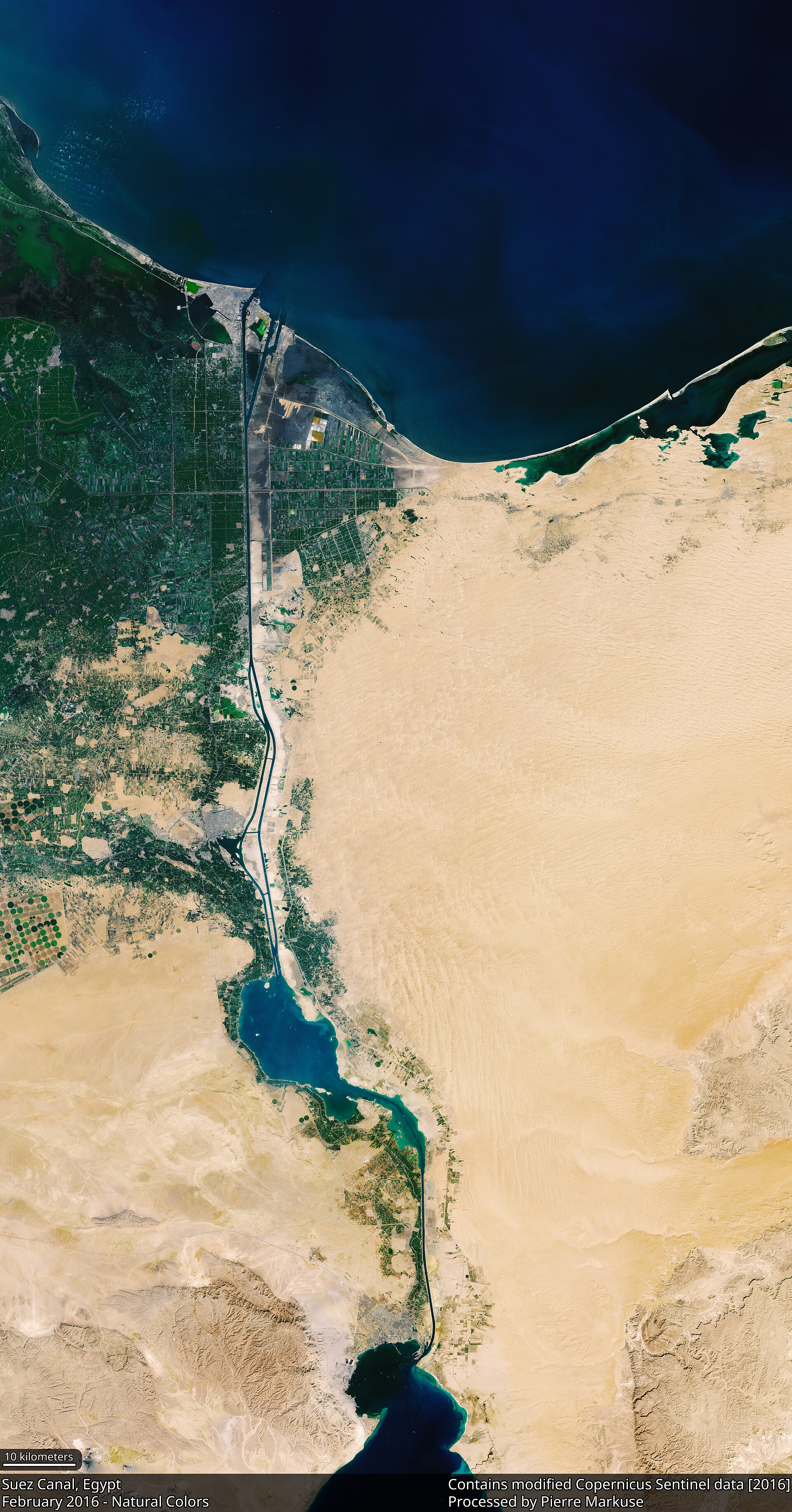
The Suez Canal, an artificial waterway in Egypt, connects the Mediterranean Sea to the Red Sea. This 193.30-kilometre-long route cuts through the Isthmus of Suez, dividing Africa and Asia. It serves as a critical link for trade between Europe and Asia. Before its completion, the idea of such a passage had been explored for centuries, rooted in ancient Egyptian ambitions.
The canal's construction was a monumental task, taking over a decade to complete. French diplomat Ferdinand de Lesseps, acting on behalf of French interests, formed the Compagnie de Suez in 1858 for the express purpose of building the canal. Work began in 1859 and faced challenges like disease, flooding, and labor disputes. By 1869, the canal was officially opened, marking a new era in global commerce and navigation.
The Suez Canal revolutionized maritime travel by offering a direct route between the North Atlantic and northern Indian oceans. Vessels could bypass the South Atlantic and southern Indian oceans, cutting travel time dramatically. The route reduced the journey distance from the Arabian Sea to London by approximately 8,900 kilometers, enabling faster and more efficient trade between continents. The canal's strategic importance became evident as it shaped economic and military dynamics for decades.
At its opening, the canal was a single-lane waterway with passing locations at the Ballah Bypass and Great Bitter Lake. Unlike other canals, it featured no locks, allowing seawater to flow freely. The direction of water movement changed with the seasons, flowing north in winter and south in summer. This natural flow made the canal both unique and complex in its operation.
The canal's ownership shifted hands over time, reflecting the geopolitical tensions of the era. Initially, it was controlled by a concessionary company with European shareholders, mainly British and French. However, in 1956, President Gamal Abdel Nasser nationalized the canal, triggering the Suez Crisis. This event underscored the canal's strategic importance and its role in international politics.
More from History

The Morning Bingham Climbed to Machu Picchu
On a cold July morning in 1911, an American historian scrambled up a jungle-choked ridge above the Urubamba River — and by afternoon, a forgotten Inca citadel would belong to the world.

The Last Half-Hour of the Hindenburg
It was already half a day late, and the public had been told to keep away — but at seven o'clock that evening, the Hindenburg finally turned toward its mooring mast for the last time.

The Last Hours of Pompeii: August 24, 79 AD
By noon it was just another hot day beside the Bay of Naples. By evening, an entire mountain had rewritten the fate of thousands.

The Longest Walk: Mandela's Last Steps to Freedom
After 27 years behind bars, a 71-year-old man had to relearn how to walk out of a prison gate — into a waiting world of cameras, crowds, and a country holding its breath.

The Document Lincoln Signed on the First Day of 1863
On a single January morning, a president's pen would change the legal status of more than three million people — if the ink held and his hand did not shake.

The Day of the Dream: August 28, 1963
Two hundred and fifty thousand people converged on the National Mall that morning — by nightfall, one voice from the steps of the Lincoln Memorial would echo for generations.