The Sultan's Six Minarets
A humiliated sultan with no conquests to his name gambled the treasury on a mosque so grand it dared to rival Hagia Sophia itself — and the clergy tried to ban prayer there before it was even finished.
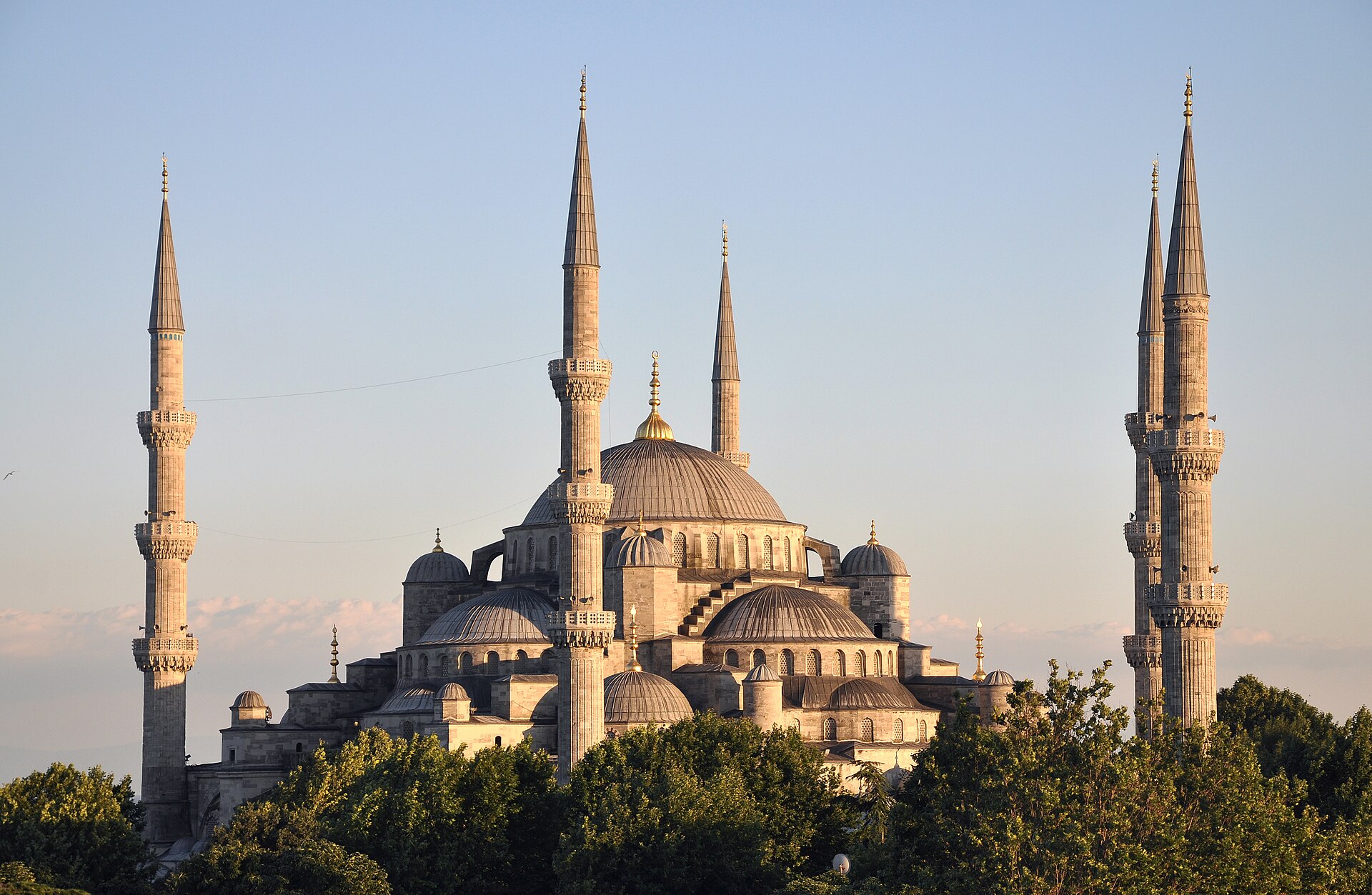
In 1609, Sultan Ahmed I stood at a low point. The Peace of Zsitvatorok had just delivered a blow to Ottoman prestige, and unlike his predecessors, he had no major military victory to his name. Tradition held that an imperial mosque should be funded by the spoils of conquest — a mark of a sultan's glory. Ahmed had none. Yet he decided to build one anyway, hoping the act itself might win him God's favour and restore the empire's standing.
He chose an extraordinary site: the southeast edge of the old Byzantine Hippodrome, directly facing the Hagia Sophia, which by then had long served as a mosque. The location had once held the Hippodrome's bleachers and imperial box — remnants of which were later unearthed during 20th-century excavations in the mosque's courtyard. Building there meant demolishing the palaces of prominent viziers, including Sokollu Mehmet Pasha, an expensive and disruptive undertaking.
The cost, combined with the empire's economic strain, provoked fierce protest from the ulema, the Islamic legal scholars, who argued that a sultan without conquests had no right to drain the treasury for such a project. Some went so far as to forbid Muslims from praying there. Ahmed pressed on regardless. Construction began in 1609 under the architect Sedefkar Mehmed Agha, a former student of the great Sinan, and continued until an opening ceremony in 1617 — though some inscriptions bear the date 1616. Ahmed died around that same time, and the final accounting records were signed not by him but by his successor, Mustafa I, suggesting the sultan never saw his project truly finished.
What rose from that contested ground was, in scale, a direct answer to Hagia Sophia. The prayer hall spans 64 by 72 metres, crowned by a central dome 23.5 metres across and, according to Turkish sources, 43 metres high, ringed by four semi-domes and smaller corner domes. Six minarets flank the structure — making it, at the time, the first mosque in Turkey to bear six. Mehmed Agha drew on his master Sinan's Şehzade Mosque for its plan, but architectural historians note his own instinct was more sculptural, more attentive to ornament and detail than Sinan's austere geometry.
Inside, the mosque earned its popular Western name from an overwhelming programme of decoration: more than 20,000 Iznik tiles, produced under the tile masters Kasap Hacı and Barış Efendi of Cappadocia, covering the walls in blue, green and white floral patterns drawn from over fifty tulip designs. Lower registers carry traditional motifs; upper galleries burst with flowers, fruit, and cypress trees. Some tiles were even repurposed from Topkapı Palace's harem after a fire there in 1574. Over 200 stained-glass windows, a gift from a Venetian signior, once filtered coloured light through the space, supplemented today by chandeliers. Calligraphy from the Quran, largely the work of Seyyid Kasım Gubari of Diyarbakır, threads through the interior.
More from Architecture

Stonehenge: The Stones That Refuse to Explain Themselves
For more than 4,500 years, a ring of leaning giants has watched the sun rise and set on the same two days each year — and no one alive can say for certain why.

The Dome That Refused to Fall
Two thousand years ago, Roman engineers poured a dome so vast that no one has dared build a bigger one from unreinforced concrete since. It still stands, open to the sky.

A Minaret Rising Over Kingsland Road
On a busy London street better known for shops and buses, the tallest minaret in Britain quietly reaches into the sky. Its story began not in Sinan's sixteenth-century Istanbul, but in 1990s Hackney.

The Bridge That Was Killed Twice
For 427 years it arched over the Neretva like a stone rainbow. Then, in a matter of days in 1993, it simply ceased to exist.

Hoover Dam: The Concrete That Tamed a River
In the scorched depths of Black Canyon, thousands of men built the largest concrete structure the world had ever seen — and finished it two years early, at a cost of over a hundred lives.

Neuschwanstein: The Castle Built for a Ghost
A king who despised his own palace built the most famous fairy-tale castle on earth — and died before he ever truly lived in it.