The Torch Across the Water
A copper woman with a broken chain at her feet began as an idea over dinner near Versailles — and nearly ended up guarding the Suez Canal instead of New York Harbor.
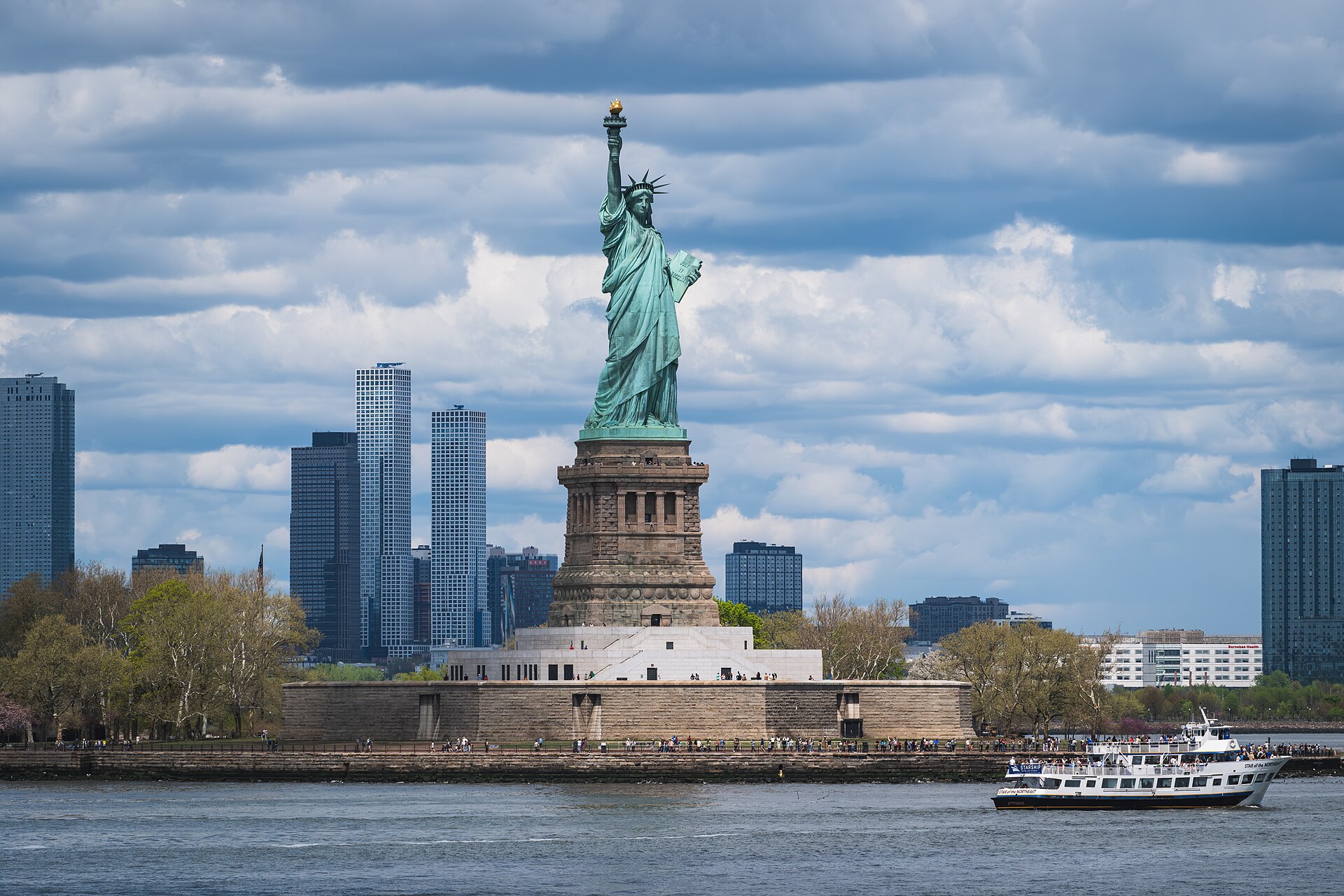
In mid-1865, at his home near Versailles, the French historian Édouard René de Laboulaye — president of the French Anti-Slavery Society — sat with sculptor Frédéric Auguste Bartholdi and spoke of monuments and shared ideals. Laboulaye, a fervent supporter of the Union during the American Civil War, believed that if the United States were ever to erect a memorial to its independence, it ought to be a joint effort of both nations. The National Park Service later questioned whether this exact conversation happened as legend describes it, tracing the tale to an 1885 fundraising pamphlet, but agrees the idea likely took shape around 1870, inspired by the Union's victory and the abolition of slavery.
Before Lady Liberty ever rose over New York Harbor, Bartholdi had another colossus in mind. In the late 1860s he pitched Isma'il Pasha, the Khedive of Egypt, on a giant lighthouse-statue called 'Progress' or 'Egypt Carrying the Light to Asia' — a robed Egyptian peasant woman holding a torch aloft at the northern entrance of the Suez Canal. Sketches and models were made, but both the Khedive and canal developer Ferdinand de Lesseps rejected the project over its cost. A more modest lighthouse was built instead in 1869. A separate claim, raised by journalist Murat Bardakçı in 2004, holds that this Suez statue was actually commissioned by Egypt's Said Pasha, with costs partly covered by Ottoman Sultan Abdülaziz, and that fear of offending Muslim sentiment kept it from ever being erected in Egypt — leaving it, so the story goes, in a French warehouse for years before it was repurposed as the gift to America.
Whatever its true lineage, the idea for an American monument gained momentum only after the Franco-Prussian War delayed everything until 1875. That year, Laboulaye proposed a division of labor: the French would fund and build the statue, while Americans would provide the site and construct the pedestal. Bartholdi, ever resourceful, finished the head and the torch-bearing arm long before the full statue was designed, using them as traveling advertisements. The torch-arm was displayed at the Centennial Exposition in Philadelphia in 1876, and — overlapping that same year and continuing on — it also stood in Manhattan's Madison Square Park from 1876 to 1882, drawing curious crowds who had no idea what the rest of the woman would look like.
Fundraising, especially on the American side, dragged. It took the newspaperman Joseph Pulitzer, publisher of the New York World, to launch a donation drive that finally pushed the pedestal fund over the line. Meanwhile in France, the statue itself took shape in workshops, its copper skin hammered into sheets and its skeleton engineered by Gustave Eiffel — the same man who would later give Paris its tower. The finished statue depicted a classically draped woman modeled after the Roman goddess Libertas, her right arm raised with a torch, her left hand cradling a tablet inscribed JULY IV MDCCLXXVI, marking the Declaration of Independence. Beneath her robes, a broken chain and shackle lay at her feet, a quiet tribute to the abolition of slavery following the Civil War.
According to some accounts, the face given to this towering woman may have owed something to Isabelle Eugenie Boyer, widow of Singer sewing machine founder Isaac Singer, said to have modeled for Bartholdi. In 1884 the completed statue stood assembled in France — a full year before it would ever touch American soil.
More from Architecture

Stonehenge: The Stones That Refuse to Explain Themselves
For more than 4,500 years, a ring of leaning giants has watched the sun rise and set on the same two days each year — and no one alive can say for certain why.

The Dome That Refused to Fall
Two thousand years ago, Roman engineers poured a dome so vast that no one has dared build a bigger one from unreinforced concrete since. It still stands, open to the sky.

A Minaret Rising Over Kingsland Road
On a busy London street better known for shops and buses, the tallest minaret in Britain quietly reaches into the sky. Its story began not in Sinan's sixteenth-century Istanbul, but in 1990s Hackney.

The Bridge That Was Killed Twice
For 427 years it arched over the Neretva like a stone rainbow. Then, in a matter of days in 1993, it simply ceased to exist.

Hoover Dam: The Concrete That Tamed a River
In the scorched depths of Black Canyon, thousands of men built the largest concrete structure the world had ever seen — and finished it two years early, at a cost of over a hundred lives.

Neuschwanstein: The Castle Built for a Ghost
A king who despised his own palace built the most famous fairy-tale castle on earth — and died before he ever truly lived in it.