The Wall You Cannot See From Orbit
For decades, schoolchildren were told the Great Wall of China is the only man-made object visible from space. The wall's own dimensions tell a different story.
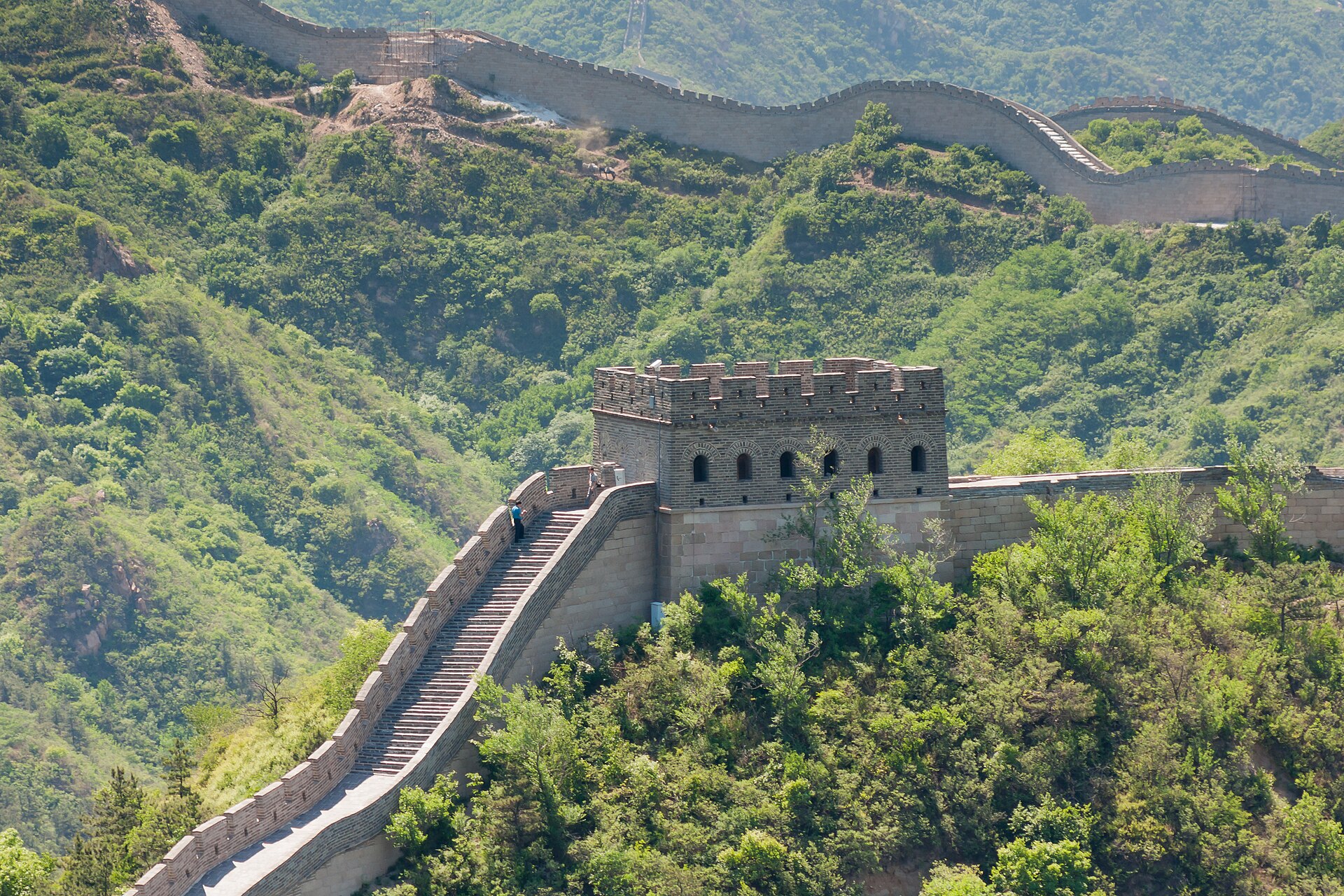
Somewhere along the way, a claim took root and refused to die: astronauts circling the Earth could pick out the Great Wall of China with the naked eye, a thin grey thread against the curve of the planet. It became a fixture of textbooks and trivia nights, repeated so often it hardened into common knowledge. But common knowledge is not the same as fact, and the wall's own measurements argue against the legend.
The structure we call the Great Wall is not one continuous rampart but a sprawling collection of fortifications built and rebuilt over roughly two thousand years, stretching in total some 21,196 kilometers across China's northern frontier. That number sounds enormous, and it is. But length is not the same as visibility. What matters for something to register in the human eye from hundreds of kilometers up is width, contrast, and continuity — and here the wall falls short.
According to the historical record, the wall's height typically ran between four and six meters, with a base thickness around seven meters and a narrower top of about six meters. Even at its most substantial, wide enough for horses and carts to travel along its top, the wall remains a ribbon only a few meters across. Against the vastness of a continent, a structure that narrow simply does not have the visual mass to stand out to an unaided eye from orbit, no matter how long it stretches.
The wall was never designed as a single unbroken barrier either. Contrary to popular belief, it was not made entirely of brick, and long stretches were built from weak, unfortified materials never intended to stop an army outright — only to slow one down. These lighter sections, along with natural gaps where mountains or rivers already blocked passage, mean the wall is not even a continuous line across the landscape. It is punctuated, patched together, uneven in strength and material.
What does survive intact today is far smaller than the full historical total. Of the roughly 8,851.8 kilometers built during and before the Ming dynasty, only about 2,500 kilometers of Ming-era wall remain standing. So even the portion someone might hope to spot is a fraction of the sprawling figure quoted in headlines, further undercutting the idea of one long, visible stripe across China.
More from History

The Morning Bingham Climbed to Machu Picchu
On a cold July morning in 1911, an American historian scrambled up a jungle-choked ridge above the Urubamba River — and by afternoon, a forgotten Inca citadel would belong to the world.

The Last Half-Hour of the Hindenburg
It was already half a day late, and the public had been told to keep away — but at seven o'clock that evening, the Hindenburg finally turned toward its mooring mast for the last time.

The Last Hours of Pompeii: August 24, 79 AD
By noon it was just another hot day beside the Bay of Naples. By evening, an entire mountain had rewritten the fate of thousands.

The Longest Walk: Mandela's Last Steps to Freedom
After 27 years behind bars, a 71-year-old man had to relearn how to walk out of a prison gate — into a waiting world of cameras, crowds, and a country holding its breath.

The Document Lincoln Signed on the First Day of 1863
On a single January morning, a president's pen would change the legal status of more than three million people — if the ink held and his hand did not shake.

The Day of the Dream: August 28, 1963
Two hundred and fifty thousand people converged on the National Mall that morning — by nightfall, one voice from the steps of the Lincoln Memorial would echo for generations.