The Woman Who Drew the Desert's Borders
She could out-ride, out-climb, and out-negotiate most men of her era — and then she helped draw the map of the modern Middle East. Who was the Englishwoman the Arabs called 'Queen of the Desert'?
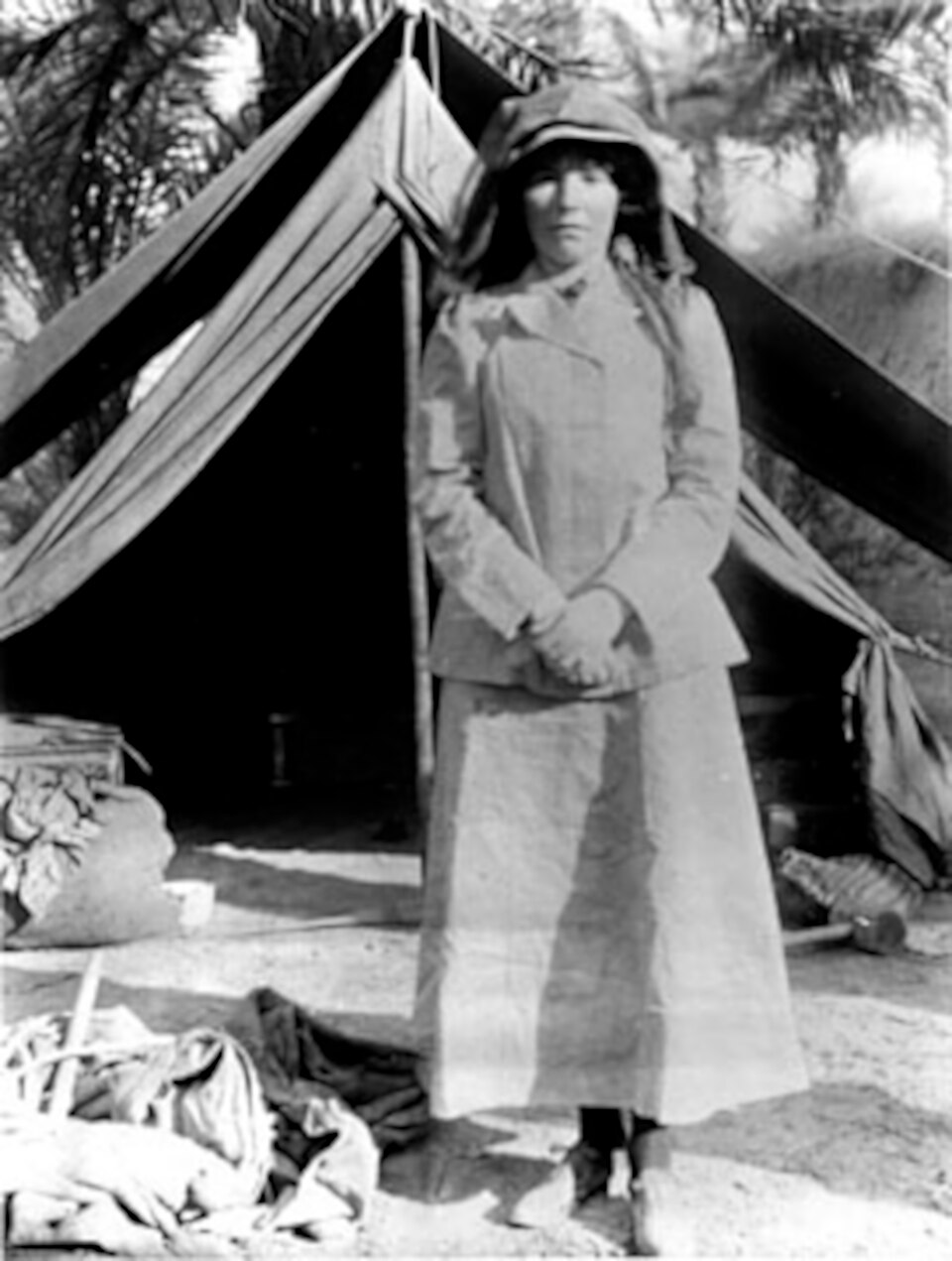
Gertrude Margaret Lowthian Bell was born on 14 July 1868 in Washington New Hall — now known as Dame Margaret Hall — in Washington, County Durham, into a wealthy industrial family. Her grandfather, Sir Isaac Lowthian Bell, was an ironmaster and Liberal MP; her father, Sir Hugh Bell, 2nd Baronet, became her lifelong confidant after her mother died giving birth when Gertrude was only three. Her stepmother, Florence Bell (née Olliffe), a playwright who studied the lives of factory workers' wives, instilled in her a sense of duty and ensured she received an excellent education — one that would later shape Gertrude's own advocacy for Iraqi women's schooling.
Bell's brilliance showed early. She was among the first five women to study at Oxford University, and became the first woman to graduate with first-class honours in Modern History there — though because women were not awarded full degrees until 1920, she received only an honorary one. This restless intelligence, paired with her family's wealth, launched her into a life of travel: two round-the-world journeys in 1897–98 and 1902–03, and a growing passion for mountaineering.
Her connection to the Middle East began in 1892, visiting her uncle Frank Lascelles, the British ambassador in Tehran. She published her first book, Persian Pictures, two years later. A 1899 visit to Jerusalem deepened her affection for Arab culture, and over the following decades she traveled extensively through Syria, Palestine, Mesopotamia, Asia Minor, and Arabia — becoming one of the very few Westerners, and virtually the only Western woman, to journey through the remote Ha'il region during her 1913–1914 expedition.
Archaeology captivated her alongside travel. In 1907 she journeyed to Anatolia with archaeologist William Ramsay and personally funded a dig at Binbirkilise. In 1909 she explored Carchemish and Babylon, and in 1911 she returned to southern Mesopotamia to study and photograph the fortress of Ukhaidir, producing what remains one of her most important scholarly contributions, published in 1914. Her travel books, The Desert and the Sown (1907) and Amurath to Amurath (1911), turned her into a recognized authority in a field dominated by men.
The outbreak of World War I in 1914 and the Ottoman Empire's entry on Germany's side transformed her role. She briefly joined the Arab Bureau in Cairo, working alongside T. E. Lawrence, before joining the British administration in Ottoman Mesopotamia in 1917 at the request of Lord Hardinge, Viceroy of India. There she served as Oriental Secretary to three High Commissioners — the only woman holding such senior civil rank anywhere in the British Empire.
More from Explorations

Humboldt: The Man Who Measured the World
A Prussian noble's son, once mocked as a sickly child, would climb a volcano to a world-record height and rewrite how humanity understood nature itself.

The Man Who Named Canada
A Breton mariner planted a wooden cross on a foreign shore and claimed a kingdom he did not understand — then spent a winter frozen into its river, praying a stranger's remedy would save his men.

Sixty Ships Into the Unknown: Hanno's Voyage Down the African Coast
A Carthaginian fleet of sixty ships and thousands of settlers vanished past the Pillars of Hercules to found cities on an unmapped coast — and came home with the skins of hairy, hostile 'gorillas' as proof of how far they had gone.

HMS Challenger: The Voyage That Charted the Deep
A stripped-down warship, its guns torn out to make room for microscopes, set sail from Portsmouth to answer a question no one had ever properly asked: what lies at the bottom of the sea?

Scott's Last Expedition: The Letters Written at the End of the World
Five men reached the bottom of the world only to find a Norwegian flag already planted there. What followed was not glory, but a slow, frozen unraveling that the world would remember for a century.

Marco Polo: In the Court of Kublai Khan
A fifteen-year-old boy meets the father he barely knew — and is soon swept toward the richest court on Earth. Twenty-four years later, he returns home with tales so vast that Venice simply calls him 'Mister Millions'.