The World's Oldest Customer Complaint
Nearly 4,000 years before online reviews, one furious buyer put his grievance in clay — and it's still being read today.
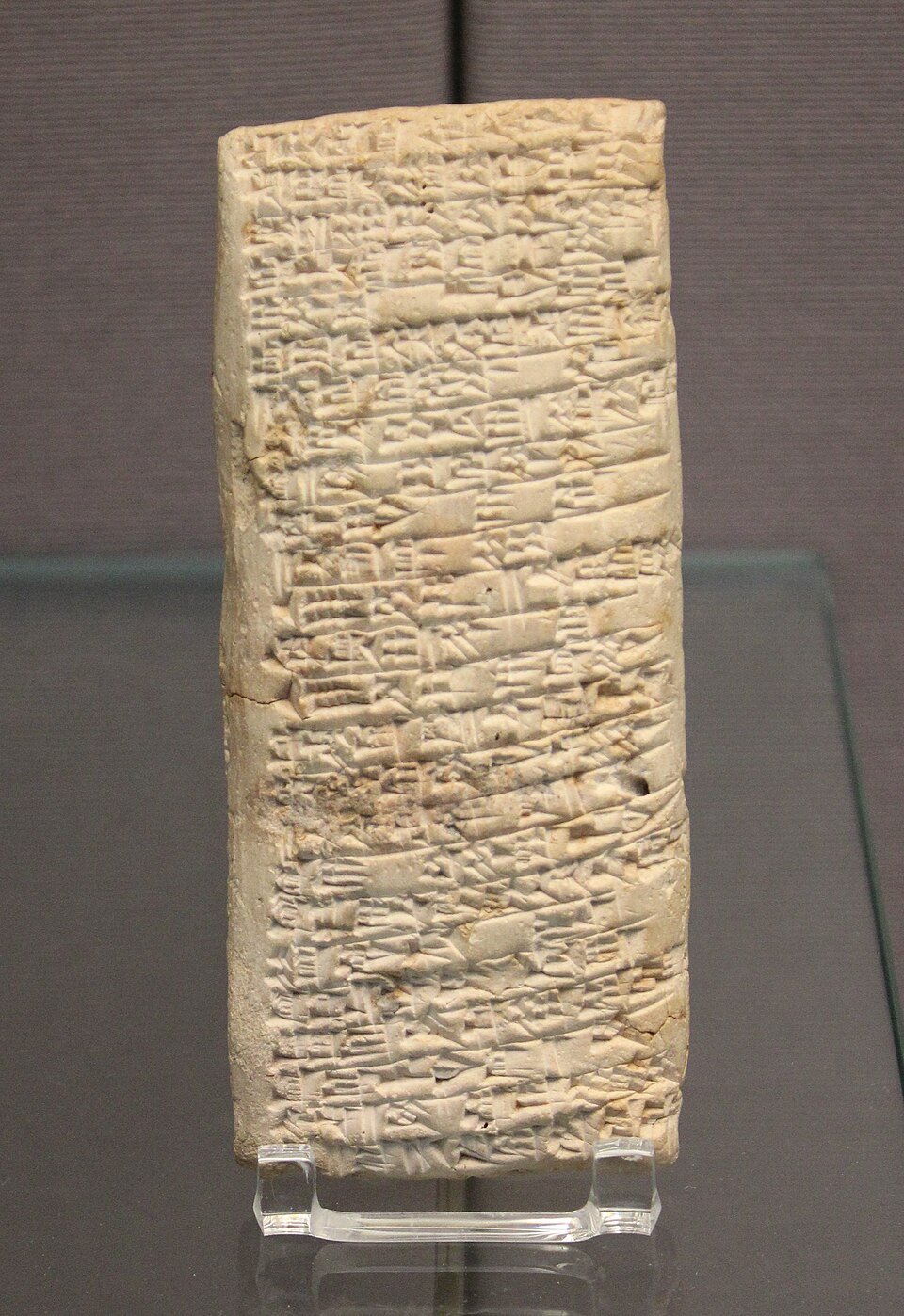
In around 1750 BC, in the Sumerian city of Ur, a man named Nanni sat down and had a complaint recorded onto a small clay tablet, just 11.6 centimetres tall and 5 centimetres wide. It was addressed to Ea-nāṣir, a trader who journeyed to the distant land of Dilmun to buy copper before returning to Mesopotamia to sell it. Ea-nāṣir had agreed to sell Nanni copper ingots, but what Nanni wanted and what he got were two very different things.
According to the tablet, Nanni had sent his servant with payment to complete the deal. But when the copper arrived, Nanni judged it to be of sub-standard quality and refused to accept it. Rather than let the matter drop, he had a cuneiform letter inscribed in Akkadian, laying out his grievances in detail: the poor grade of the copper, unresolved issues from an earlier delivery, and — perhaps most personally wounding to Nanni — the rude treatment his servant had received while trying to conduct the transaction on his behalf.
Nanni made a point of noting that although he had already paid for the copper, he still had not accepted it, since it failed to meet his standards. It reads like the ancient equivalent of demanding a refund and a stern talking-to for bad service, preserved not in an email thread but in permanent, fired clay.
Ea-nāṣir was no obscure figure. He belonged to a known group of merchants called the alik Tilmun, or 'Dilmun traders', and appears in other historical texts dated to the 11th and 19th regnal years of Rim-Sîn I, the ruler of Larsa. Other tablets recovered from the ruins believed to be his home suggest Nanni was not alone in his dissatisfaction — a man named Arbituram complained he had never received copper he was owed, and another correspondent wrote that he was simply tired of receiving bad copper from Ea-nāṣir.
The tablet itself was unearthed by Sir Leonard Woolley, who led a joint excavation by the University of Pennsylvania and the British Museum at Ur between 1922 and 1934. It has since been housed primarily at the British Museum, where in 2009 it was stabilised using a conservation treatment called Paraloid B-72 to protect it from further deterioration.
More from Archaeology

The Bronze Disc That Rewrote the Sky
Two looters with a metal detector dug up something illegal, invisible in value, and older than Stonehenge's final stones — a map of the heavens buried for over three thousand years.

The Faceless Women of the Ice Age
Long before writing, before cities, before the wheel, someone carved a woman's body into stone and ivory — and left no name, no face, no explanation.

The Pebble That Might Be Human
A palm-sized stone found on a Moroccan riverbank may be humanity's oldest attempt to see itself — or simply a trick of erosion.

The Crown That Vanished: Deshret and the Red Land
A crown worn by kings for three thousand years has never once been found in a tomb — not one. So where did it go?

The Face That Traveled Between Empires
A farm worker's shovel struck stone in 1897 and unearthed a face so striking it would be sold to France, seized as war booty, and finally traded back for a Velázquez.

The Boy in the Dark Tunnel
A schoolboy fell into black water inside an ancient tunnel and surfaced with his fingers brushing letters no one had noticed for 2,600 years.