Versailles: The Town a King Built to Rule France
A king grew tired of Paris and its unruly crowds, so he built a new capital from the ground up — and for over a century, the fate of France was decided in its halls.
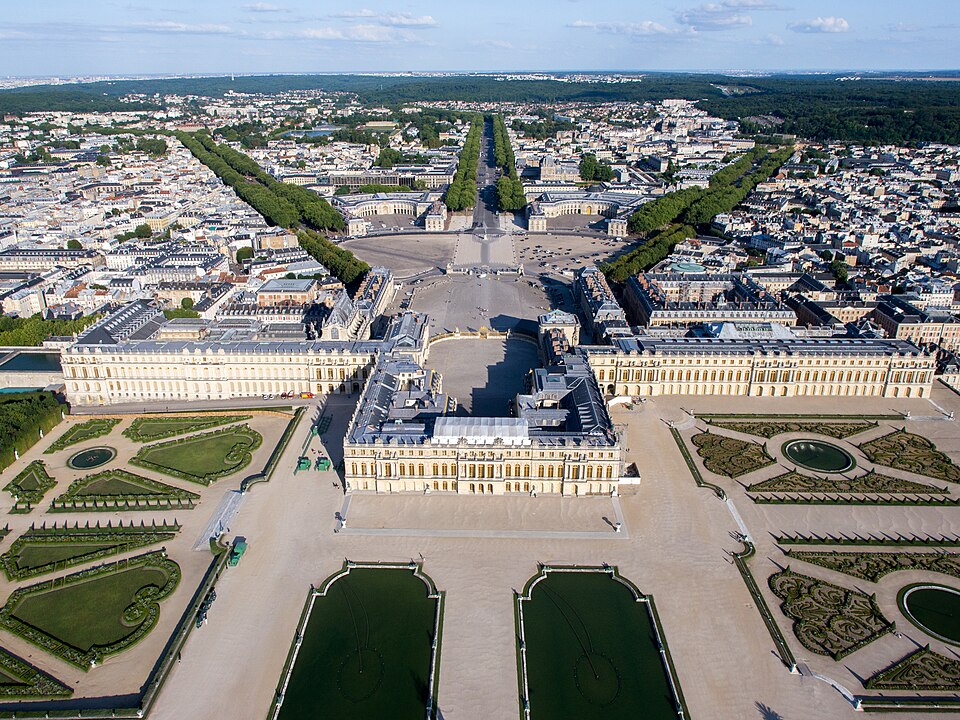
In 1682, Louis XIV did something no French monarch had done before: he moved his entire court and government out of Paris and into a town he had willed into existence on an elevated plateau seventeen kilometers to the west. That town was Versailles, and from that moment until 1789, it functioned as the de facto capital of the Kingdom of France, even though Paris technically retained the official title.
The name itself likely traces back to the Latin word versare, meaning to turn over repeatedly — an old term for ploughed or cleared land. It is a fittingly humble root for a place that would become synonymous with royal grandeur, but the word first appears in medieval documents as early as 1038, long before any king dreamed of a palace there.
Versailles sits at 130 to 140 metres above sea level, a plateau ringed by wooded hills — the forests of Marly and Fausses-Reposes to the north, Satory and Meudon to the south. Unlike the tangled, organic streets of old Paris, Versailles was laid out as a rational, symmetrical grid, a strikingly modern design for its era. That grid later inspired Pierre Charles L'Enfant when he designed Washington, D.C.
For over a century, power flowed through Versailles almost continuously. Louis XIV reigned from there until his death in 1715. During the brief regency of Philippe d'Orléans, the court shifted back to Paris, but by 1722 young Louis XV had returned it to Versailles, where it remained until October 1789, when a Parisian mob forced Louis XVI and his family back to the capital — a moment that marked the beginning of the end for the ancien régime and made Versailles, in effect, the cradle of the French Revolution.
The town's diplomatic legacy runs just as deep as its political one. Versailles is historically associated with numerous treaties, among them the Treaty of Paris, which brought an end to the American Revolutionary War between Great Britain and the Thirteen Colonies. And after the First World War, the Treaty of Versailles was signed within its own walls, on 28 June 1919, cementing the town's name permanently into the history of twentieth-century geopolitics.
More from Architecture

Stonehenge: The Stones That Refuse to Explain Themselves
For more than 4,500 years, a ring of leaning giants has watched the sun rise and set on the same two days each year — and no one alive can say for certain why.

The Dome That Refused to Fall
Two thousand years ago, Roman engineers poured a dome so vast that no one has dared build a bigger one from unreinforced concrete since. It still stands, open to the sky.

A Minaret Rising Over Kingsland Road
On a busy London street better known for shops and buses, the tallest minaret in Britain quietly reaches into the sky. Its story began not in Sinan's sixteenth-century Istanbul, but in 1990s Hackney.

The Bridge That Was Killed Twice
For 427 years it arched over the Neretva like a stone rainbow. Then, in a matter of days in 1993, it simply ceased to exist.

Hoover Dam: The Concrete That Tamed a River
In the scorched depths of Black Canyon, thousands of men built the largest concrete structure the world had ever seen — and finished it two years early, at a cost of over a hundred lives.

Neuschwanstein: The Castle Built for a Ghost
A king who despised his own palace built the most famous fairy-tale castle on earth — and died before he ever truly lived in it.