Vikings in the Ice: The Vanishing of Norse Greenland
For four hundred years, Norse farmers raised cattle and prayed in stone churches at the edge of the known world — then, without a single surviving account of why, they were simply gone.
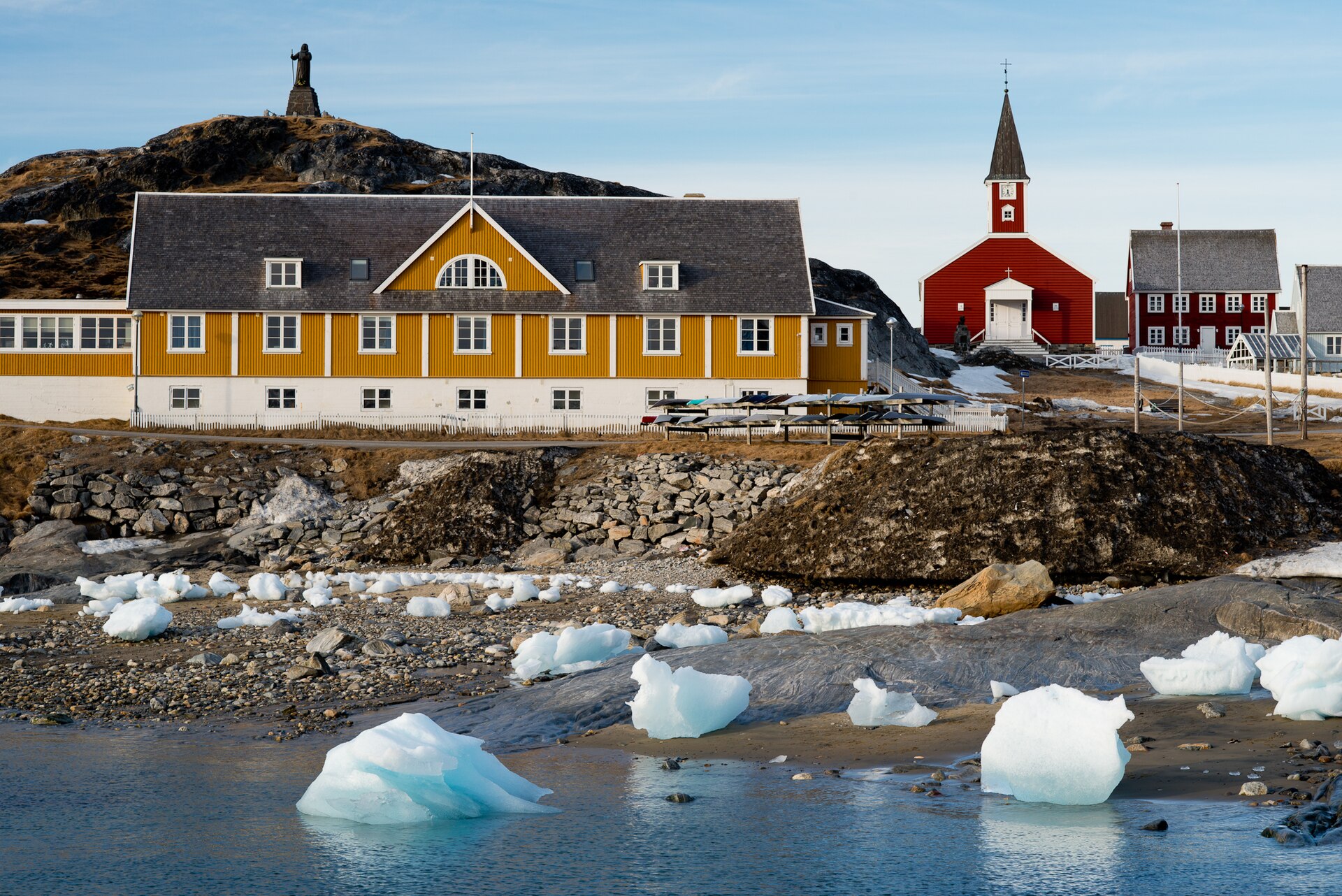
Erik the Red arrived on Greenland's southwestern coast in 986, leading a contingent of fourteen boats out of Iceland and Norway. He was no stranger to exile: he had already been driven from Norway and then Iceland following killings tied to his father, Thorvald Asvaldsson, who himself had committed manslaughter. Erik had spent time exploring the icy, uninhabited land to the northwest, and when he returned to claim it, he gave it a name meant to lure others: Greenland. According to the Saga of Erik the Red, he reasoned that a pleasant-sounding name would draw settlers more readily than a true description of its icebound coasts.
The gamble worked, at least for a while. Icelanders and Norwegians followed him across the sea, and together they established three settlements on the sheltered fjords of the southwest: the Eastern Settlement, the Western Settlement, and a smaller Middle Settlement. These were farming communities, built around livestock and short growing seasons, carved into a landscape far harsher than the one they had left behind in Iceland or Norway.
For centuries, the Norse Greenlanders lived on the margins of Europe's awareness but not entirely outside it. Their settlements had churches, farms, and trade contact with Iceland and Norway. They were part of a wider Norse world that had already colonized Iceland before pushing further into the Atlantic's cold frontier. Politically and culturally, Greenland remained tied to the Kingdom of Norway from 986 into the early 15th century.
But the land they inhabited was unforgiving, and it seems to have grown less forgiving over time. The descendants of Erik the Red's original settlers held on in Greenland for roughly four hundred years. Then, in the late 15th century, they disappeared. No single surviving record explains what happened to them — whether it was climate shifts, dwindling trade, isolation from Europe, conflict, or some combination that finally emptied the fjords of Norse voices.
For decades afterward, the outside world barely noticed the silence. It was the Portuguese, searching in the late 15th century for a northern route to Asia, whose voyages contributed to the earliest cartographic depictions of Greenland's coastline — though by then, the Norse settlements were already gone or vanishing.
More from History

The Morning Bingham Climbed to Machu Picchu
On a cold July morning in 1911, an American historian scrambled up a jungle-choked ridge above the Urubamba River — and by afternoon, a forgotten Inca citadel would belong to the world.

The Last Half-Hour of the Hindenburg
It was already half a day late, and the public had been told to keep away — but at seven o'clock that evening, the Hindenburg finally turned toward its mooring mast for the last time.

The Last Hours of Pompeii: August 24, 79 AD
By noon it was just another hot day beside the Bay of Naples. By evening, an entire mountain had rewritten the fate of thousands.

The Longest Walk: Mandela's Last Steps to Freedom
After 27 years behind bars, a 71-year-old man had to relearn how to walk out of a prison gate — into a waiting world of cameras, crowds, and a country holding its breath.

The Document Lincoln Signed on the First Day of 1863
On a single January morning, a president's pen would change the legal status of more than three million people — if the ink held and his hand did not shake.

The Day of the Dream: August 28, 1963
Two hundred and fifty thousand people converged on the National Mall that morning — by nightfall, one voice from the steps of the Lincoln Memorial would echo for generations.